McLaren’s newest supercar looks backward to move forward, pairing a V-8, rear-wheel drive, and a manual transmission with modern carbon-fiber construction. A production version arrives in 2028.













McLaren has spent decades pursuing quicker lap times, more sophisticated aerodynamics, and ever-faster gear changes. Now it’s doing something considerably less predictable: building a new supercar around a manual transmission.
Revealed during 2026 Monterey Car Week, the McLaren McL 6GT is unlike anything in the company’s current lineup. It combines a V-8 engine with rear-wheel drive, hydraulic steering, and—most importantly—a genuine manual gearbox.
That last detail is significant. McLaren says this will be its first manual-transmission road car since the legendary F1.
And this isn’t merely a design exercise destined for a museum. McLaren says the McL 6GT previews a new, highly exclusive category of supercar positioned beyond its core portfolio, with a production version scheduled for 2028.
Bruce McLaren’s Unfinished Dream, Reimagined
The inspiration goes back more than half a century.
Bruce McLaren wanted to turn the company’s successful racing machinery into a road-going supercar, and the M6GT was supposed to make that happen. Based on the M6A Can-Am racer, the low-slung machine represented an early attempt to establish McLaren as a road-car manufacturer.
That ambition was never fully realized during Bruce McLaren’s lifetime.
The McL 6GT effectively asks what that car might have become if McLaren had been able to continue developing the idea through another six decades.
“The McLaren McL 6GT imagines what our inspirational founder had wished to complete but with six additional decades of innovation and passion woven through every element,” McLaren Automotive CEO Nick Collins said.
McLaren Special Operations had already revisited this chapter of the company’s history earlier in 2026, presenting a meticulously assembled one-off M6GT at the Goodwood Festival of Speed. The McL 6GT takes the idea much further by translating the philosophy of that original machine into a contemporary supercar intended for production.
Even the name establishes the connection. “6GT” references both McLaren’s competition history and the M6GT that helped establish the foundations of its road-car ambitions.
Yes, It Has a Real Manual Transmission
The specification that will get enthusiasts talking isn’t horsepower. In fact, McLaren hasn’t disclosed an output figure yet.
It’s the gearbox.
The McL 6GT combines V-8 internal-combustion power with an authentic manual transmission driving only the rear wheels. For a company whose modern road cars have been defined by lightning-fast dual-clutch gearboxes, that’s a fundamental change in philosophy.
McLaren isn’t trying to make every interaction disappear in the pursuit of speed. It’s deliberately putting some of the work back into the driver’s hands.
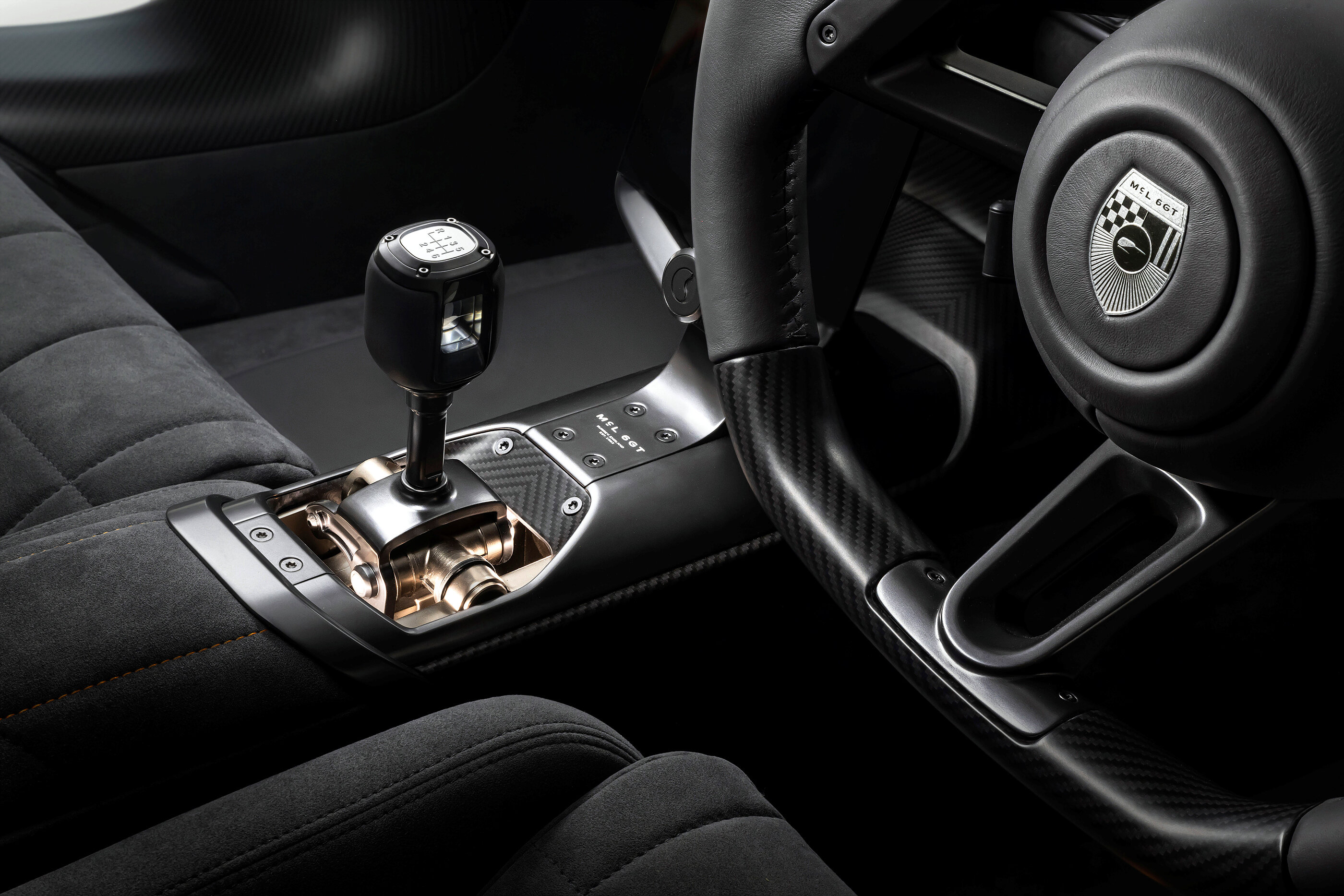
The gear lever itself illustrates how seriously the company is taking that idea. McLaren says its shape, shift feel, and throw have been carefully developed, while a three-dimensional Speedy Kiwi—the historic emblem derived from McLaren’s earliest logo—is incorporated into the upright.
The analogue philosophy goes beyond the transmission.
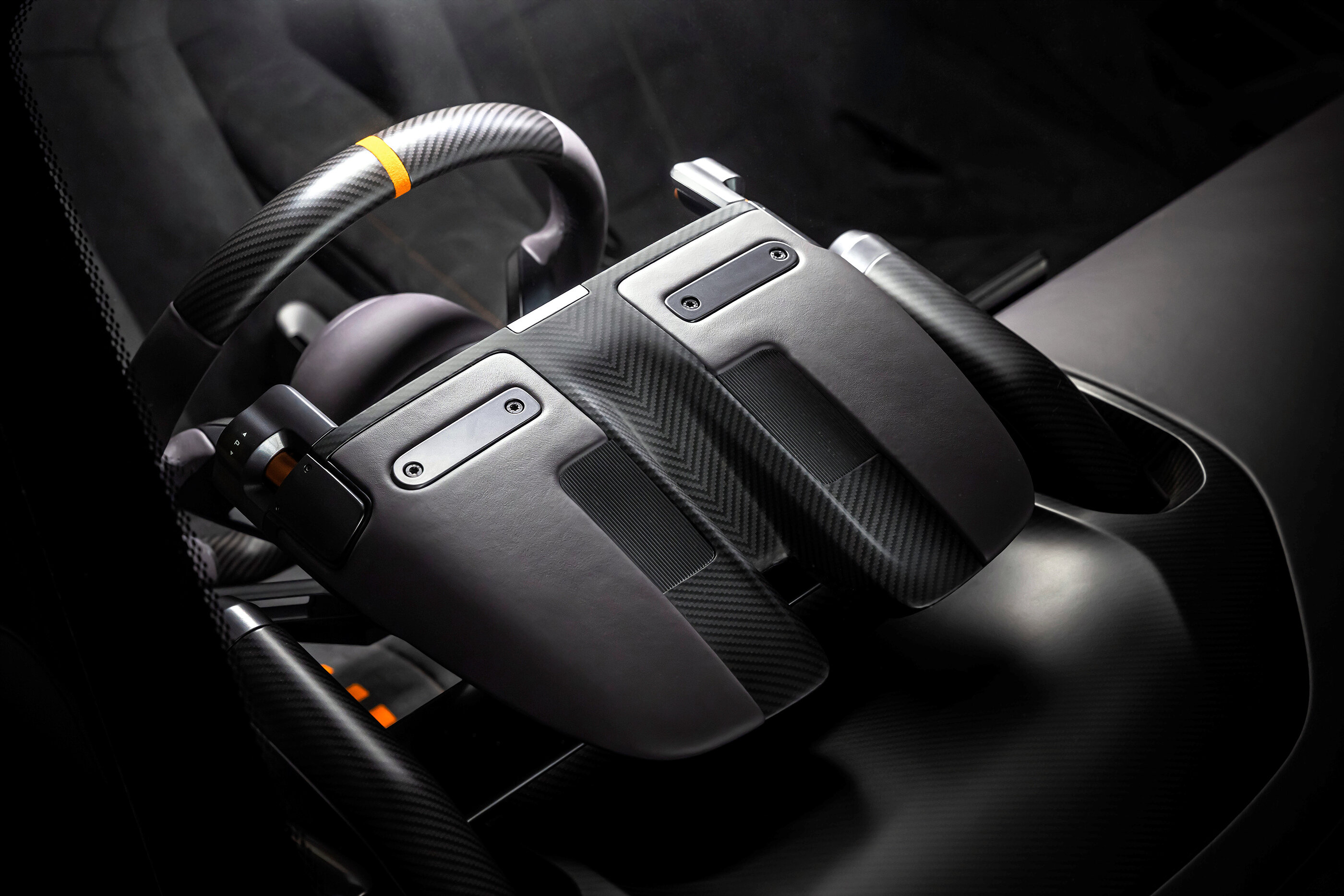
Hydraulic steering replaces the increasingly common electrically assisted alternative, and the cockpit uses tactile physical switchgear. Knurled machined-aluminum controls are designed to make basic interactions feel mechanical and deliberate.
The idea is refreshingly simple: steering, shifting gears, and using the throttle should be events in themselves.
It Looks Like a 1960s Prototype That Never Stopped Evolving
McLaren hasn’t simply recreated the M6GT.
Instead, the designers have borrowed the proportions and aerodynamic logic of 1960s sports-prototype racers and interpreted them using modern materials and packaging.
The McL 6GT sits exceptionally low and wide, with a nose that recalls the M6A Can-Am racer that provided the basis for the original M6GT. Rather than relying on a collection of aggressive vents and complicated surface treatments, the body is relatively clean.
Its volumes flow from the low nose toward a distinctive Kammback tail. The roof continues naturally into the rear deck and engine cover, making the cabin appear embedded within the body instead of sitting on top of it.
It’s an approach rooted in an era when low drag and tightly wrapped mechanical packaging largely determined the shape of a racing car.
Look closer and the historical references become more obvious.
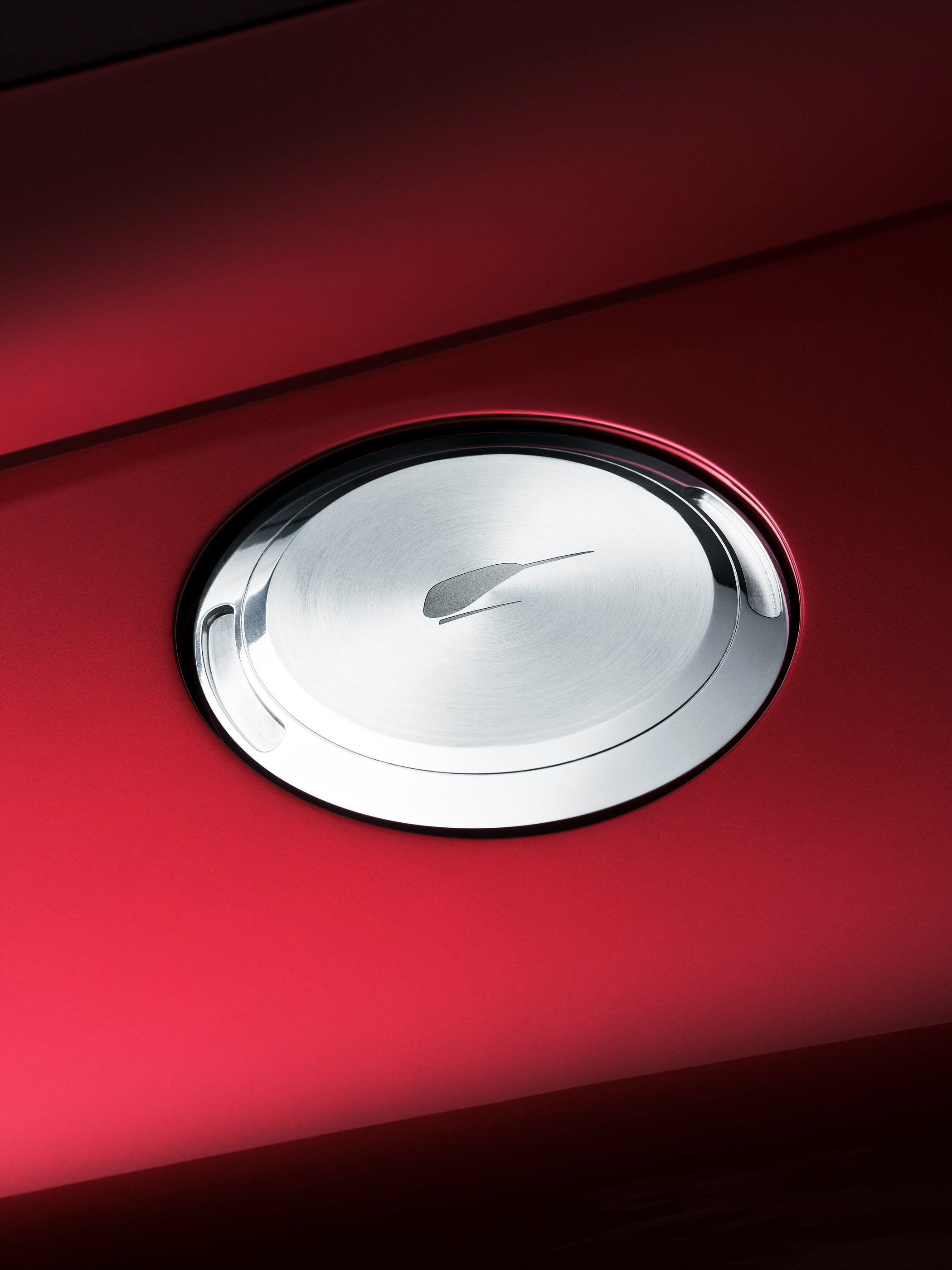
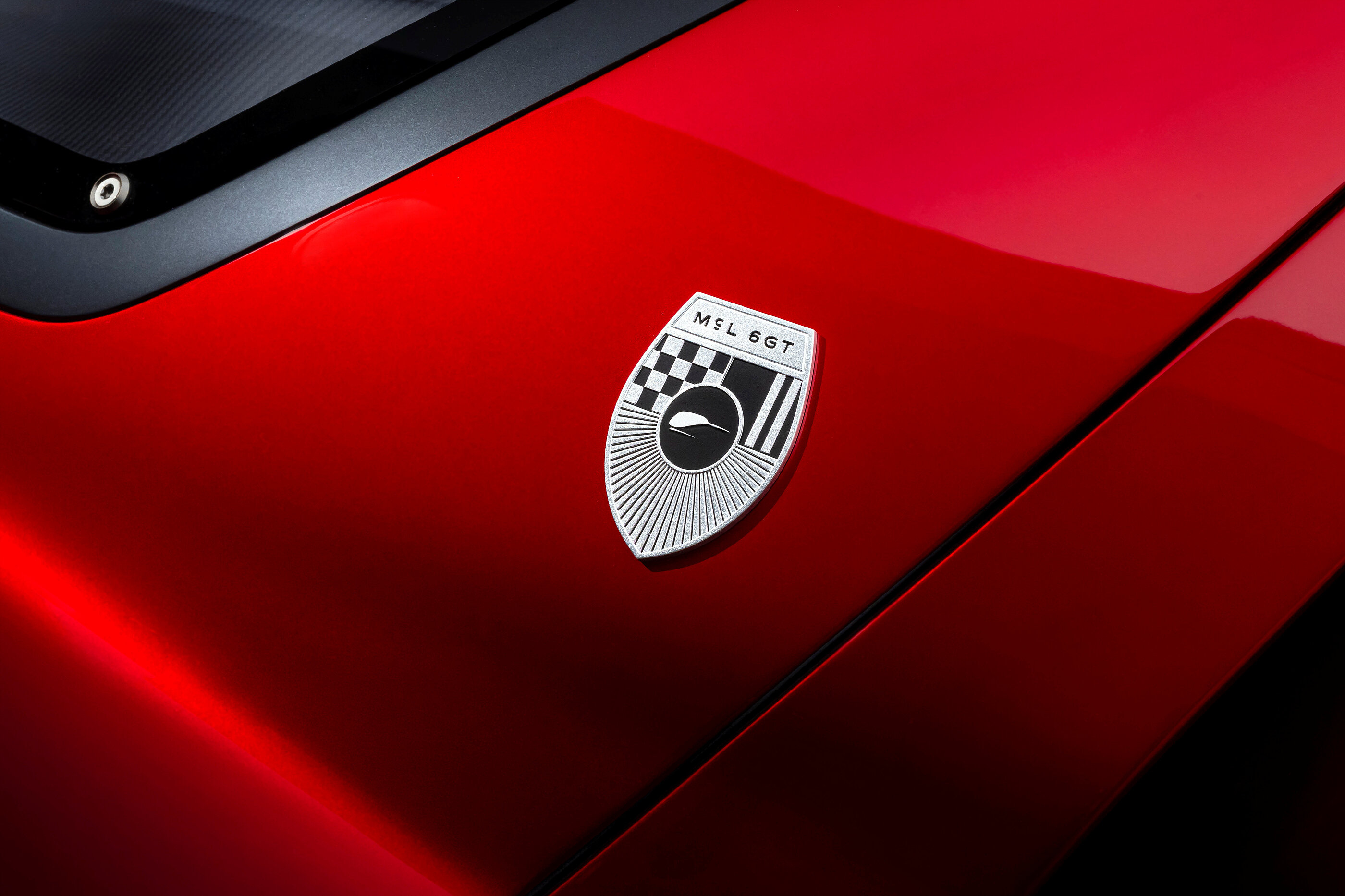
A “Racing Loop” lighting motif takes inspiration from the M6GT’s original taillights but is integrated into the McL 6GT’s airflow management. Bruce McLaren’s original M6GT license plate has been reinterpreted as a subtle graphic, his signature appears in the engine bay, and the Speedy Kiwi is etched into the fuel-filler cap.
The Retro Theme Doesn’t Mean Retro Technology
Underneath the 1960s-inspired shape is thoroughly modern McLaren construction.
The McL 6GT uses the company’s latest lightweight carbon-fiber monocoque technology together with carbon-fiber bodywork. McLaren hasn’t announced curb weight or power figures, but says the construction is intended to deliver an exceptional power-to-weight ratio.
Carbon fiber isn’t hidden away, either.
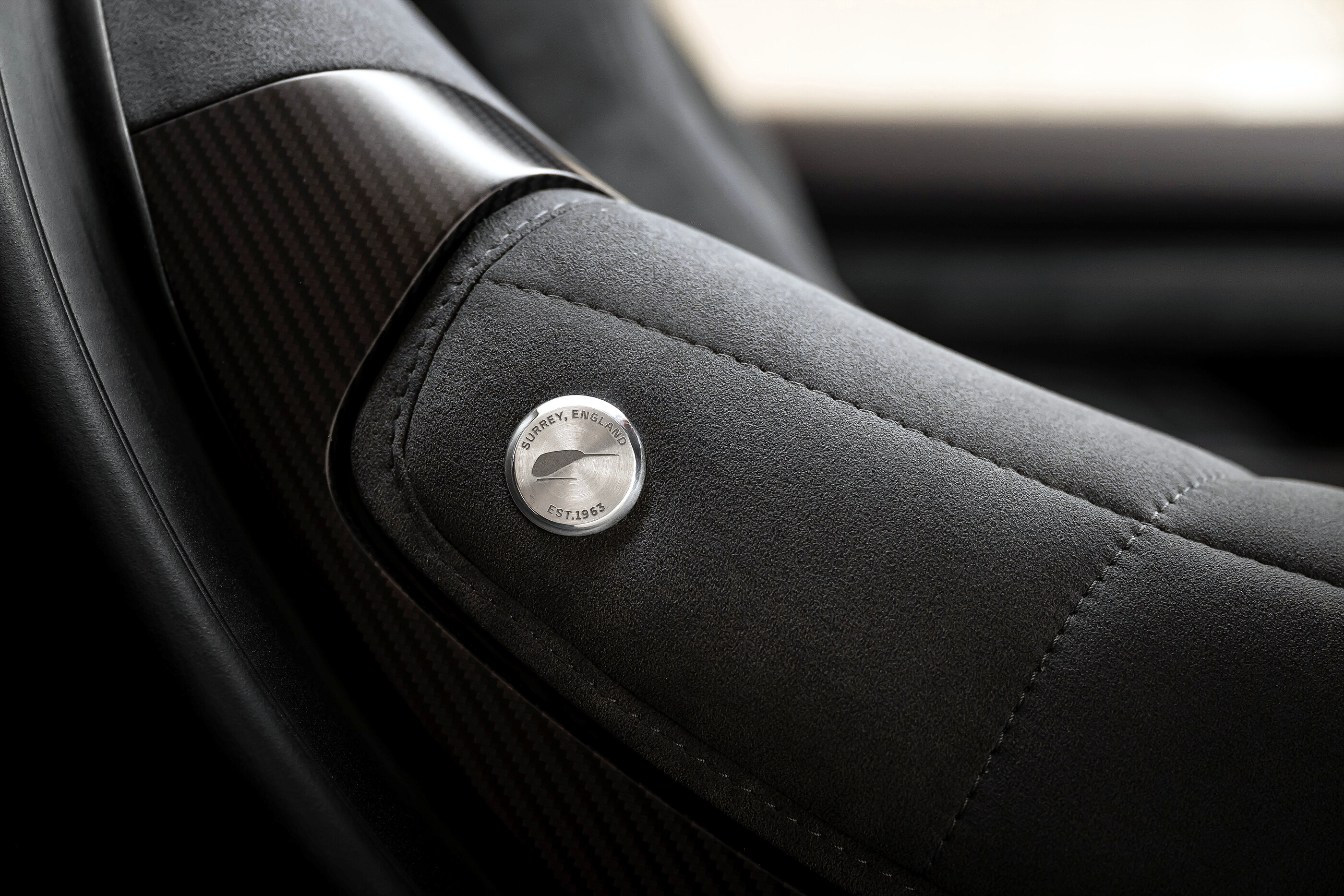
Exposed gloss carbon appears throughout the cabin, simultaneously referencing the competition-focused construction of McLaren’s past and reinforcing the lightweight philosophy of the new car.
The interior follows a similar strategy. Boxed quilting takes inspiration from the original M6GT but receives a contemporary interpretation, while digital instrumentation is designed to preserve the simplicity and clarity of the older car rather than overwhelm the driver with information.
It’s retro without pretending the past 60 years of automotive development didn’t happen.
McLaren Is Betting That Engagement Matters More Than Shift Speed
Perhaps the most interesting thing about the McL 6GT is what it says about McLaren’s future.
Modern supercars have become extraordinarily capable. Dual-clutch transmissions shift faster than any human could. Electronic steering systems can be endlessly tuned. Hybrid assistance can fill torque gaps and deliver huge horsepower numbers.
The McL 6GT deliberately steps away from some of that thinking.
A manual gearbox is objectively slower than a modern dual-clutch transmission. Hydraulic steering isn’t the easiest solution to package. Physical controls require more hardware than burying functions inside a touchscreen.
That’s precisely the point.
McLaren describes the McL 6GT as tactile, analogue, and deeply mechanical. Rather than minimizing the driver’s role, the car is designed to emphasize it.
And unlike countless heritage-inspired concepts, this one has a future beyond the show stand.
McLaren says a production McL 6GT will arrive in 2028 as the foundation of a new and highly exclusive type of supercar outside its existing range.
We still don’t know how much power the V-8 will make, how much the car will weigh, how quickly it will accelerate, how many McLaren intends to build, or what it will cost.
For once, those might not be the most important numbers.
McLaren is putting a clutch pedal and a gear lever back into one of its supercars. In 2026, that’s arguably the bigger story.