India’s entry-level EV space is heating up fast, and the refreshed Tata Punch EV is already proving it.
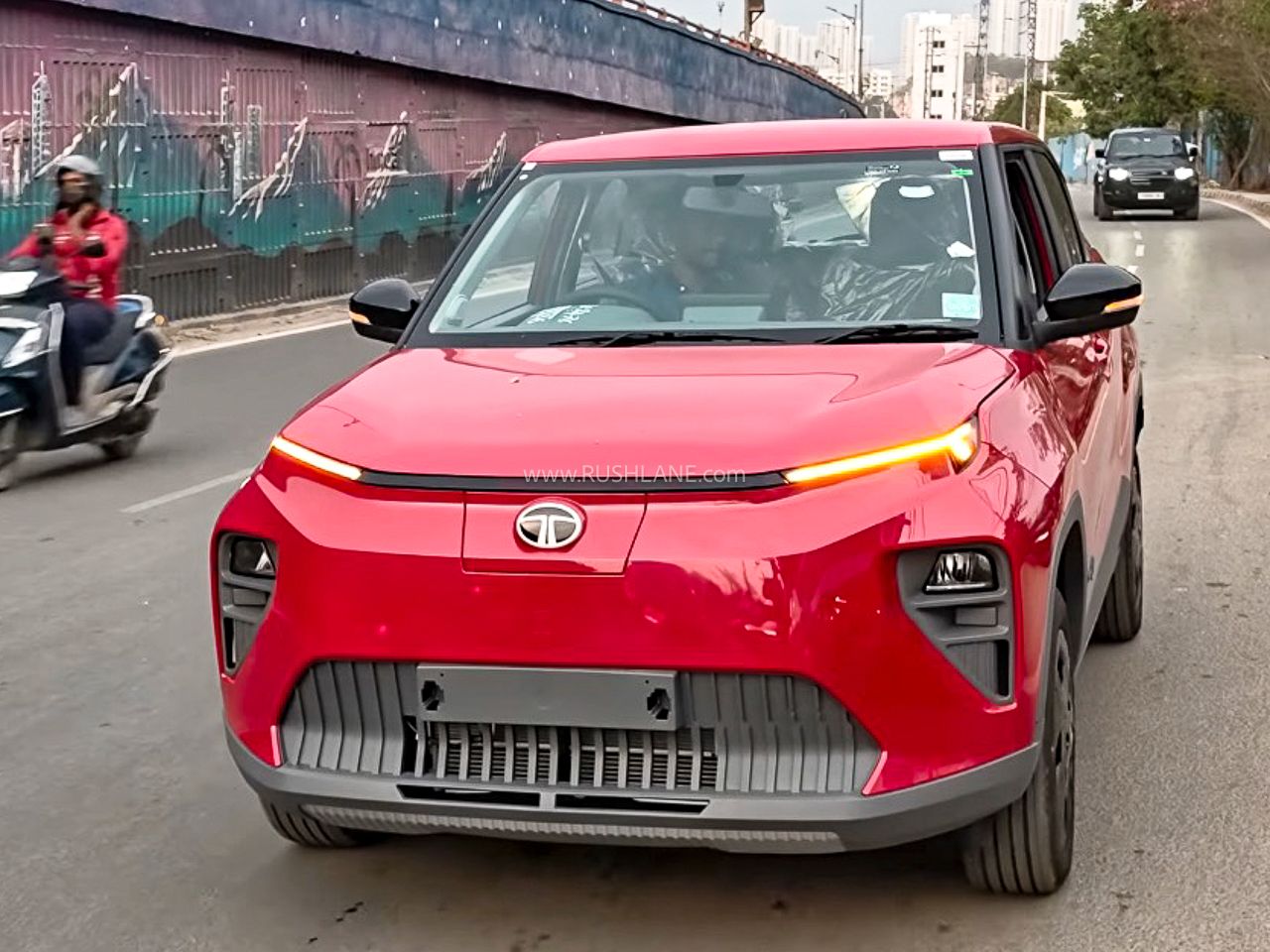
Just weeks after launch, the facelifted model is seeing waiting periods of up to 10 weeks, depending on the variant. That’s a pretty strong early signal, especially for a budget-focused EV.
What’s selling the most?
Interestingly, it’s the base trims (Smart 30, Smart+ 30) that are seeing the longest waits — around 8–10 weeks.
Higher-spec versions with the bigger battery are slightly easier to get (around 7–8 weeks), which suggests buyers are still price-sensitive first, range-focused second.
Pricing (India)
~$11.5k – $15k USD equivalent (ex-showroom)
Battery subscription (BaaS) option drops entry price even further
That kind of pricing is basically unheard of in most global markets — this is true mass-market EV territory.
What you get now (facelift upgrades)
For something this cheap, the feature list is kind of wild:
10.25-inch digital cluster
360° camera
Ventilated front seats
Wireless charging
Voice-activated sunroof
Ambient lighting
Blind spot monitoring + cruise control
This is the kind of spec sheet that would’ve been reserved for compact SUVs just a few years ago.
Powertrain breakdown
Two battery options:
30 kWh
88 hp / 154 Nm
Up to 375 km (ARAI)
40 kWh
129 hp / 154 Nm
Up to 468 km (ARAI)
Charging:
Up to 65 kW DC fast charging
20–80% in ~26 minutes
Tata is also offering a lifetime, unlimited-km battery warranty, which is a big confidence play in a price-sensitive market.
Where it sits
The Punch EV is basically a micro-SUV EV, positioned below the Tata Nexon EV, and competing with cars like the Citroën eC3.
Big picture
This isn’t about performance — it’s about accessibility.
At this price point, Tata is doing something most global OEMs still haven’t figured out:
making EVs genuinely affordable without stripping them bare.
And the demand seems to back that up.
Hot take:
If something like the Punch EV existed in the U.S. at even $20k–$25k, it would probably sell like crazy as a second car or city commuter.
But with current regulations and cost structures, that kind of product still feels a long way off.
Would you actually consider a barebones, small EV like this if it meant paying half the price of a typical EV today?
Source: www.rushlane.com