Hyundai has pulled the wraps off the all-new Tucson, giving its best-selling compact SUV a tougher look, a larger footprint, and a substantially reworked interior.
This is the fifth generation of the Tucson and the first complete redesign since the current model debuted in September 2020. Hyundai hasn’t revealed powertrain details yet, but the new SUV is already making a clear statement: The Tucson is growing up—and literally getting bigger.
The Tucson Gets Bigger and Boxier
The new Tucson measures 185.0 inches long, 75.0 inches wide, and 66.3 inches tall, riding on a 109.6-inch wheelbase. Compared with its predecessor, overall length grows by 2.4 inches, the wheelbase stretches 1.2 inches, and the body is 1.6 inches wider.
Those aren’t insignificant changes in the compact SUV segment, and Hyundai says the extra size translates directly into more passenger space. Second-row headroom increases by 1.1 inches to 40.6 inches, while the rear doors now open to 83 degrees instead of 73 degrees, making it easier to get people—or bulky child seats—in and out.
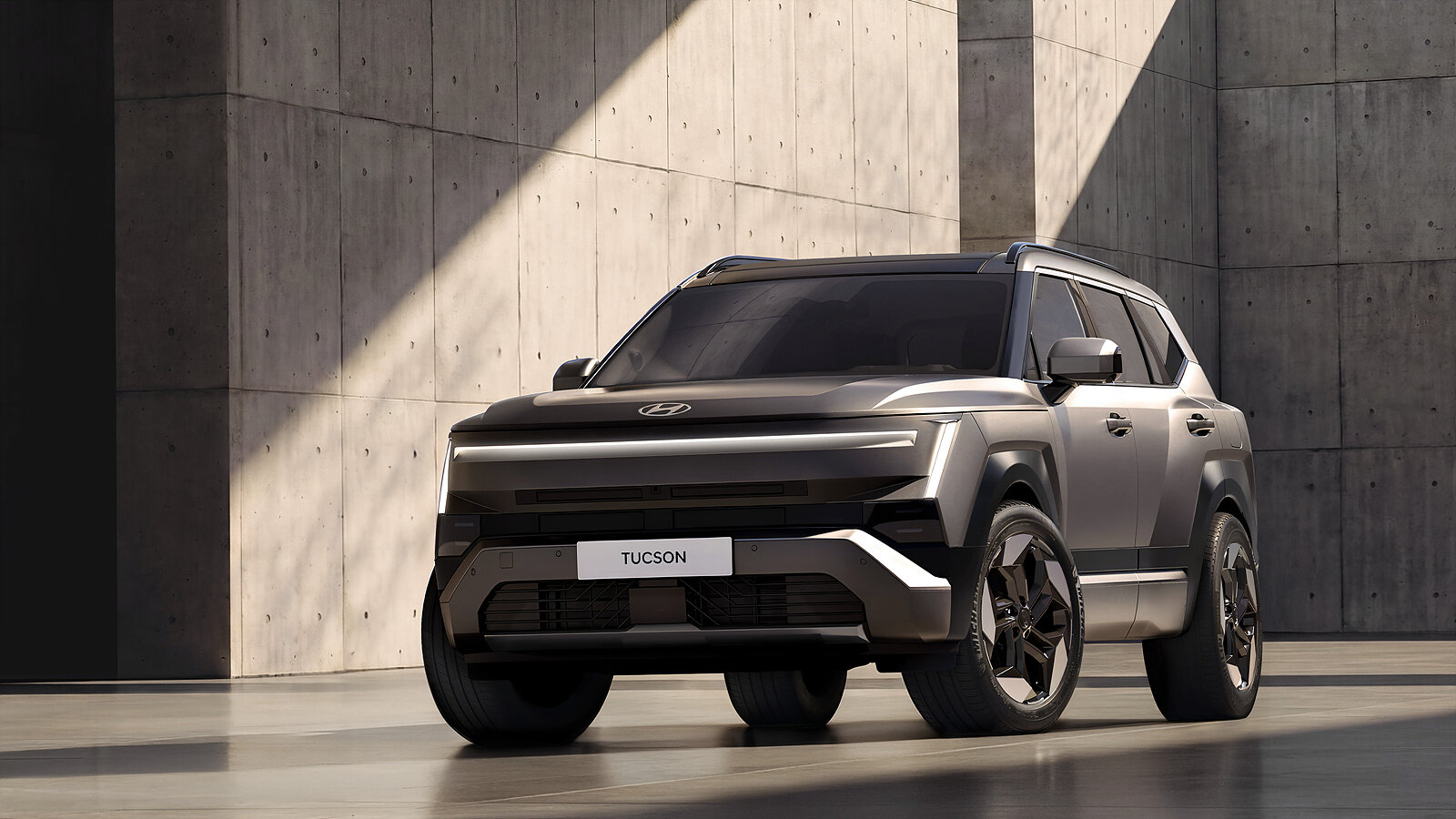
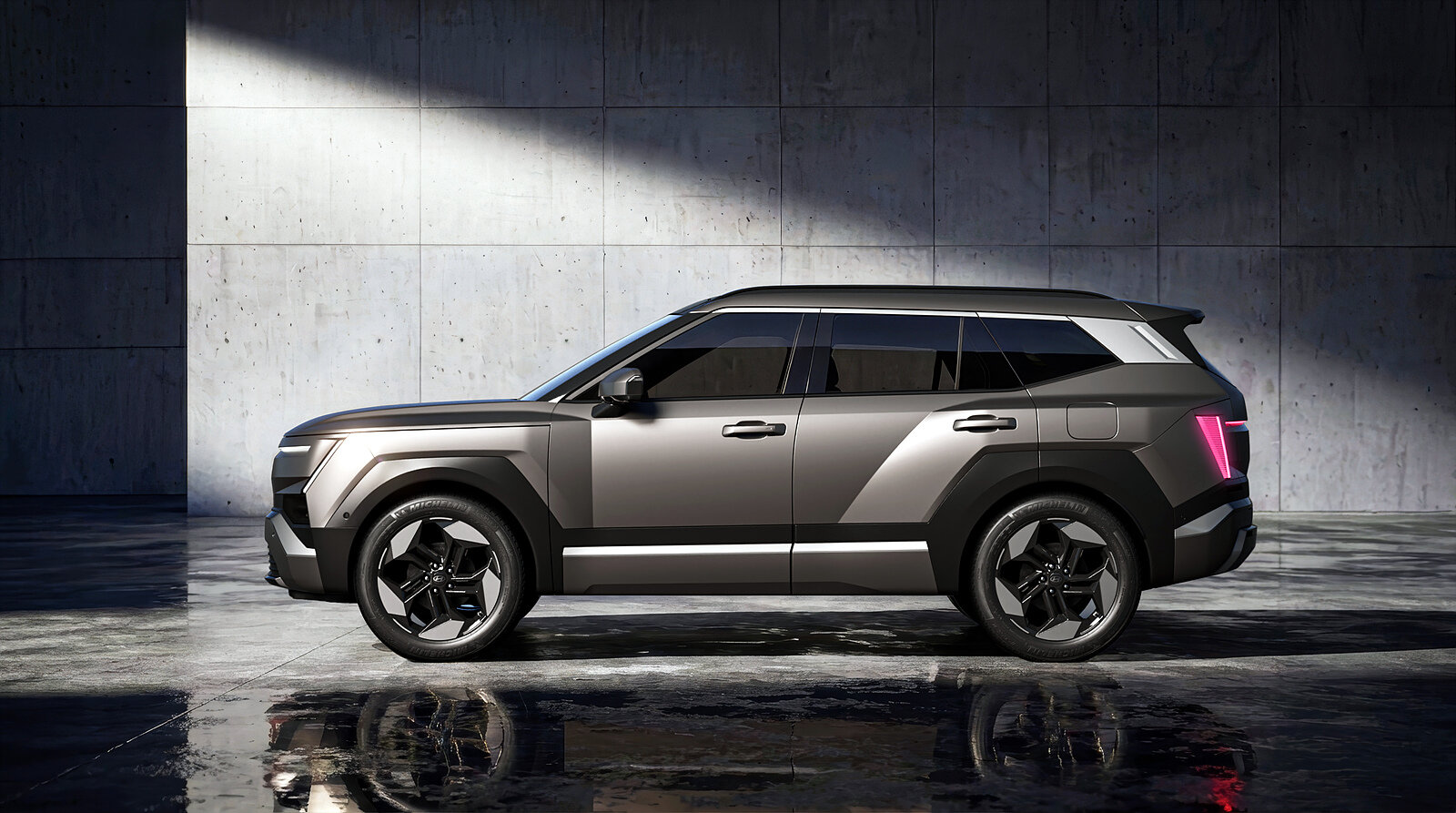
Visually, the fifth-generation Tucson represents another evolution in Hyundai’s rapidly changing design language. The automaker calls its latest philosophy “Art of Steel,” with the bodywork using sharp tension, sculpted volumes, and more restrained surfacing to create a tougher SUV stance.
The front end is dominated by vertical H-edge daytime running lights inspired by architectural lighting, connected visually by a slim horizontal center lamp. Hyundai uses an indirect lighting arrangement that hides the actual light source from view, giving the nose a cleaner appearance when illuminated.
The profile is considerably more muscular. Pronounced front and rear fenders contrast with relatively clean door surfaces, while a strong horizontal character line visually stretches the body.
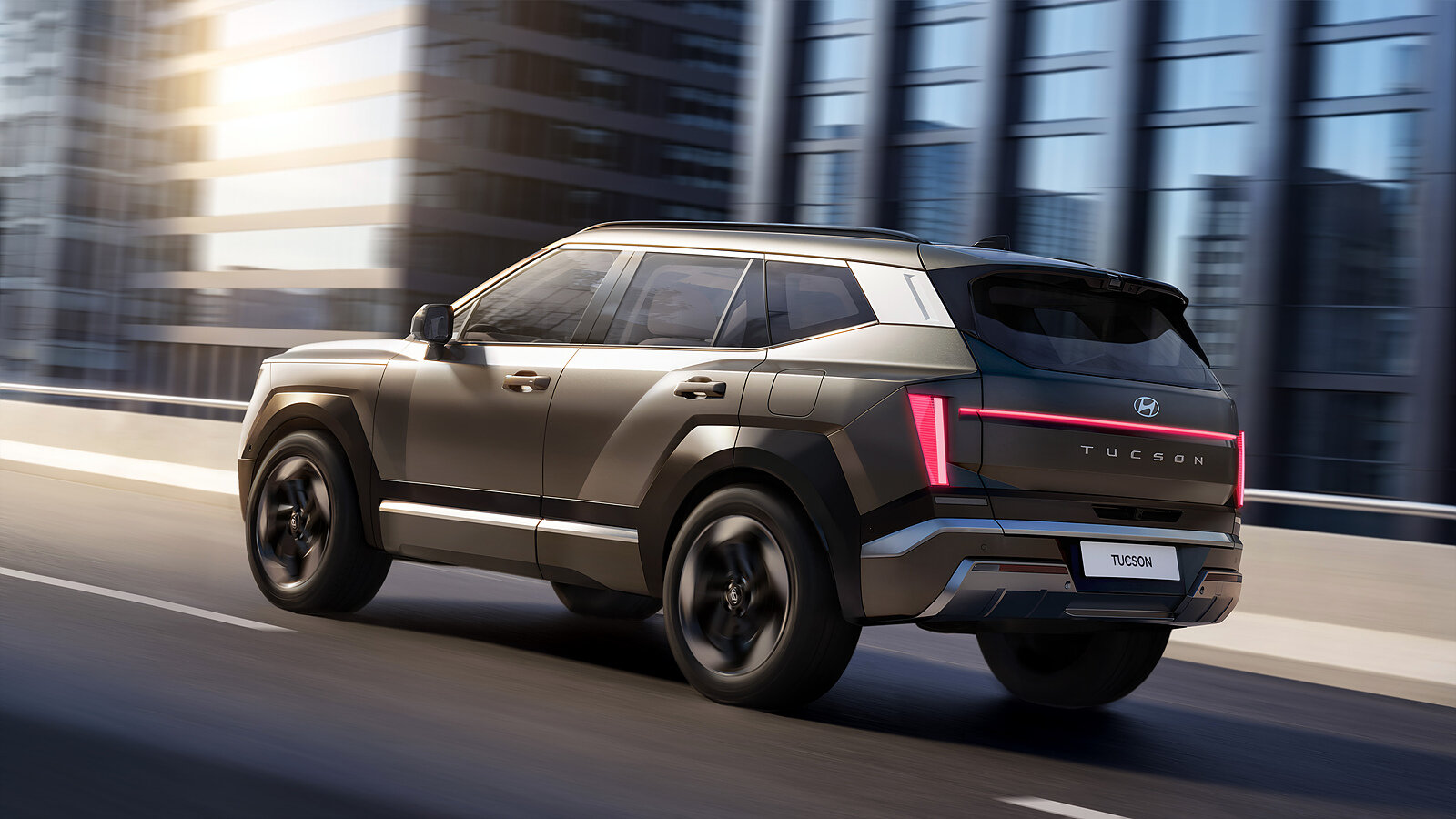
At the rear, Hyundai has fitted three-dimensional prism-style lamps with internal patterns that become more prominent when illuminated. A slim horizontal center taillight and vertical combination lamps echo the lighting treatment up front, while a chunky bumper and substantial skid-plate treatment reinforce the SUV theme.
More Room, Fewer Distractions Inside
The bigger transformation may be inside.
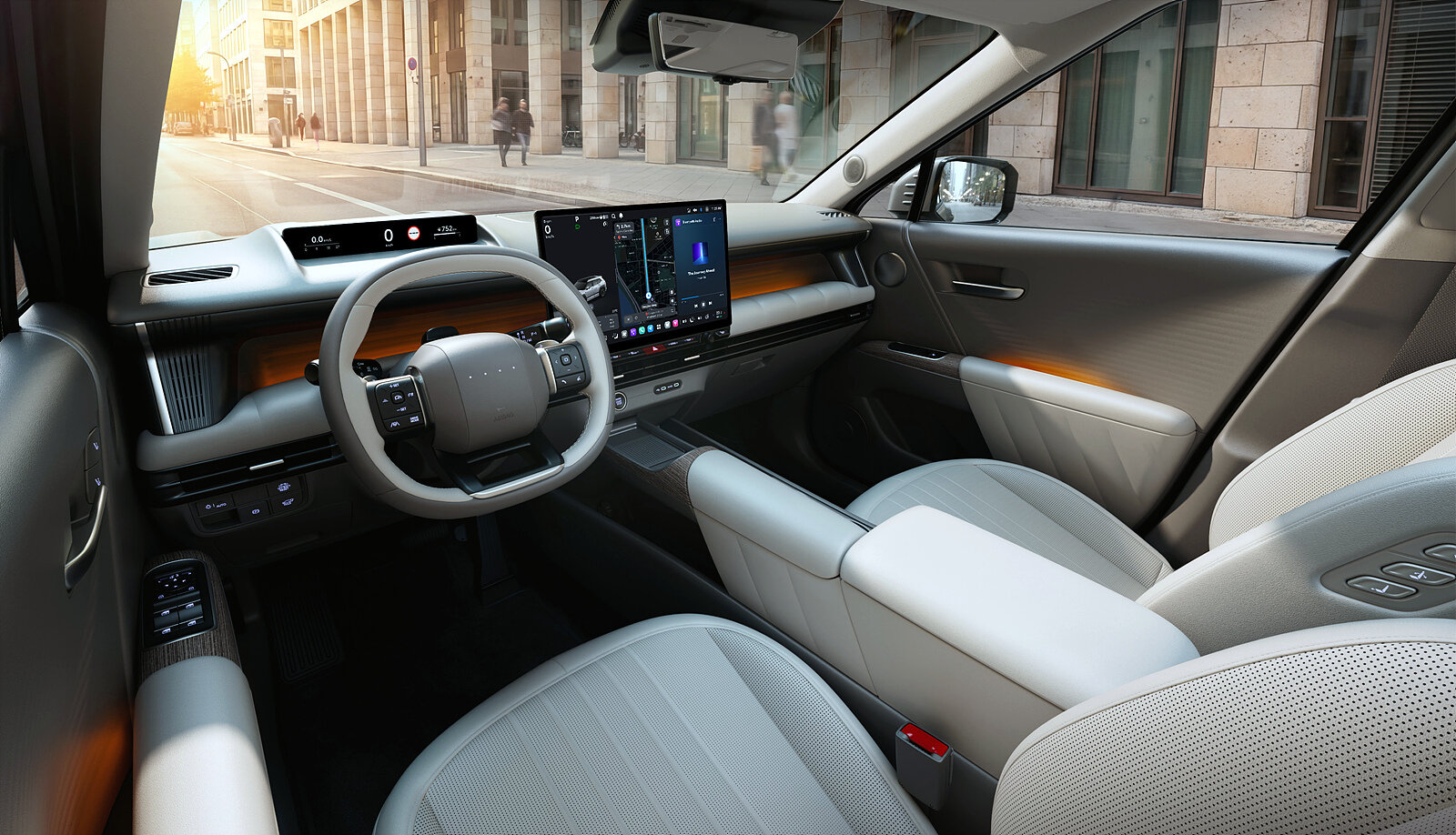
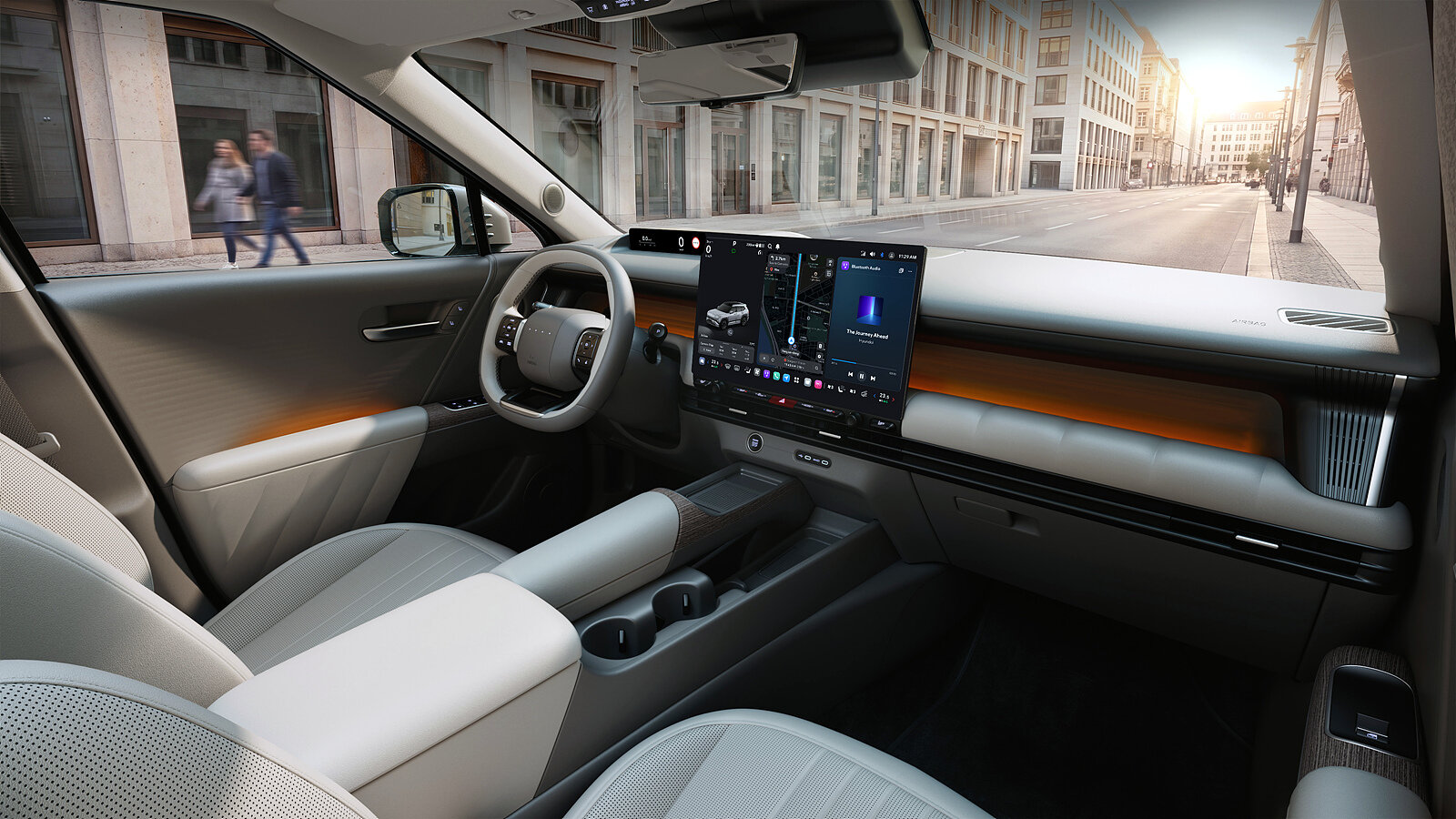
Hyundai has moved away from the heavily integrated dashboard treatment of the previous Tucson in favor of a more horizontal, open layout. The upper and lower portions of the dashboard appear visually separated by a line connecting the outer air vents, creating what Hyundai describes as a floating effect.
A large center display dominates the middle of the dashboard, while a slim driver display sits ahead of a new double-D-cut steering wheel. Hyundai says the arrangement is intended to reduce driver distraction while keeping frequently used information easy to see.
There are some clever everyday details, too.
A hidden tray is integrated into the palm-rest area, and Hyundai has added what it calls “Luggage AddGear” to improve cargo-area versatility. There’s even a card holder beside the driver’s left air vent—an unusually specific feature, but potentially a useful one for parking cards, access cards, or similar items.
More significant is the dual wireless charging setup, which allows two smartphones to charge simultaneously.
Hyundai will offer eight exterior colors, including five new choices: Serenity White Pearl, Driftwood Gray Matte, Driftwood Gray Metallic, Red Rock Orange Matte, and Goyo Copper Pearl.
Four interior themes will be available. In addition to the familiar all-black cabin, buyers can choose Mud Gray/Dove Gray, Black/Sand Beige, or a Black/Inlay Soil Brown package.
XRT Turns Up the Off-Road Attitude
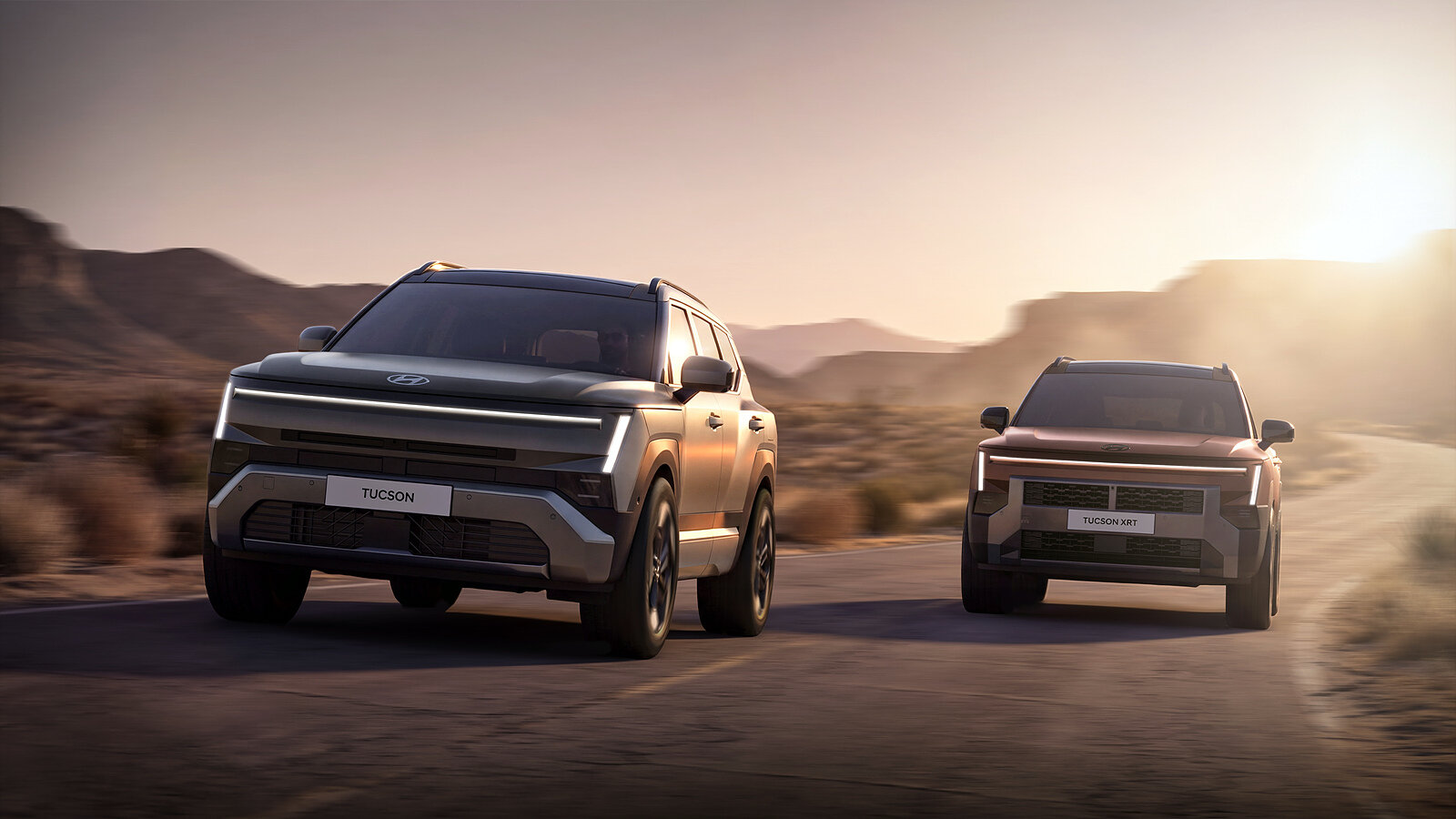
Hyundai is also expanding the Tucson’s rugged side with a dedicated XRT model.
The XRT receives a much wider rectangular grille and a more substantial front skid plate, immediately separating it from the standard Tucson. Black wheel-arch cladding wraps around the lower body and incorporates a pattern inspired by forged carbon, while black window trim and XRT-specific wheels add to the darker appearance.
At the rear, Hyundai fits an XRT-specific bumper and skid plate along with dedicated badging.
The changes continue inside, where the XRT gets unique patterned seats and dark-metal trim. First- and second-row floor-protection mats are standard, while a touch-operated LED lamp in the tailgate is intended to make loading gear easier during outdoor activities.
For now, however, Hyundai is emphasizing appearance and utility rather than making claims about dramatically increased off-road capability. Details such as drivetrain hardware, suspension changes, tires, and ground clearance have yet to be announced.
The New Tucson Is Making a Bigger Play
The outgoing Tucson already sits on the larger side of the compact SUV spectrum, but the fifth-generation model pushes that formula further. A 109.6-inch wheelbase and 185.0-inch overall length move it closer to territory that would once have been associated with midsize crossovers.
That’s no accident. Compact SUVs increasingly have to serve as primary family vehicles, and Hyundai appears to have prioritized rear-seat space, easier access, and everyday storage rather than simply chasing a more dramatic exterior.
The styling is also a notable change in direction. Where the fourth-generation Tucson became known for its intricate “parametric” surfacing and hidden lighting elements, the new model looks more upright, substantial, and conventionally SUV-like—without abandoning Hyundai’s increasingly recognizable lighting signatures.
There is still one major piece of the puzzle missing: what’s under the hood.
Hyundai has yet to disclose the new Tucson’s engines, hybrid systems, fuel economy, pricing, or detailed market specifications. Those numbers will ultimately determine how significant this redesign really is.
But based on the first images and dimensions, one thing is already clear: Hyundai didn’t simply give the Tucson a new face. It made the entire SUV bigger, tougher, and more family-focused.