Mercedes-Benz has thoroughly reworked its flagship SUV, and the result is something that blurs the line between a luxury vehicle and a living room that happens to have wheels.
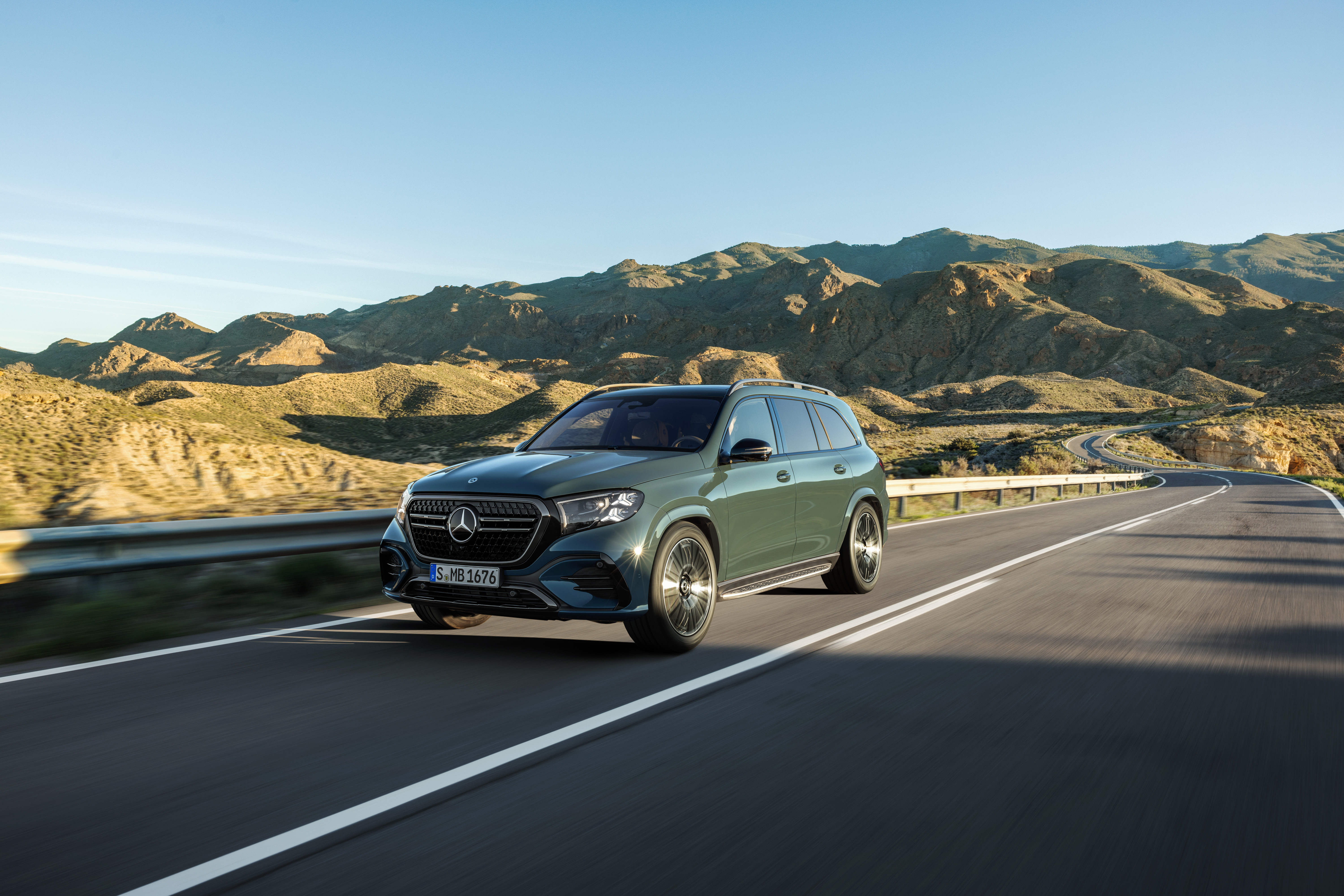


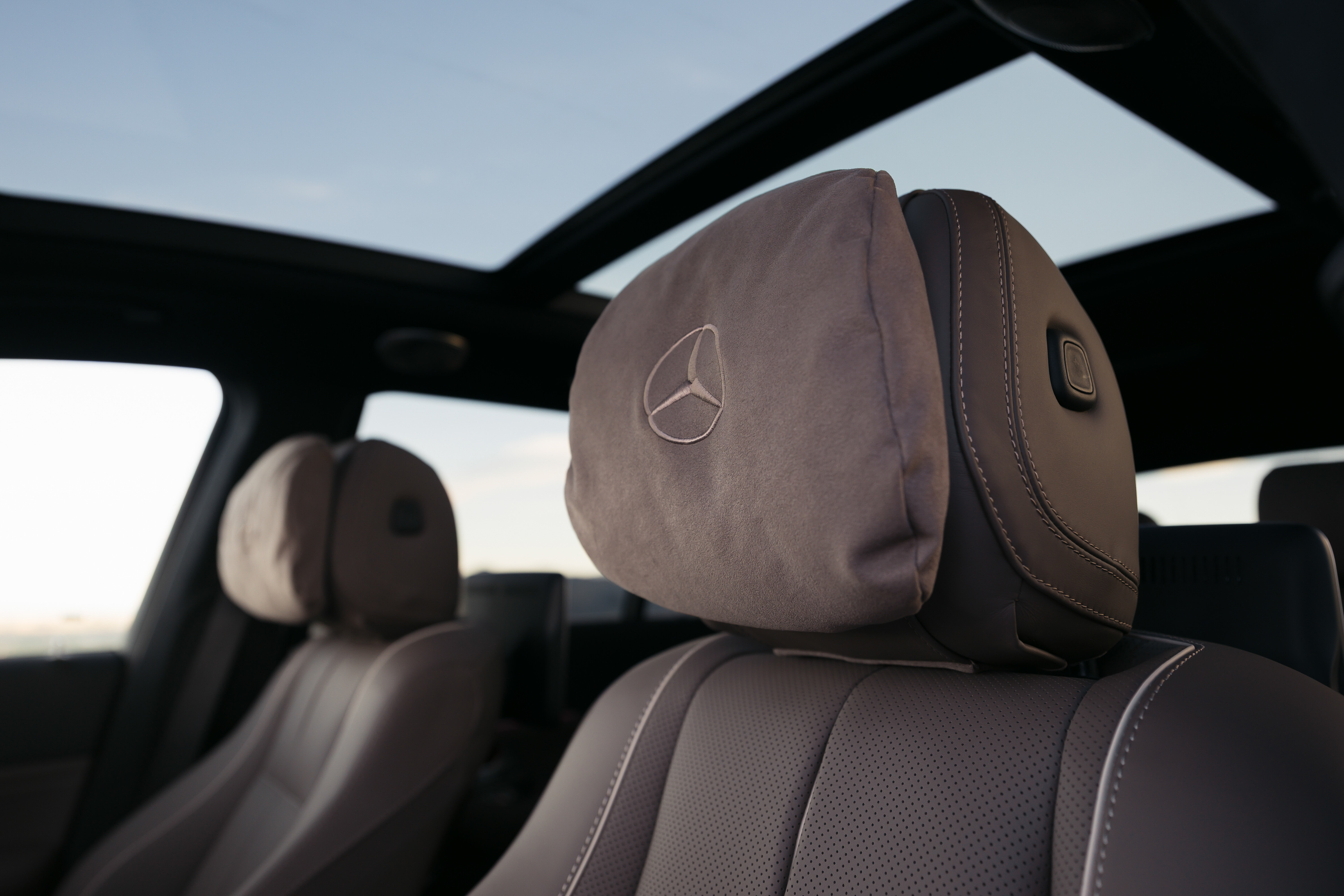
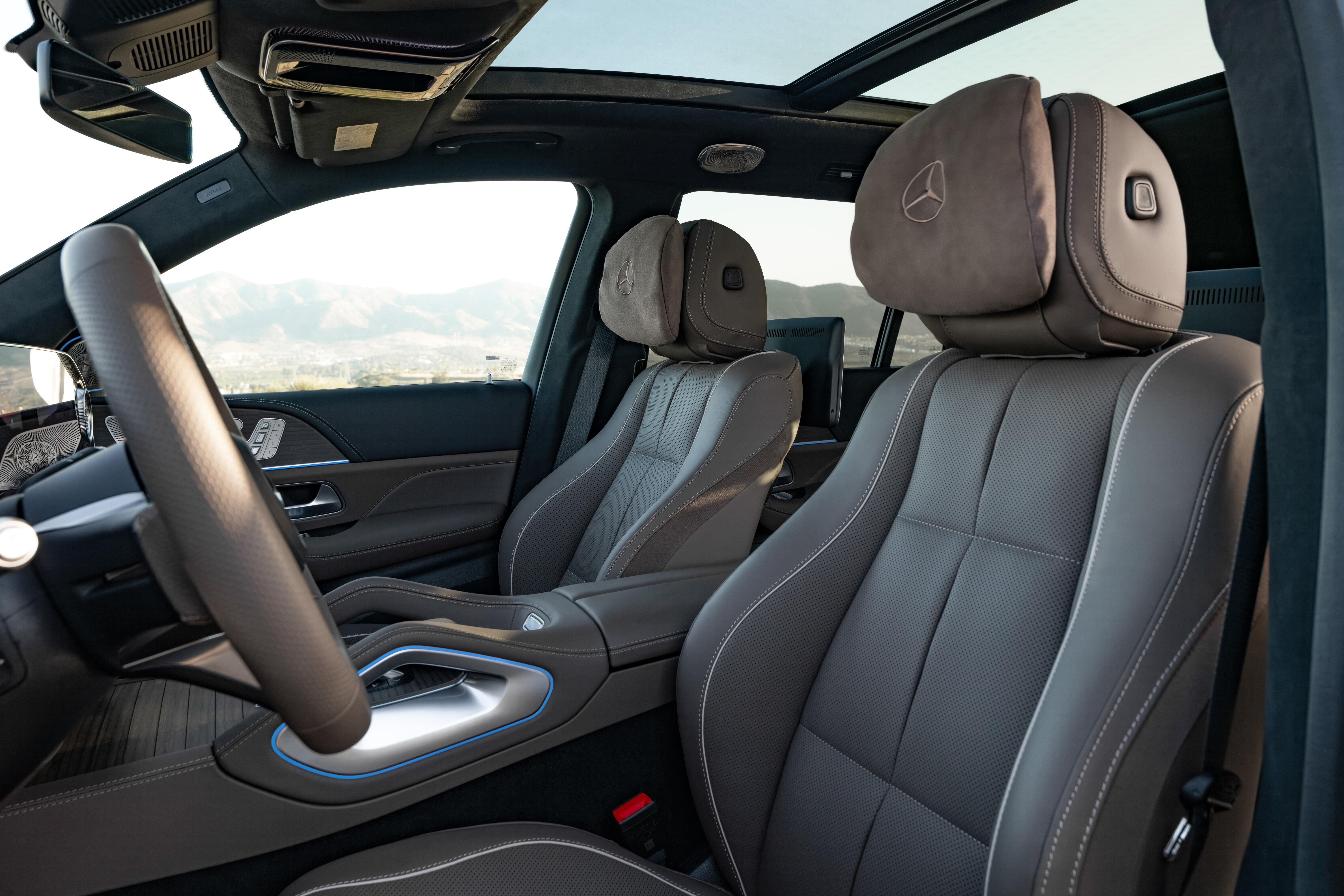
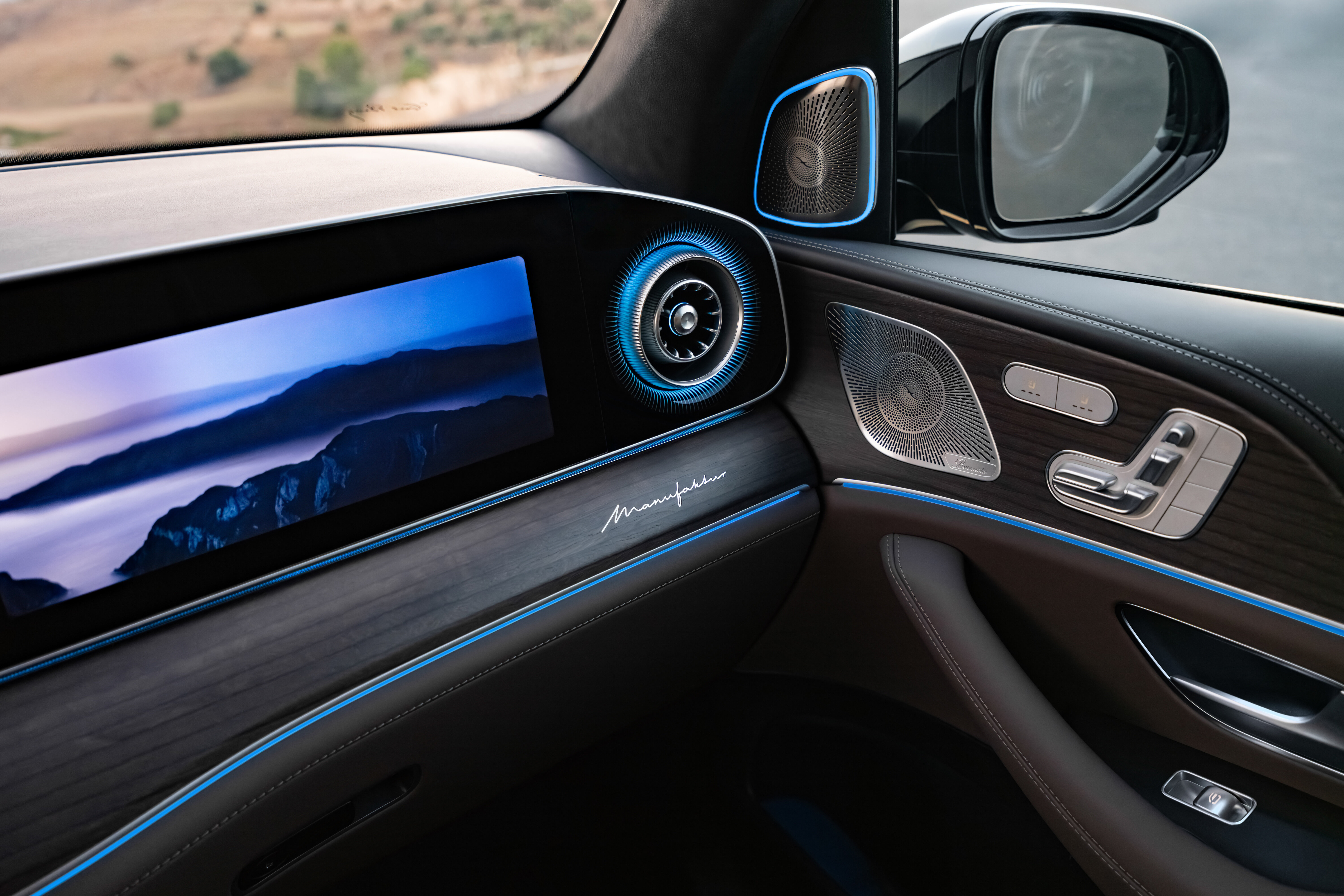
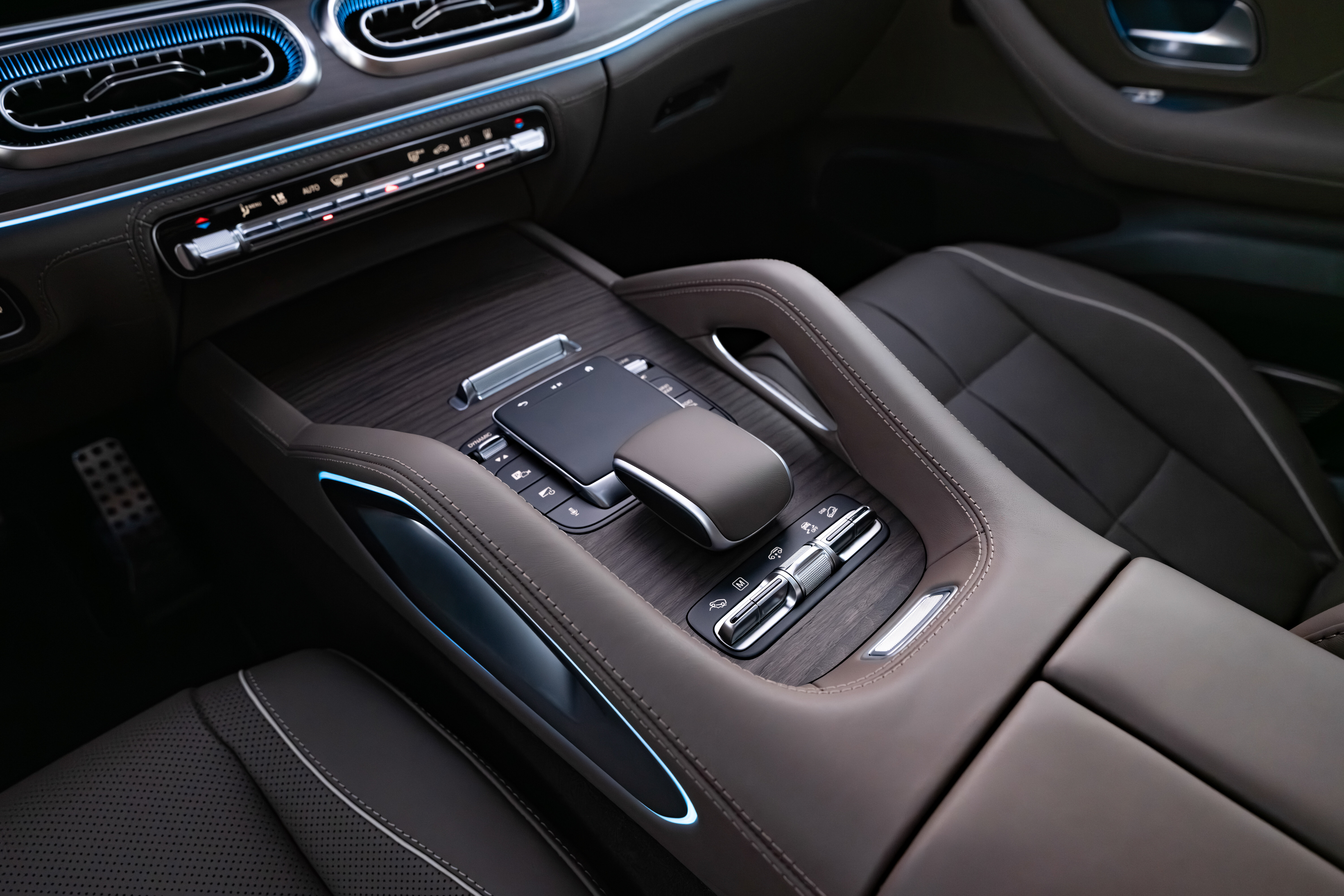
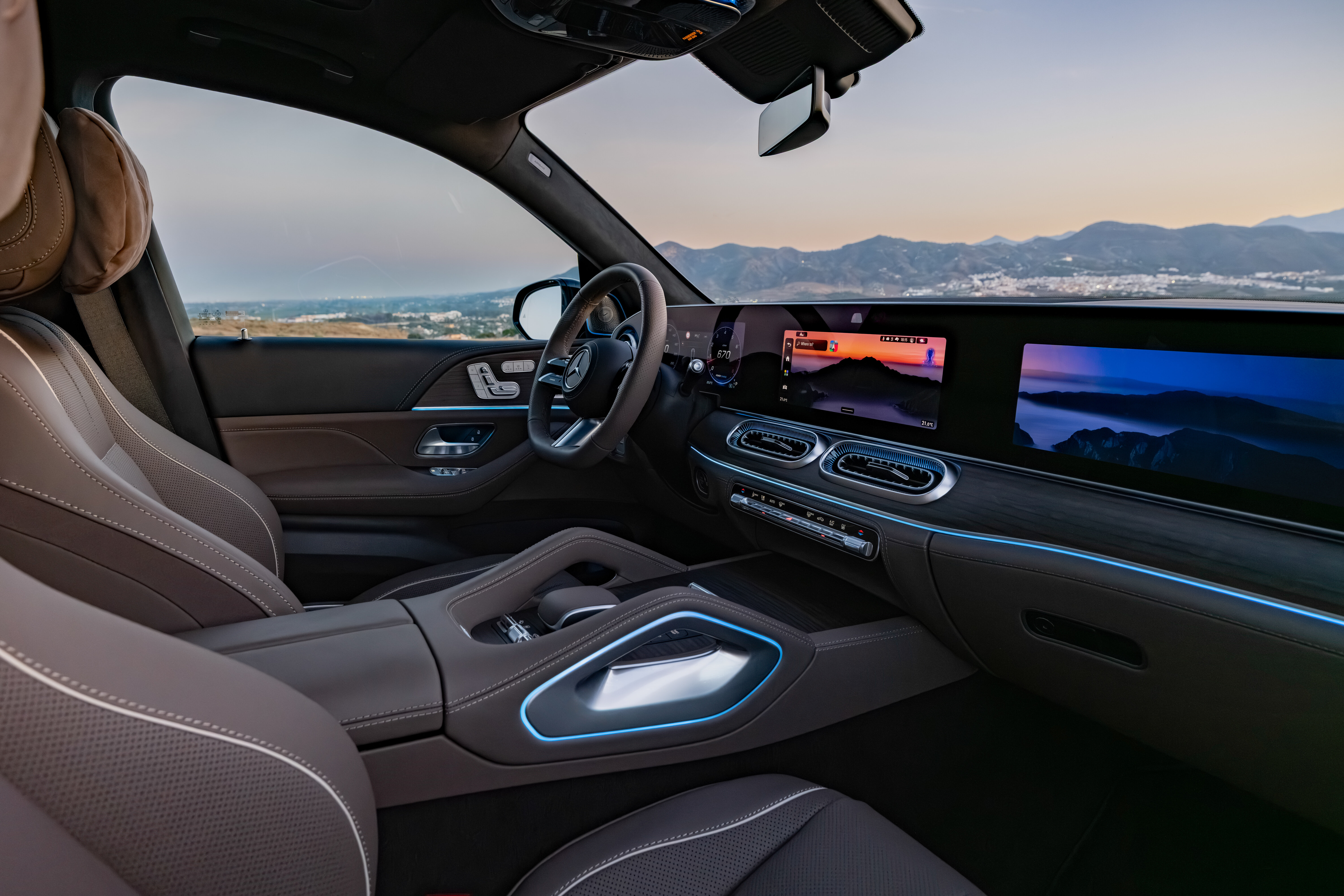
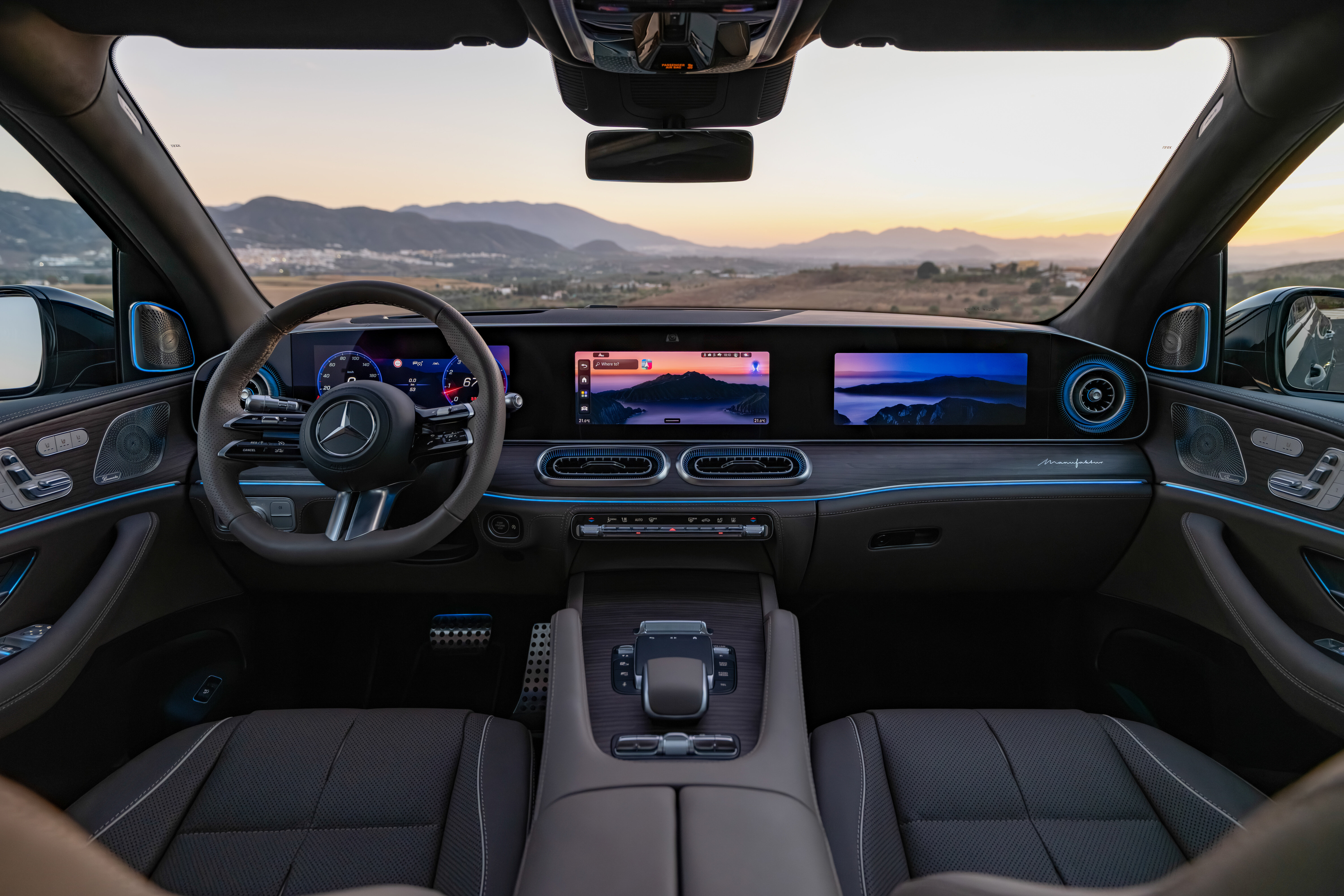

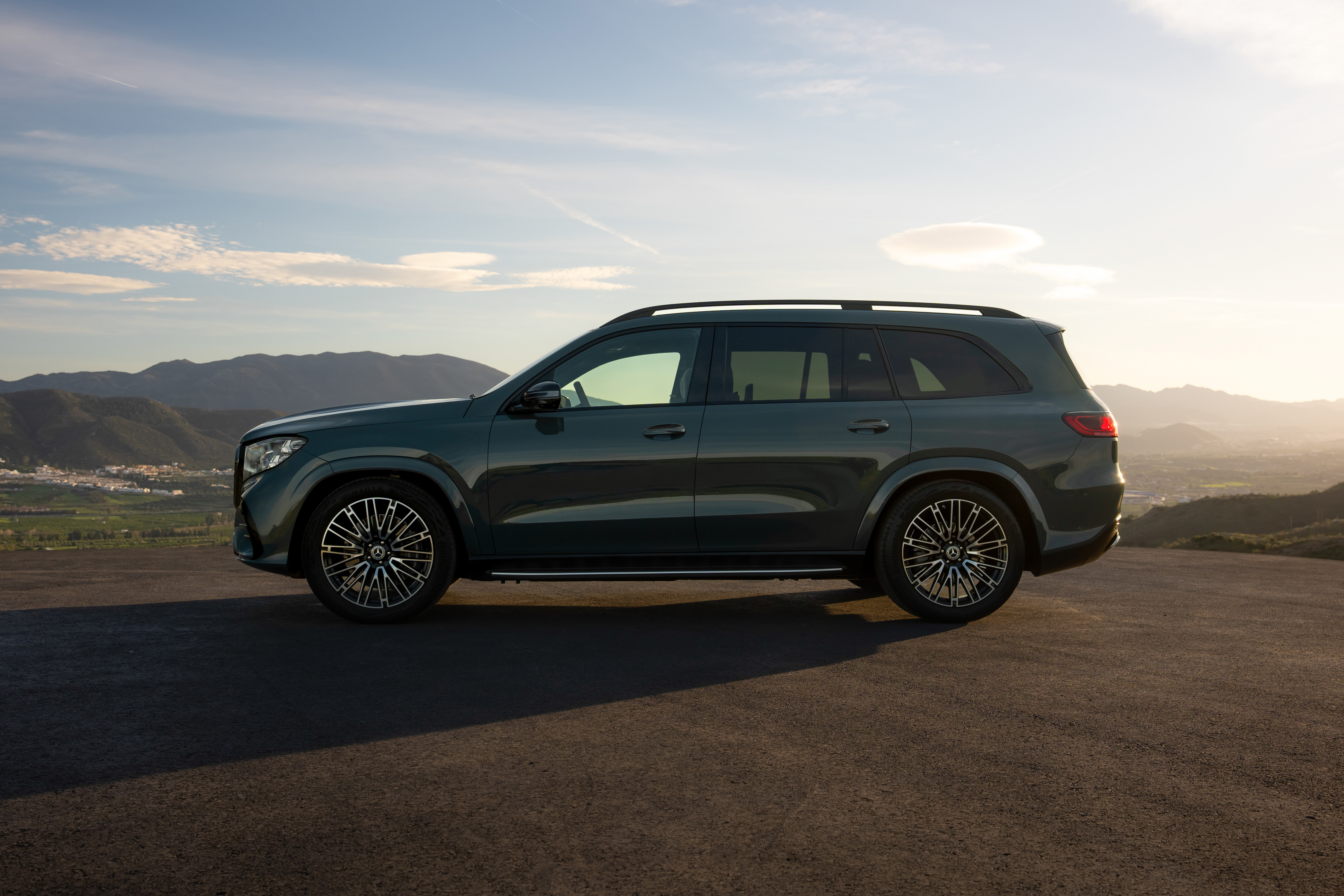

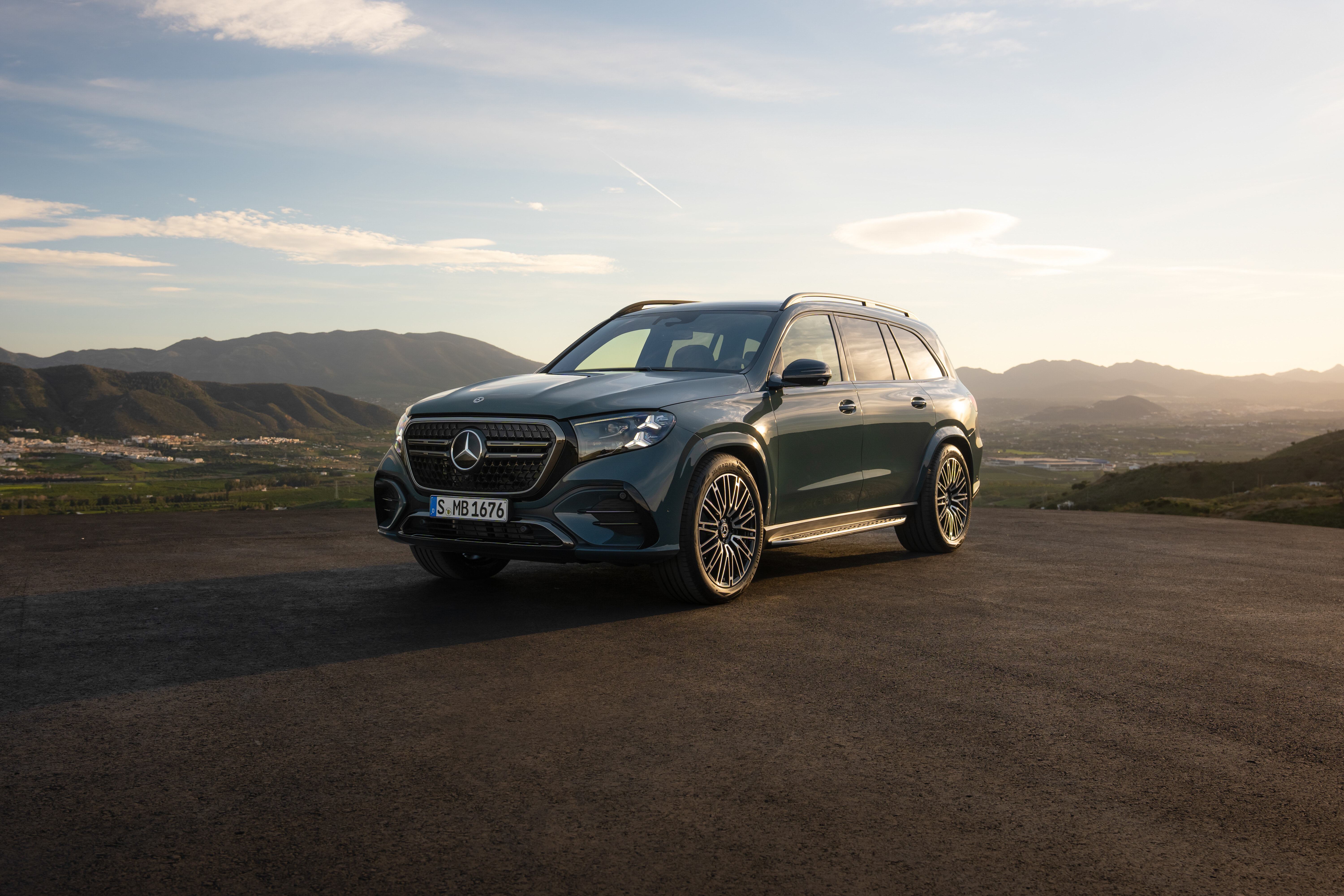


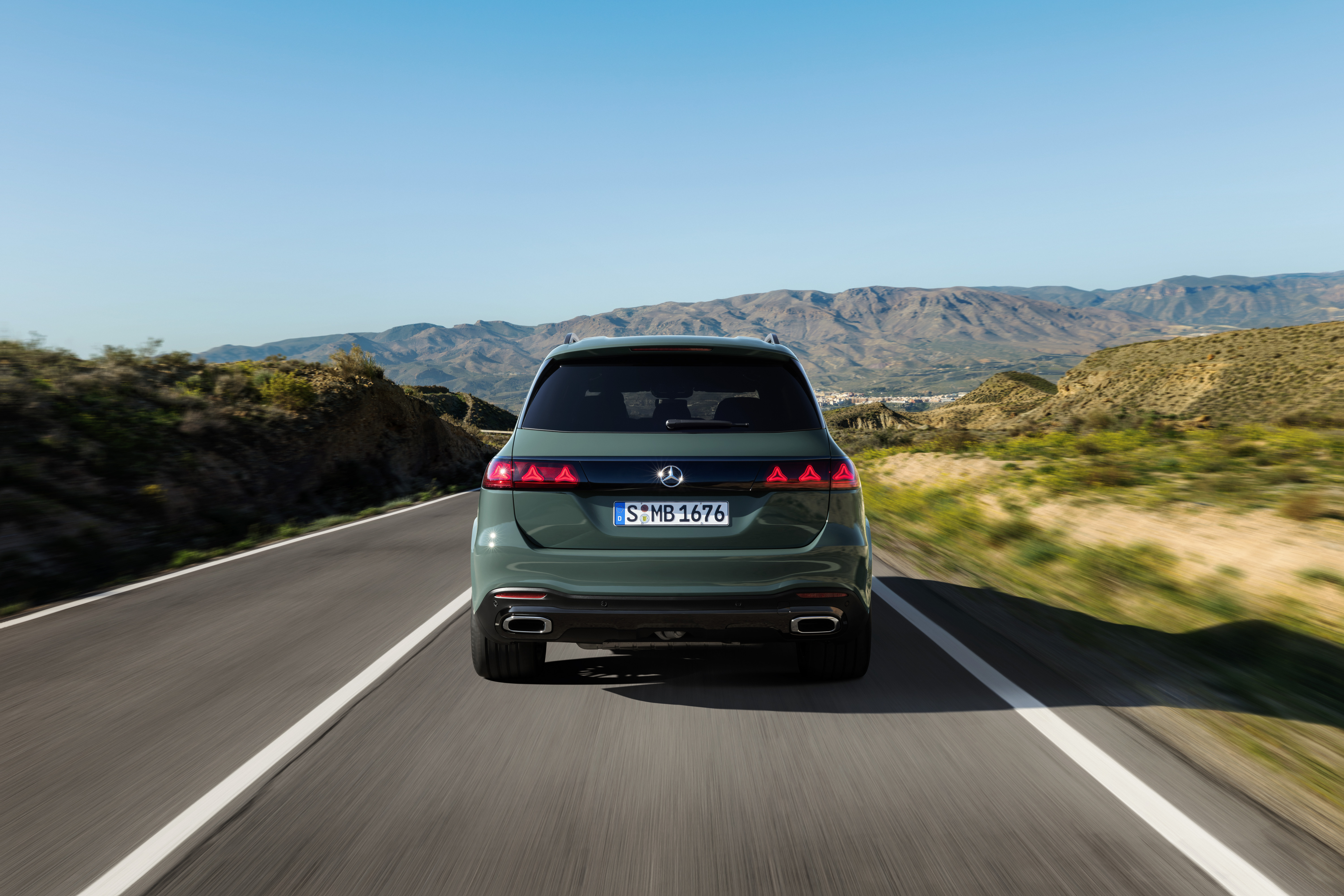

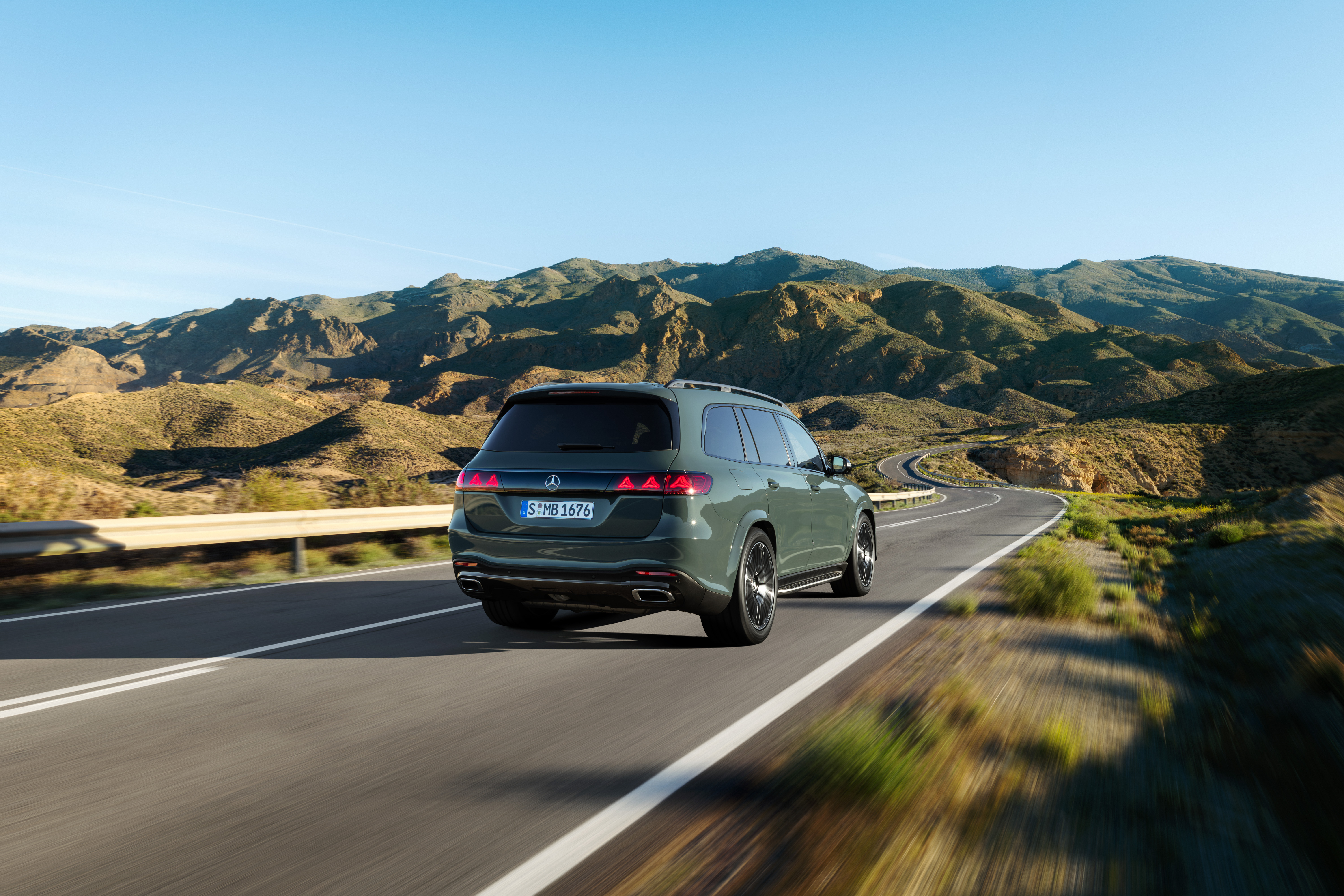
There’s a moment, right after you close the door of the new GLS, when the outside world simply ceases to exist. The thud of the door seal, the hush that follows, the soft ambient glow washing over three seamless displays — it all conspires to tell you one thing: you’re home. That’s not marketing copy. That’s an engineering objective, and with the 2026 GLS, Mercedes-Benz has chased it harder than ever.
Bigger Star, Bigger Presence
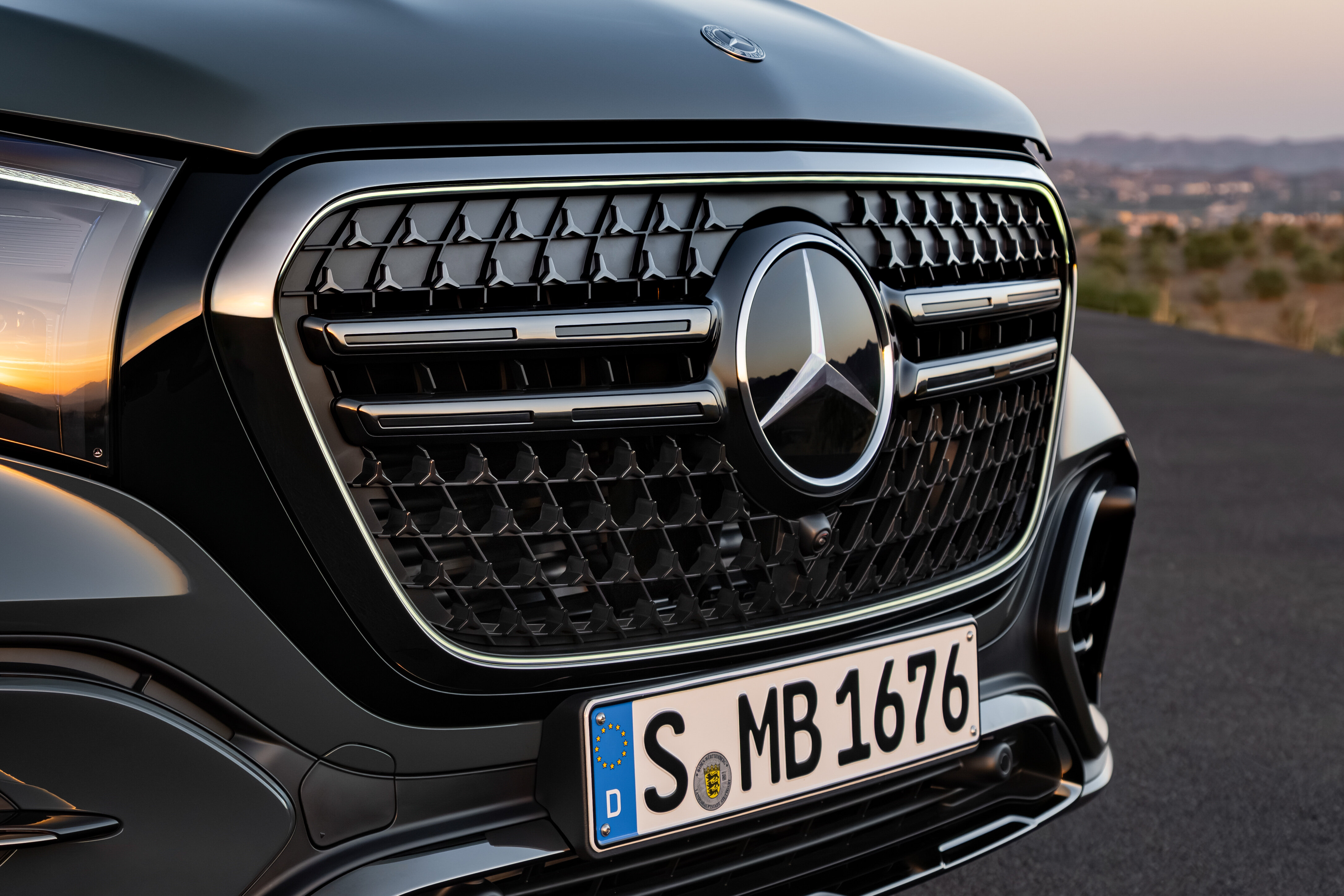
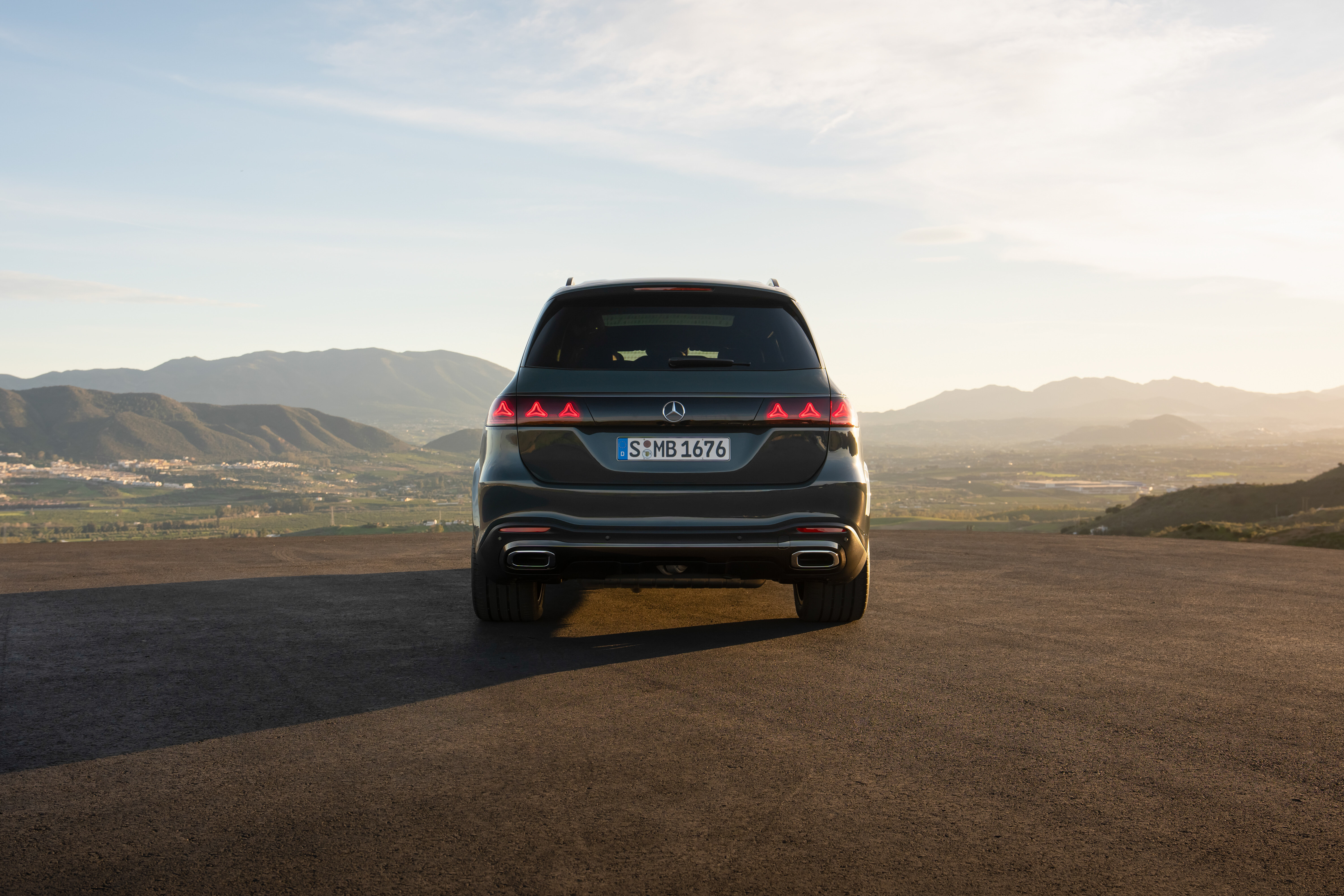
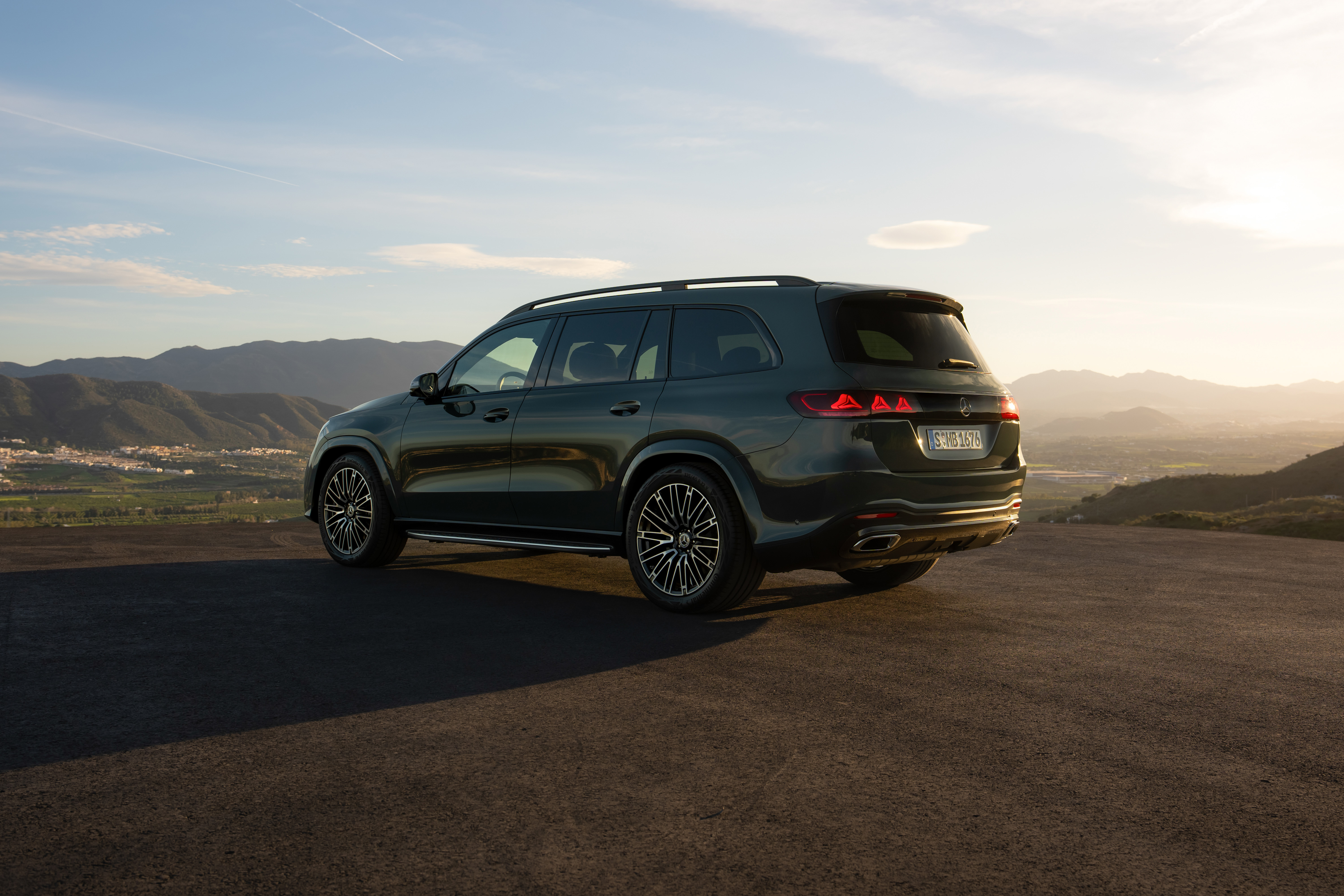
The first thing you’ll notice is the face. Mercedes has fitted the GLS with an upright hood star — the same proud emblem that’s long defined the S-Class sedan — and the effect is immediately regal. The enlarged grille frames it all with a distinctive chrome surround, three horizontal chrome fins, and contour lighting that makes the SUV unmistakable even at a distance. In the U.S., that hood star illuminates while you’re driving. Subtle theater, executed beautifully.
New paint options include Dark Petrol flat and the rich MANUFAKTUR Patagonia Red Metallic, while fresh 21- and 22-inch wheel designs round out a visual package that feels genuinely evolved rather than just refreshed.
The Powertrains: More Pull, Less Noise
Mercedes has taken the opportunity to overhaul every engine in the lineup, and every one of them is better for it.
At the top sits the GLS 580 4MATIC, now producing 395 kW (up from 380) and 750 Nm of torque from its V8 — available across a broad 2,500–4,500 rpm range. The V8 has been re-engineered around a flat-plane crankshaft (a Formula 1-inspired configuration), with revised injection, an updated turbocharger, and two Lanchester balance shafts for extraordinary smoothness. In partial load situations — the ones you actually live in every day — it’s noticeably more responsive than its predecessor.
The GLS 450 4MATIC six-cylinder gains a more powerful electric auxiliary compressor and revised cylinder head, pushing torque up 12 percent to 560 Nm. The result is an engine that fills in where naturally aspirated motors would have you waiting.
Both diesel variants — the GLS 350d and GLS 450d — now feature an electrically heated catalyst that brings exhaust temps up to operating range faster, improving real-world emissions and cold-start refinement. Aluminum engine blocks trim front axle weight, and NANOSLIDE cylinder liners — the same tech Mercedes uses in F1 — reduce internal friction measurably.
All four engines pair with a 48-volt integrated starter generator. It enables coasting, recuperation, and boost functions while making the stop-start system almost imperceptible in daily use.
The Suspension: A Computer That Predicts the Road
The optional E-ACTIVE BODY CONTROL remains one of the most sophisticated active suspension systems available on any production vehicle, full stop. Five multi-core processors and more than 20 sensors analyze the driving situation 1,000 times per second — continuously adjusting spring and damper forces at each individual wheel to counteract roll, pitch, and dive simultaneously. The 48-volt system can even recuperate energy on rough roads, which feels almost offensively clever.
But here’s what’s genuinely new: cloud-based damper regulation via AIRMATIC. Using Car-to-X communication, Mercedes-equipped vehicles ahead of you anonymously transmit road surface data to the cloud in real time. When your GLS approaches a speed bump, the suspension has already adjusted before you hit it. The comfort gain is most pronounced for rear passengers — and if you’ve ever taken a sleeping child over a Los Angeles speed bump, you’ll understand exactly why this matters.
The Brains: MB.OS and the Superscreen
The interior is where the GLS makes its most dramatic statement. The standard MBUX Superscreen stretches across the cockpit as a single glass panel housing three 12.3-inch displays, and it’s as impressive in person as it sounds on paper. The front passenger’s display streams Disney+, YouTube, and other services while the vehicle is in motion — a camera system monitors driver attention and automatically dims the screen if distraction is detected.
Driving all of it is MB.OS, Mercedes-Benz’s proprietary operating system. Think of it as a supercomputer running every vehicle function — from driver assistance to climate control to entertainment — while staying perpetually current through over-the-air updates. The MBUX Virtual Assistant, now powered in part by Microsoft AI, handles complex, multi-part dialogues and presents itself through your choice of three avatar styles: the classic blue orb, a futuristic tech cloud, and a surprisingly expressive human-like face.
Navigation runs on Google Maps with Mercedes-Benz’s own interface layered on top. MBUX Augmented Reality overlays directions onto live camera feeds of the road ahead, while a new Augmented Navigation Head-Up Display projects lane guidance and points of interest seemingly onto the road itself. First-time feature for the GLS, and genuinely useful in dense urban environments.
The Rear Cabin: First Class, Full Stop
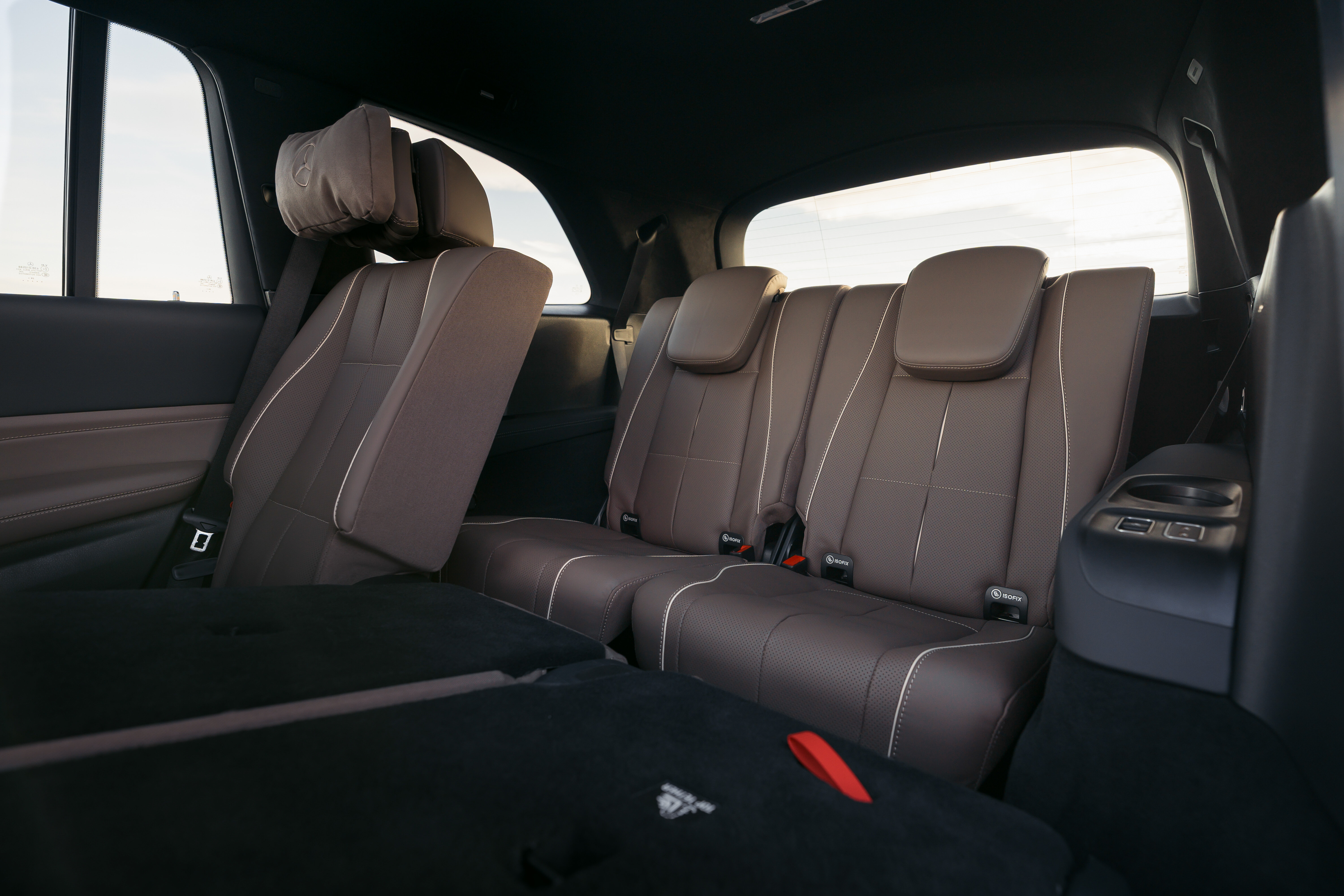
Seven seats come standard, all three rows fully electrically adjustable. Third-row passengers have heated seats, USB ports, and enough headroom to accommodate occupants up to 6’4" — a claim most three-row SUVs cannot honestly make.
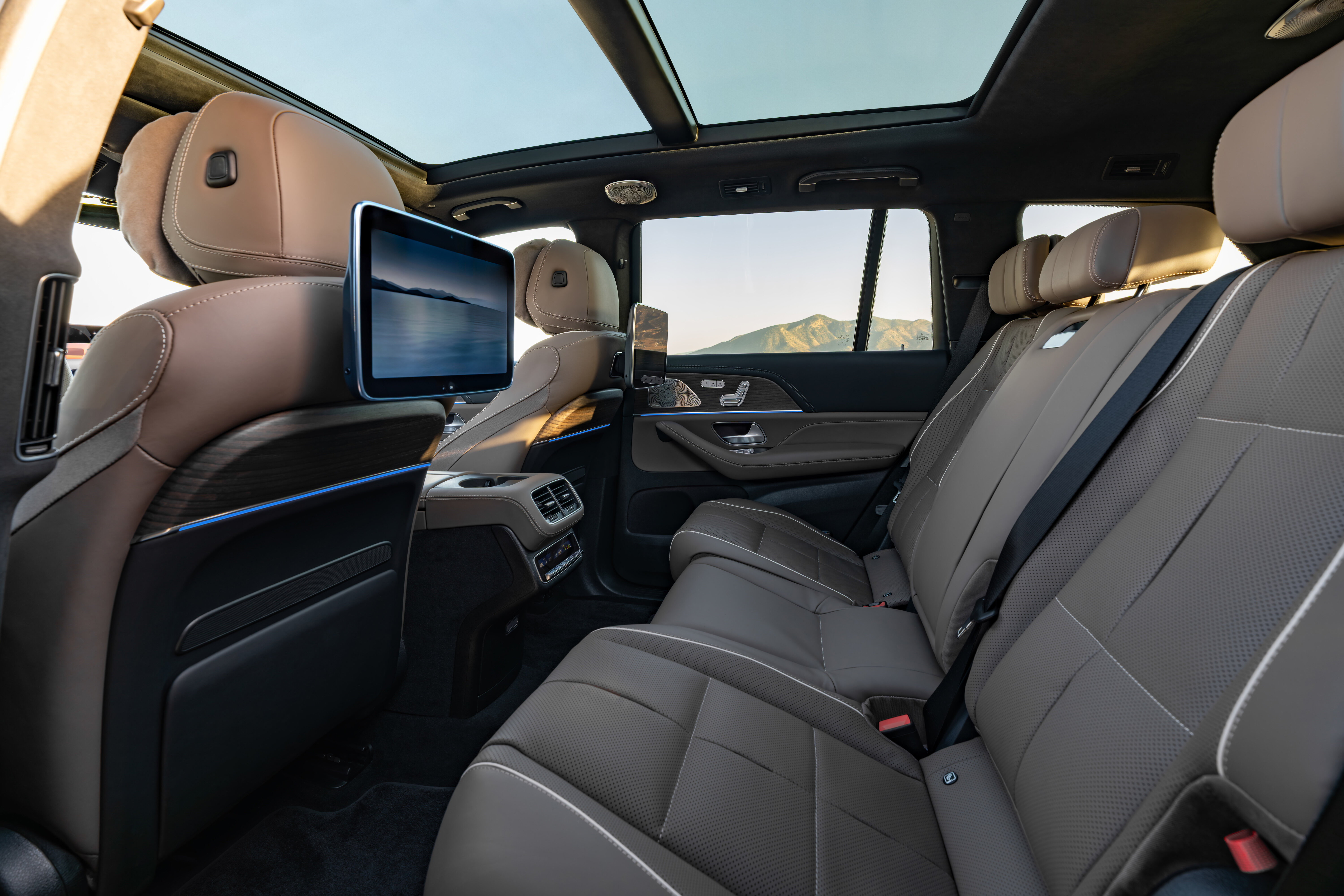
The optional Rear Comfort Package Plus equips second-row passengers with multi-contour massage seats, removable MBUX remote controls (replacing the previous tablet system), electric window blinds, wireless charging, and a dedicated climate zone. Rear passengers can also push the front passenger seat forward electrically — a quality-of-life feature that lands harder than you’d expect once you’ve used it.
The new vibration massage function — four motors embedded in the seat cushion — delivers what Mercedes describes as a deep-tissue effect. In a world where the back seat of a car can give you a spa treatment, the competitive bar has moved considerably.
DIGITAL LIGHT: More Lumens, Less Weight
The new GLS ships with Mercedes’ latest DIGITAL LIGHT micro-LED system as standard. The high-resolution light field is approximately 40 percent larger than the outgoing unit, while the module itself weighs 25 percent less and consumes up to 50 percent less energy. The dynamic high beam reaches 600 meters — roughly six football fields — and can now swivel to track the road’s curvature. All software is developed in-house and integrated directly into MB.OS.
The Verdict
The 2026 GLS is what happens when a company with 140 years of engineering heritage decides that being the best large luxury SUV isn’t enough — it has to be the most technologically sophisticated, the most comfortable, and the most intelligent vehicle in its class. The cloud-connected suspension is a genuine innovation. The powertrains are more refined and more capable than before. And the interior, from the panoramic roof to the rear massage seats to the predictive damper control, delivers on the “Welcome home” promise in a way that feels less like a slogan and more like a design philosophy.
In a segment full of worthy competitors, the GLS remains the standard by which the others are measured. Mercedes hasn’t just refreshed it — they’ve reset the bar.