1,050 horsepower. One motor per wheel. A sound system that amplifies the axles themselves. Ferrari’s first EV isn’t a concession. It’s a statement.
Ferrari could have built a safe electric car. Badge an existing platform, tune the driving modes, hire a sound designer to fake an engine note, and call it progress. Every other legacy brand has taken some version of that path.
Ferrari did not.
The Luce — unveiled in Rome on the 79th anniversary of the marque’s first race victory — is a ground-up rethinking of what a Ferrari can be when freed from the constraints of an internal combustion engine. Four independent motors, one per wheel. A 122 kWh battery built and validated in Maranello. A sound philosophy rooted in amplifying actual mechanical vibration rather than synthesizing theater. More than 60 new patents. Five years of aerodynamic development. And a curb weight of 2,260 kg that Ferrari’s engineers are not embarrassed about, because they’ve done the geometry work to make it feel considerably lighter in corners.
This is not the electric Ferrari. It’s a new kind of Ferrari entirely.
Four Motors, Total Control
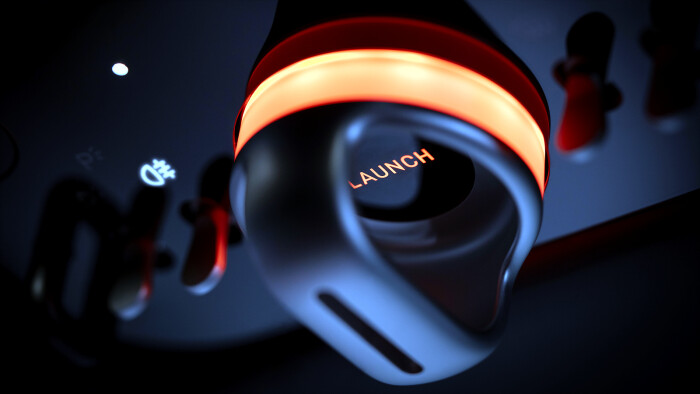
The powertrain architecture is the core of everything. Ferrari fitted one permanent magnet synchronous motor to each wheel — two front, two rear — all derived from the F80 and informed by decades of Formula 1 and WEC power unit development. The front axle produces 210 kW at the wheels. The rear delivers 620 kW. Combined system output in Launch Control: 772 kW (1,050 hp). Peak torque at the wheels: 11,500 Nm.
Those wheel torque numbers sound abstract until you understand what they enable. With independent actuators at each corner, Ferrari’s torque vectoring — which they call FLOW (Ferrari Lateral Optimisation Wheeltorque) — can manage individual wheel torque during both corner entry and exit on all four corners simultaneously. On entry, negative torque distribution stabilizes the car and optimizes energy recovery. On exit, the rear differential maximizes traction while the fronts control understeer and oversteer response. This is torque vectoring operating at a level of granularity that mechanical differentials physically cannot match.
The rear motors spin to 25,500 rpm. The fronts go to 30,000 rpm. Angular acceleration from standstill to maximum speed: under one second. The inverters were co-developed in-house, with the rear unit alone generating up to 600 kW while simultaneously housing a resonant DC/DC converter for the active suspension — eliminating the need for a separate 48V battery at 98% efficiency.
The Battery Is Built Like a Race Component
Ferrari didn’t buy a battery. They designed one, co-developed the cells with SK On, validated everything in Maranello, and built the pack as a structural element of the car’s chassis — contributing 20% to bending rigidity and 40% to torsional rigidity.
The numbers: 122 kWh gross, 210 pouch cells in series, 800-volt architecture, peak discharge at 830 kW, cell energy density at 305 Wh/kg. The cells are 159 Ah, with a graphite anode, high-nickel NMC cathode, and a peak discharge current capability of 1,200 amps per cell.
Thermal management runs through three cooling plates with multiple internal channels designed for uniform temperature distribution — because cell aging and peak performance both hinge on temperature consistency. The pack integrates 15 modules: 13 in the floor, two beneath the rear seats, with the battery housing forming the structural floor of the car.
Fast charging tops out at 350 kW. Ferrari claims 70 kWh added in 20 minutes. For 400V infrastructure, an onboard DC/DC booster — weighing 8 kg, switching above 1 MHz — steps voltage up to enable up to 150 kW on slower chargers. Range target: 530 km WLTP (still under homologation). These numbers are estimates, not certified figures.
The One-Per-Wheel Chassis Setup
Each wheel on the Ferrari Luce has three actuators: one for traction and regeneration, one for steering angle (rear axle), and one controlling vertical movement via the active suspension. Ferrari is calling this “control of each wheel’s motion in every direction in any dynamic condition.” It’s not marketing copy — it’s a description of a technical architecture that doesn’t exist in any other production car.
The center of gravity sits 95mm lower than the Purosangue. Yaw moment of inertia is 15% lower. Ferrari claims the handling characteristics during direction changes are equivalent to a car 400 kg lighter — which, given the Luce’s 2,260 kg curb weight, means it’s targeting dynamics closer to a 1,860 kg car. We’ll need track time to verify that claim, but the physics of the architecture support it.
The front suspension uses a semi-virtual geometry with a split lower arm that places the virtual steering axis near the wheel center — reducing sensitivity to surface irregularities and torque reactions under braking. Steering ratio is 13% quicker than previous Ferrari applications. The active dampers evolved from the Purosangue and F80 units, with a new ball-screw design that improves vertical impact absorption and sheds 2 kg per unit. A mass damper tuned to the steering column reduces vibration through the wheel rim on rough surfaces.
Rear-wheel steering is standard. The elastically-mounted rear subframe — the largest hollow single-piece aluminum casting Ferrari has ever produced — is a first for any Maranello road car, and is the primary reason Ferrari is calling the Luce the most comfortable Ferrari ever built.
The e-Manettino, The Manettino, and Torque Shift
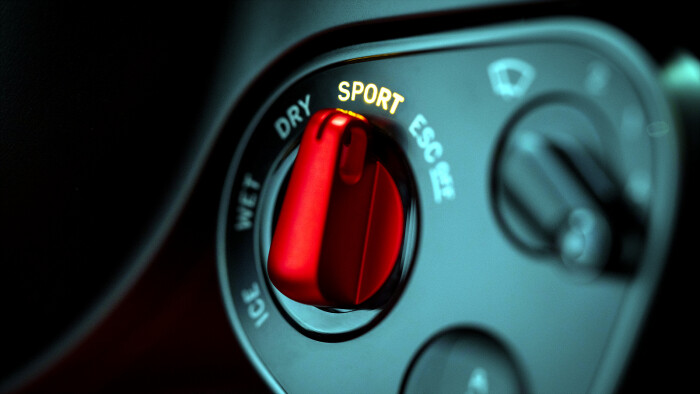
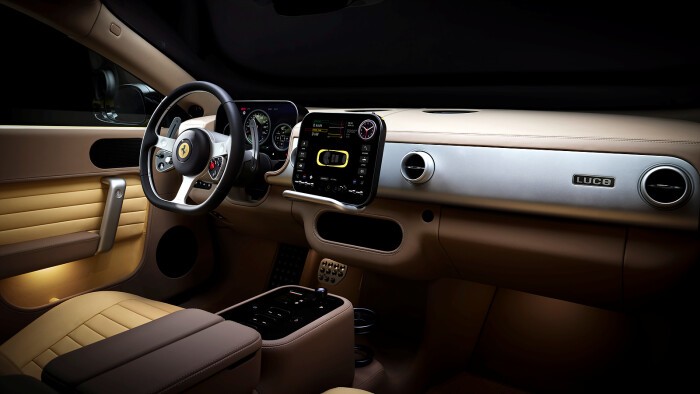
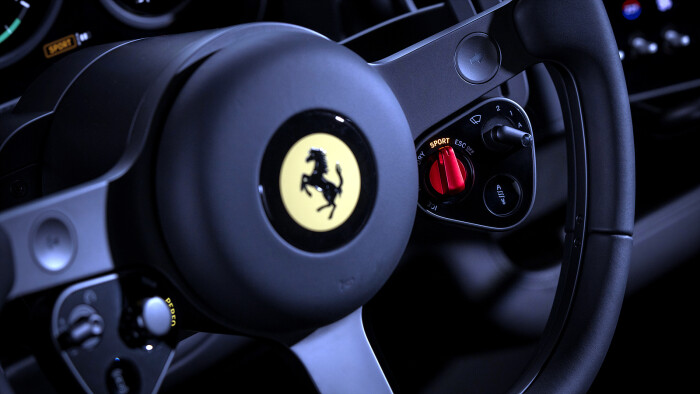
Ferrari kept both control systems on the steering wheel: the iconic five-position Manettino for dynamic settings and a new three-position e-Manettino for power management.
The e-Manettino’s three positions define the car’s character fundamentally. Range mode limits output to 320 kW, prioritizes rear-wheel drive, caps top speed at 260 km/h, and activates an alternating traction logic between the rear wheels to operate at peak efficiency. Tour mode steps up to 460 kW with permanent AWD, still at 260 km/h. Performance mode opens everything: 725 kW, permanent AWD, 310 km/h.
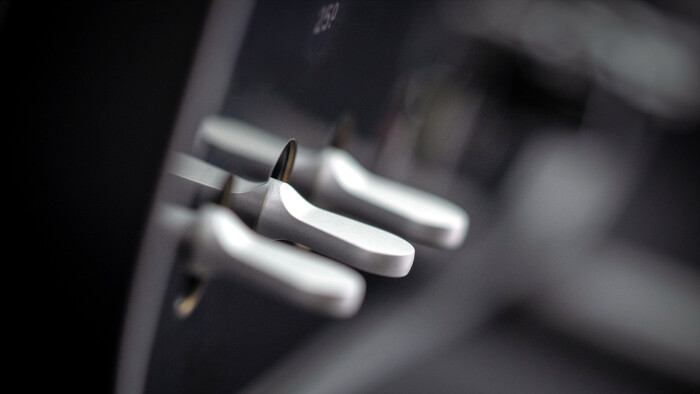
The most interesting new system is Torque Shift Engagement — five power levels on the right paddle, five engine braking levels on the left. It doesn’t simulate gear changes. Instead, it gives the driver a direct, adjustable relationship with torque delivery and deceleration, creating a new interaction language that Ferrari argues is more intuitive than anything an ICE transmission provides. The left paddle increases regeneration intensity. The right paddle increases available torque. The driver manages both continuously while driving, adjusting braking force on corner entry and power delivery on exit.
It’s a different kind of engagement. Whether it replaces the emotional connection of a manual gearbox is a question that will divide people. Ferrari isn’t claiming equivalence. They’re claiming it’s something new.
Sound Without Synthesis
This is where Ferrari made their most philosophically distinct choice.
The Luce does not have a sound generator that plays back recorded or synthesized audio. Instead, a precision accelerometer mounted in the rear axle housing captures the actual vibration generated by the rotating electric motors, gears, and mechanical components — the real structural noise of the drivetrain. That signal is filtered, equalized, and amplified in real time, similar to how an electric guitar pickup works. The result is then emitted through external speakers at the front and rear, distributed proportionally to torque delivery on each axle, and reproduced with high fidelity inside the cabin.
Five years of development. 40,000 km of dedicated acoustic testing. The philosophy: sound only in Performance mode (the “Perfo” e-Manettino position), when it serves the driving experience as genuine feedback. In Range mode, the cabin goes quiet. In Tour mode, Torque Shift is available with sound muted for acoustic comfort.
The audio system supporting this — and the rest of the cabin — runs 21 speakers, 24 channels, 3,000 watts, with a proprietary Ferrari Audio Director software platform that certifies each car’s acoustic quality individually. Five presets: Studio, Concerto, Immersive, Opera, and Electronic.
Design by LoveFrom
The exterior was handed to LoveFrom — the creative collective founded by Jony Ive and Marc Newson — not Ferrari’s in-house design studio. The brief was a clean-sheet direction, with LoveFrom given philosophical autonomy before Ferrari’s studio refined for production constraints.
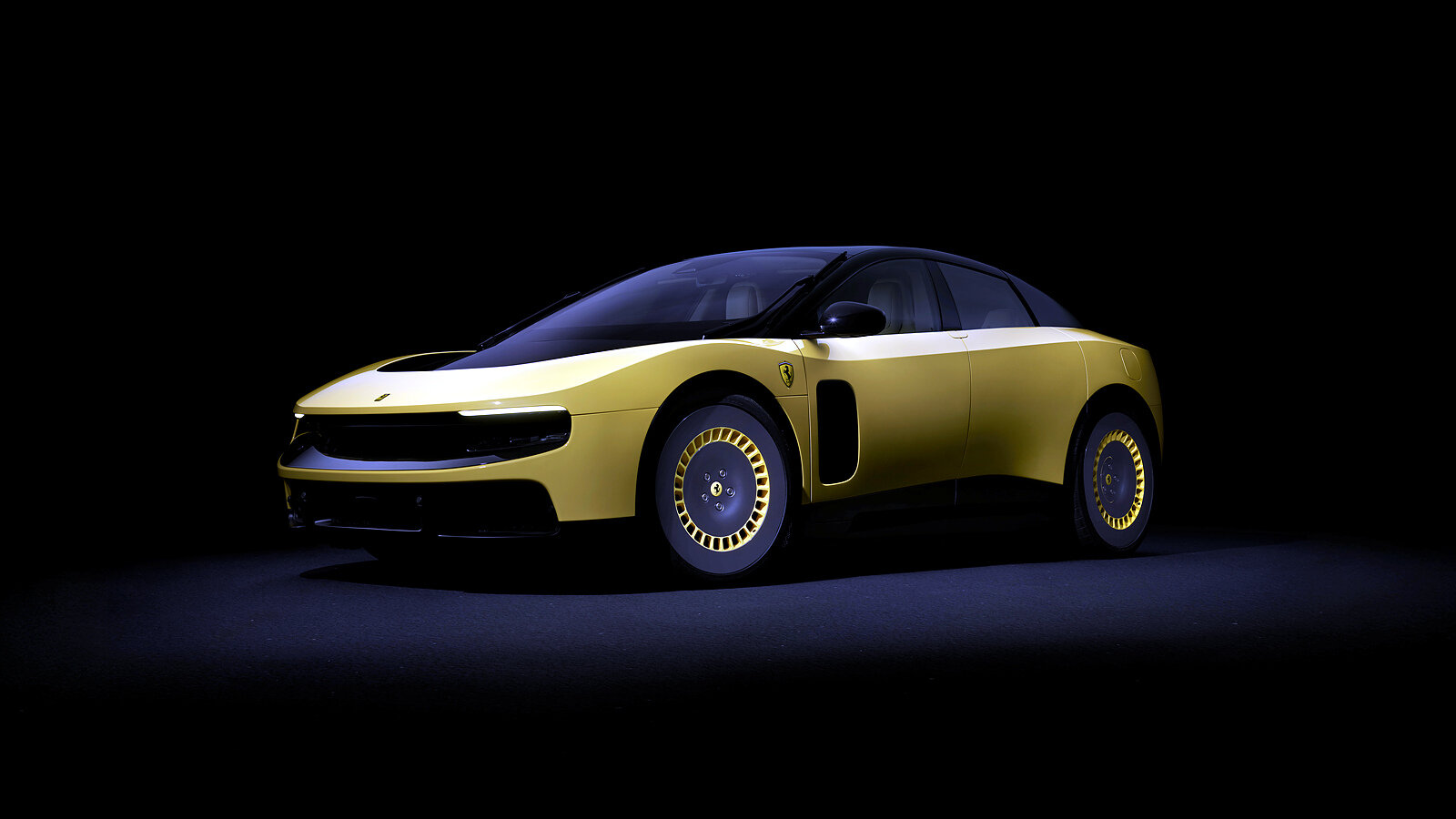
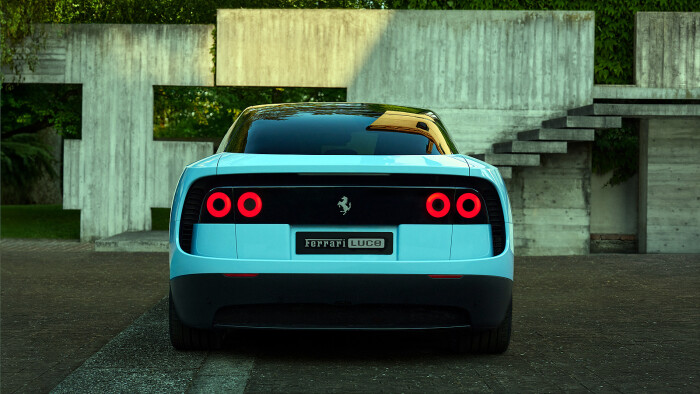
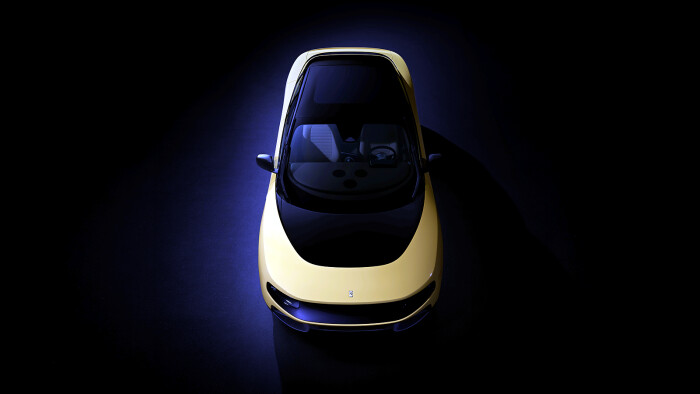
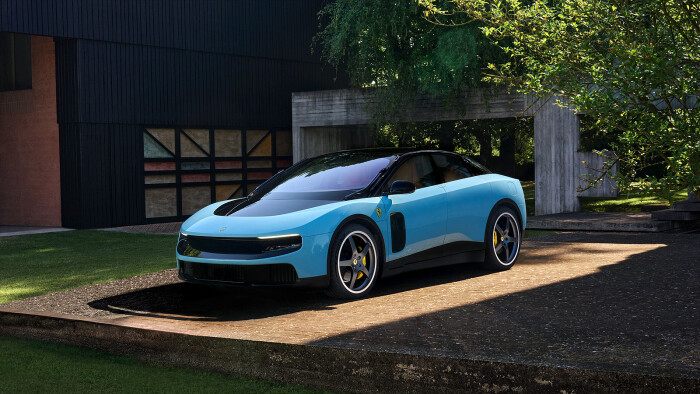
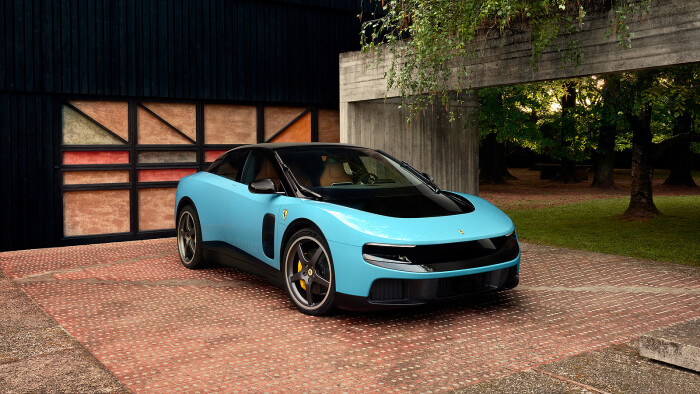
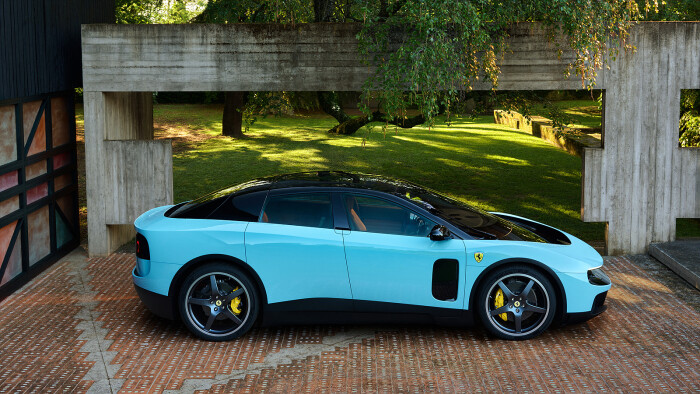
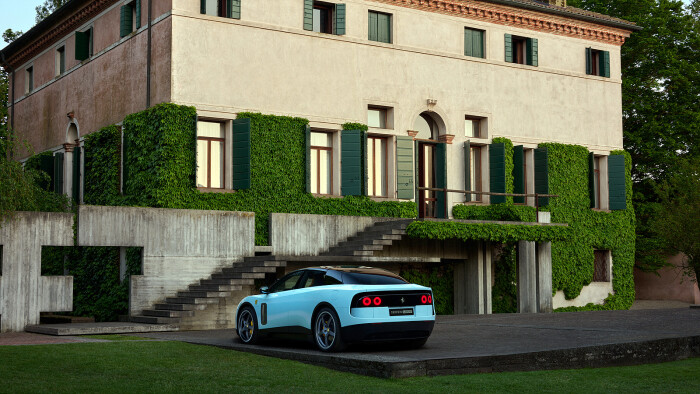
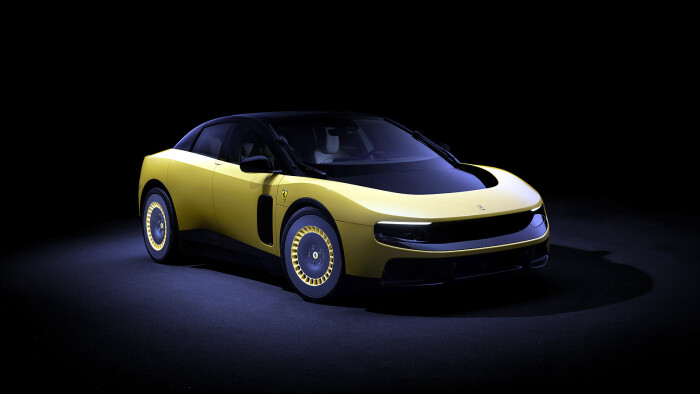
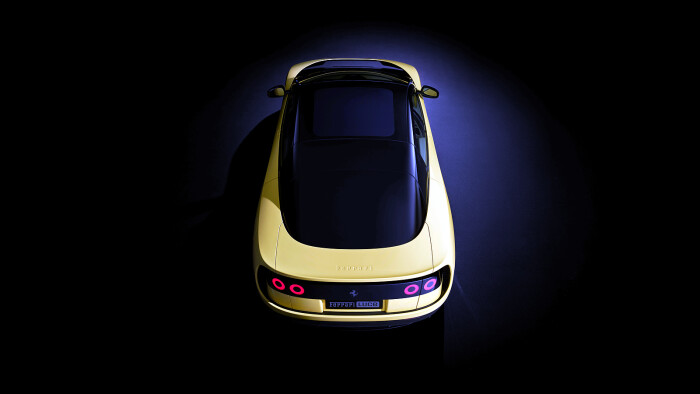
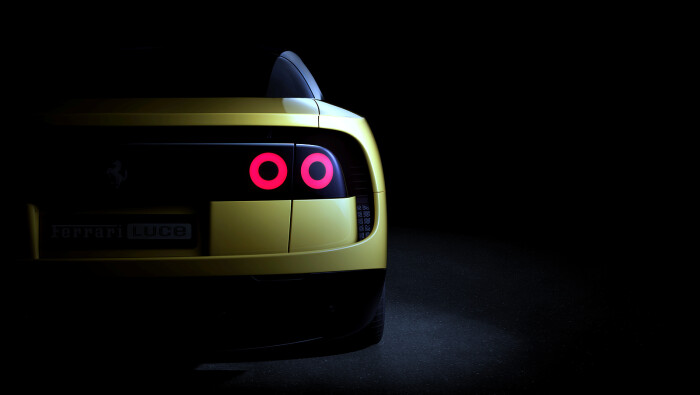
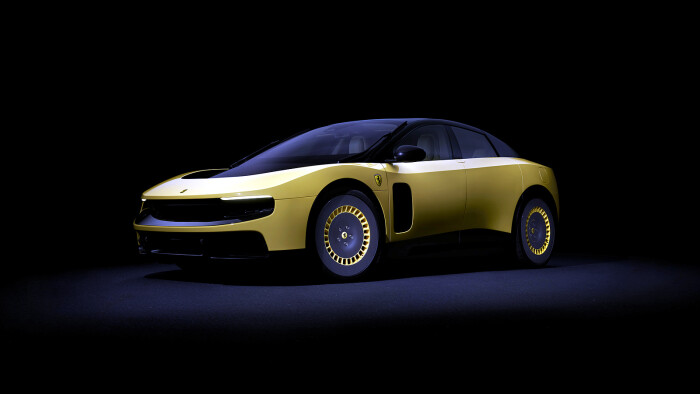
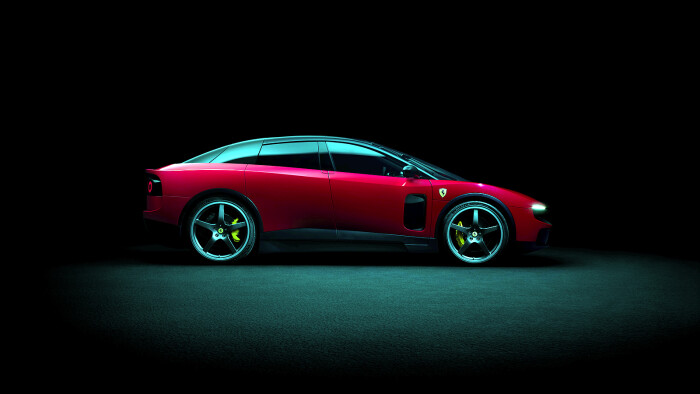
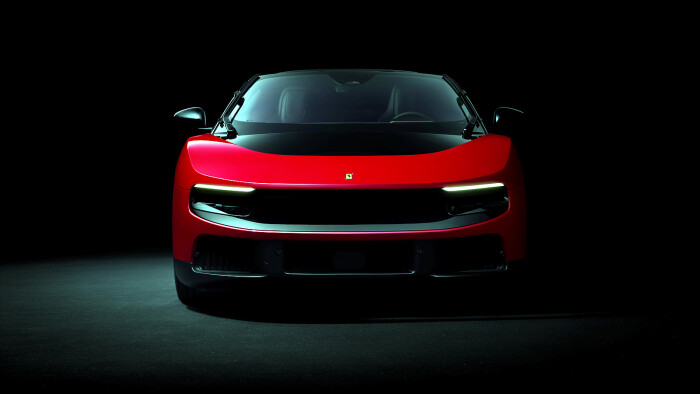
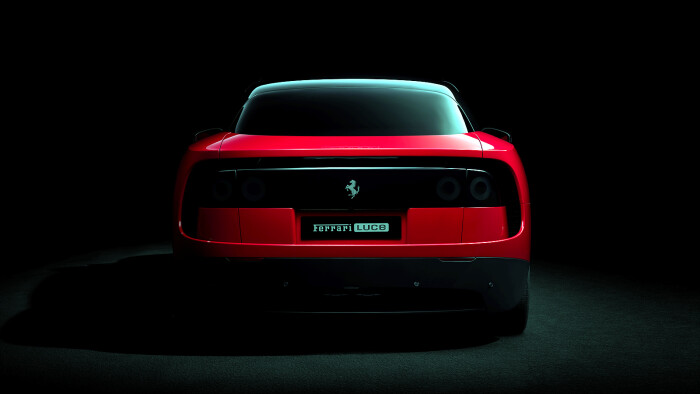
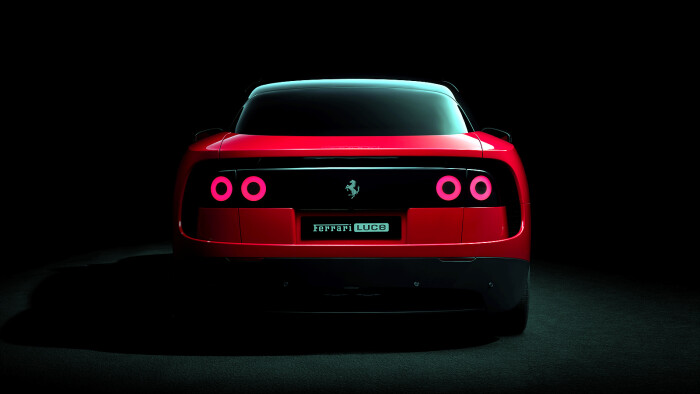
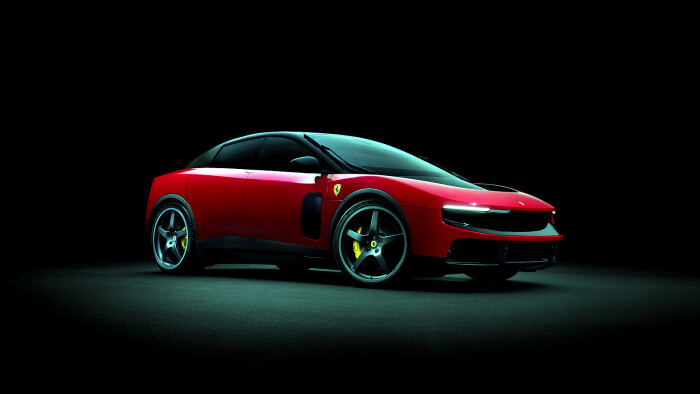
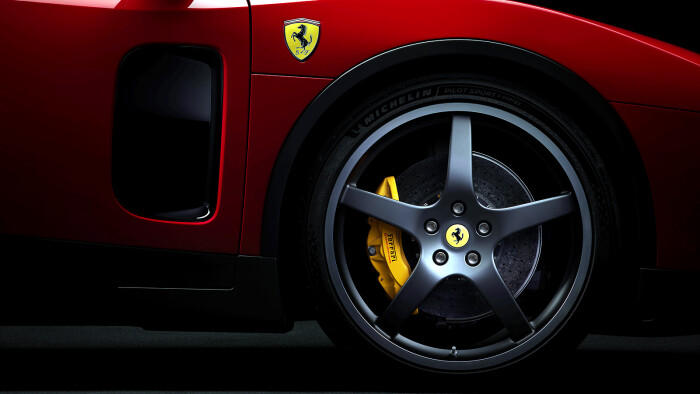
The result is a design defined by the “glass house” — an uninterrupted shell-like greenhouse that extends below the belt line, with the front and rear aerodynamic wings floating around it rather than integrating into it. Light panels at front and rear are transparent when off, preserving surface continuity. Halo tail lights reference the 360 Modena and 458 Italia. The wheels are staggered: 23 inches front, 24 rear — the largest staggered diameters on any production Ferrari.
Aerodynamic development took more than five years: 6,000 CFD runs, 250 hours in the wind tunnel on scale models, 80 hours with a full-size car. Active grilles control airflow through the heat exchangers, capable of eliminating radiator drag entirely when cooling demand is zero. Active suspension lowers the front by 10mm at speed. The underbody is flush-sealed with the structural battery floor.
The drag coefficient result of all this work: Ferrari isn’t publishing a Cd figure yet. They describe it as the lowest in the marque’s history for a road car. Given the constraints of a 5,026mm four-door with 24-inch rear wheels, that’s a meaningful engineering achievement.
Inside: Five Seats, First Time
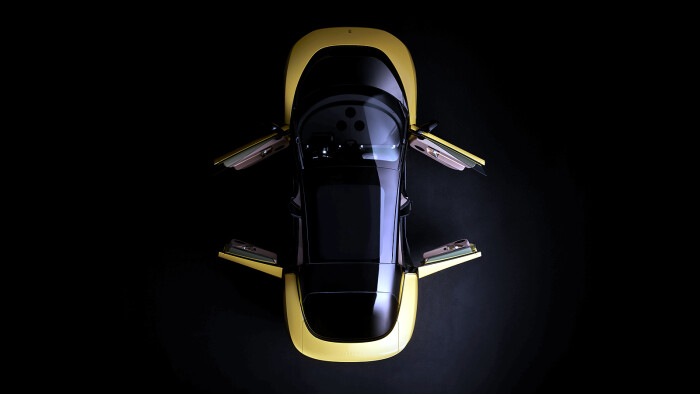
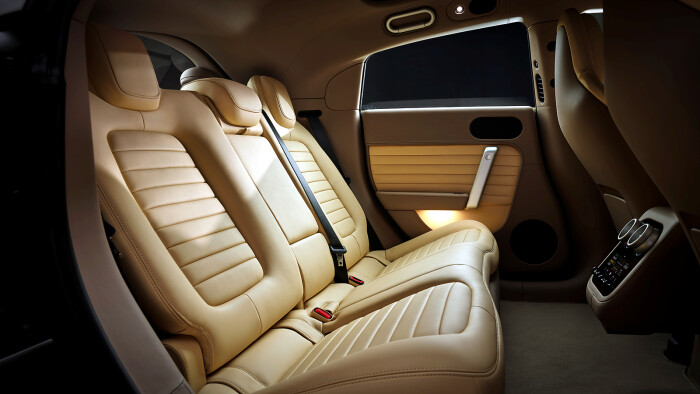
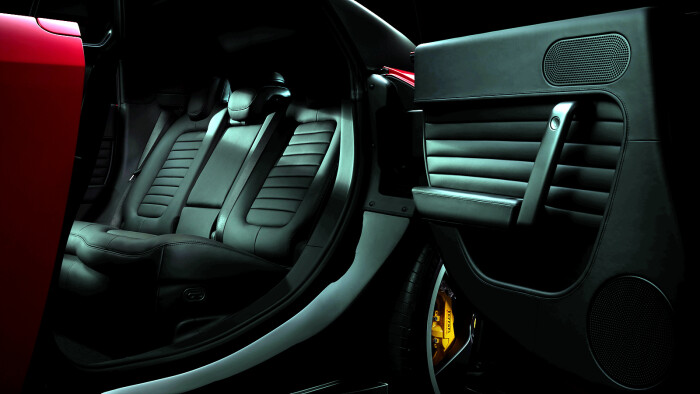
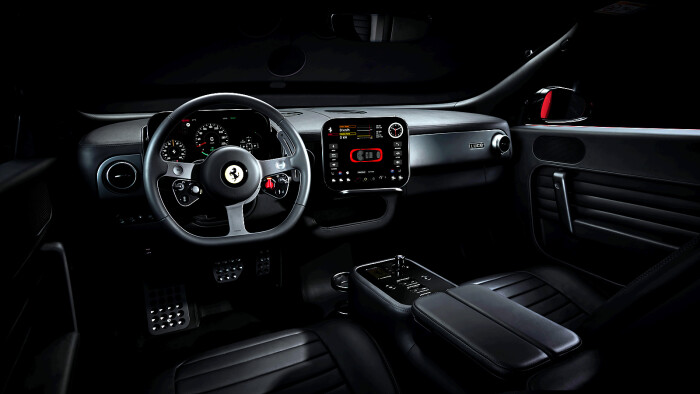
The Luce is a four-door, five-seat Ferrari — the first five-seat configuration in the brand’s history. The electric architecture eliminates the transmission tunnel, which means a flat floor and genuine rear-center seat usability. Interior proportions at the rear are described as similar to the Purosangue.
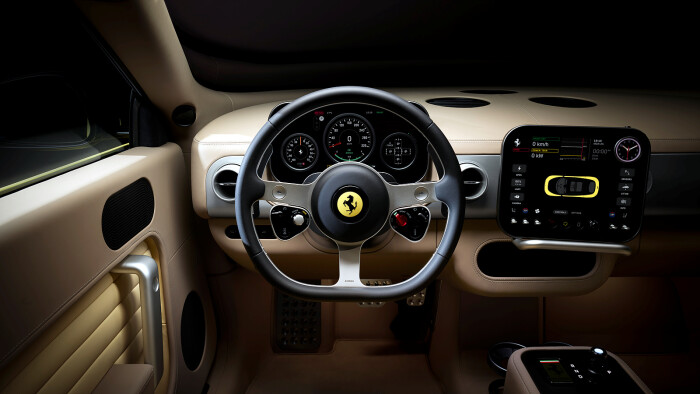
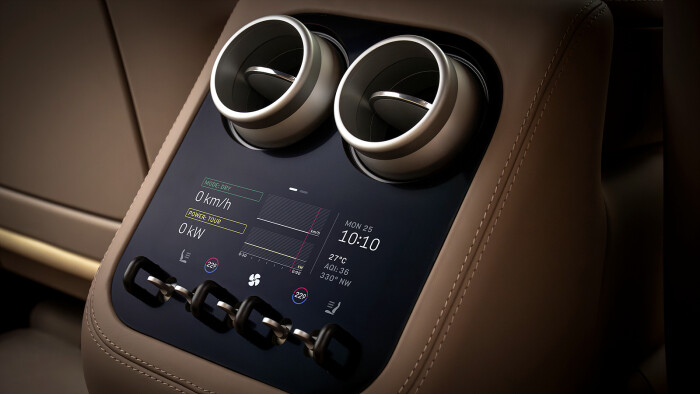
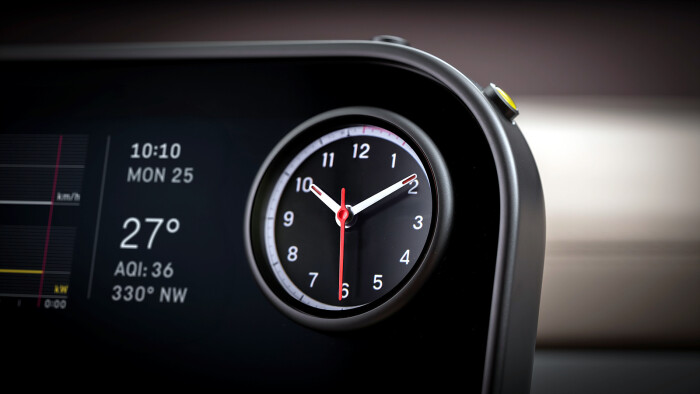
The interface was co-designed with Samsung Display, which developed four custom OLED panels: a 12.9-inch binnacle, a 12-inch control panel, a 10.1-inch and 6.3-inch rear panel. The binnacle uses a multi-layer design with two stacked panels and physical openings that create visual depth — analog dials on a digital face. The steering wheel is machined from 100% recycled aluminum. The key is Corning Gorilla Glass with an E-Ink display — a world first in automotive.
Materials: recycled anodized aluminum throughout the structure. The secondary-alloy aluminum used across the chassis and body reduces CO₂e emissions by roughly 70% of total vehicle weight compared to primary alloy production.
The Numbers
| Spec | Ferrari Luce |
|---|---|
| Motors | 4 (one per wheel) |
| System Output | 772 kW / 1,050 hp |
| Peak Torque (wheels) | 11,500 Nm |
| 0–100 km/h | 2.5 s |
| 0–200 km/h | 6.8 s |
| Top Speed | 310 km/h |
| Battery | 122 kWh gross / 800V |
| Max DC Charging | 350 kW |
| Range (WLTP est.) | 530 km |
| Curb Weight | 2,260 kg |
| Dimensions | 5,026 / 1,999 / 1,544 mm |
| Wheelbase | 2,961 mm |
| Front Wheels | 23-inch |
| Rear Wheels | 24-inch |
| Trunk | 597 liters |
Performance figures are in Launch Control with the full 765 kW peak (including an additional 40 kW battery boost). Range and consumption figures are under homologation. Curb weight includes optional equipment.
Ferrari is not a company that enters new segments tentatively. The Luce is not tentative. It’s an argument — technical, philosophical, and aesthetic — that the electric powertrain opens possibilities that internal combustion never could, and that Ferrari intends to use every one of them.
The four-wheel steering, the structural battery, the axle-sourced sound, the Torque Shift paddles, the LoveFrom exterior — none of these are incremental upgrades to existing Ferrari thinking. They’re new ideas, rigorously engineered, and wrapped in a car that Ferrari says will be the most comfortable they’ve ever built without compromising the most important thing: the sensation of driving one.
We need seat time. But from the engineering alone, the Ferrari Luce is the most interesting new car of 2026.