Lamborghini’s first retractable hardtop brings 907 horsepower, a clever roof mechanism, and a more accommodating cockpit.
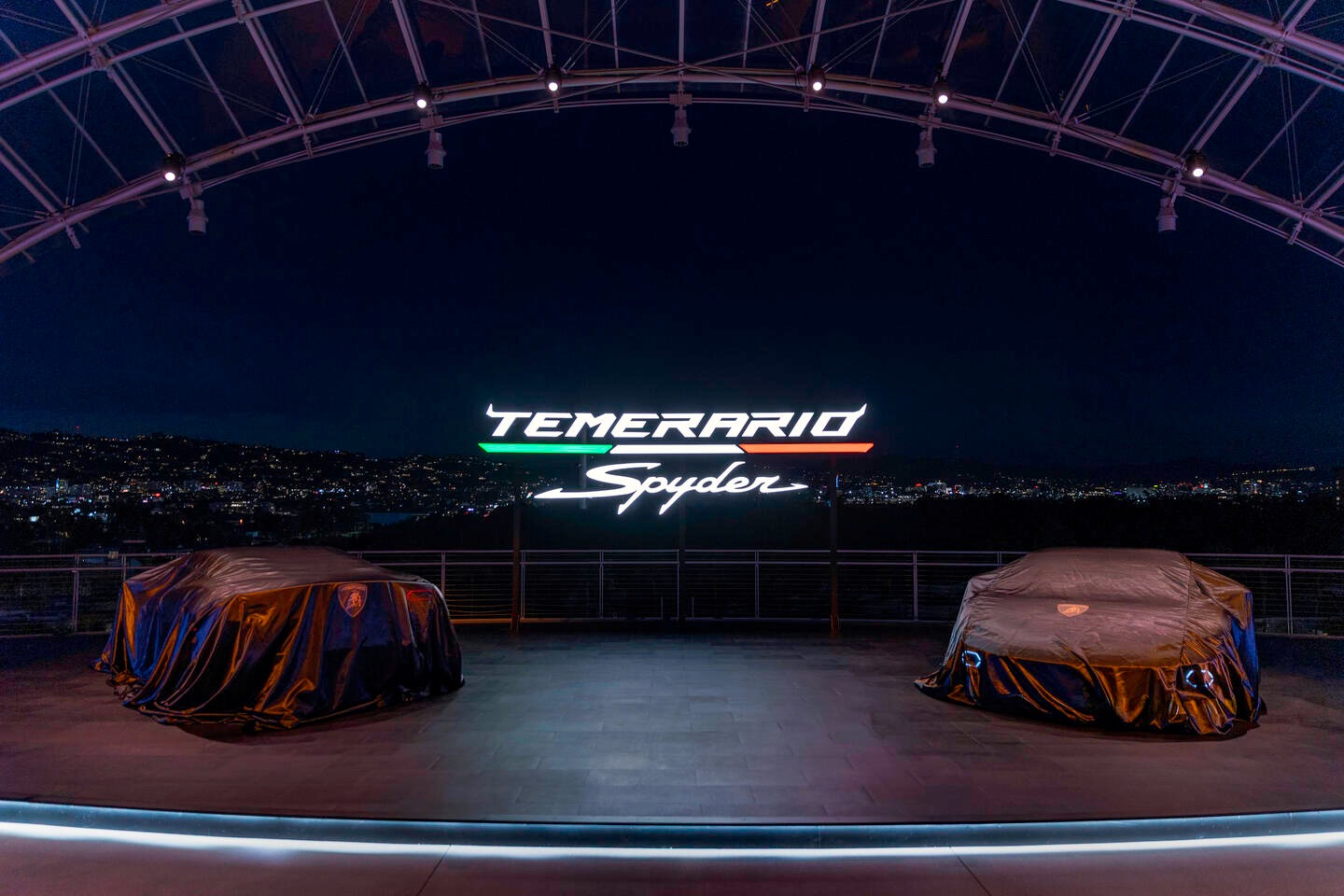
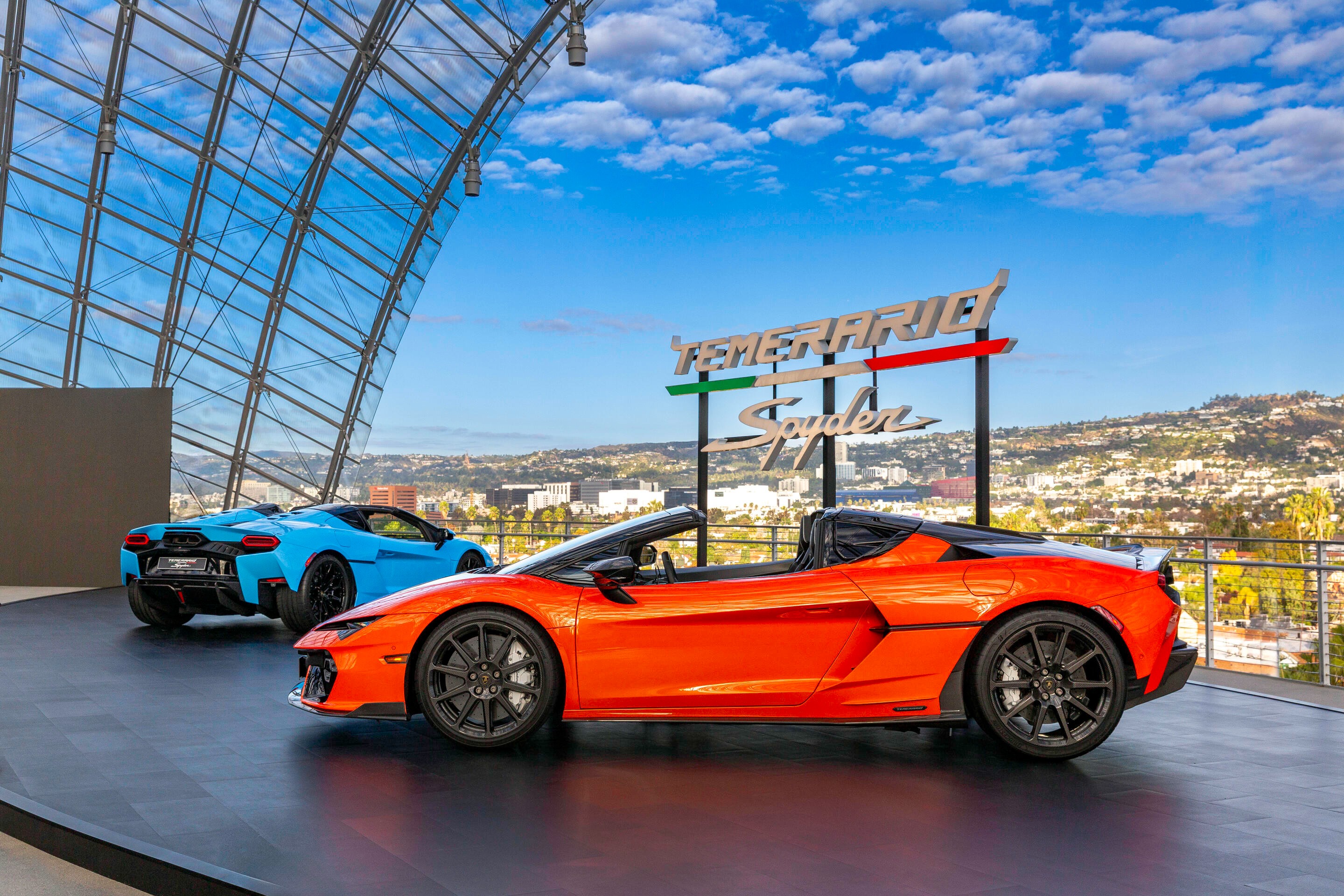
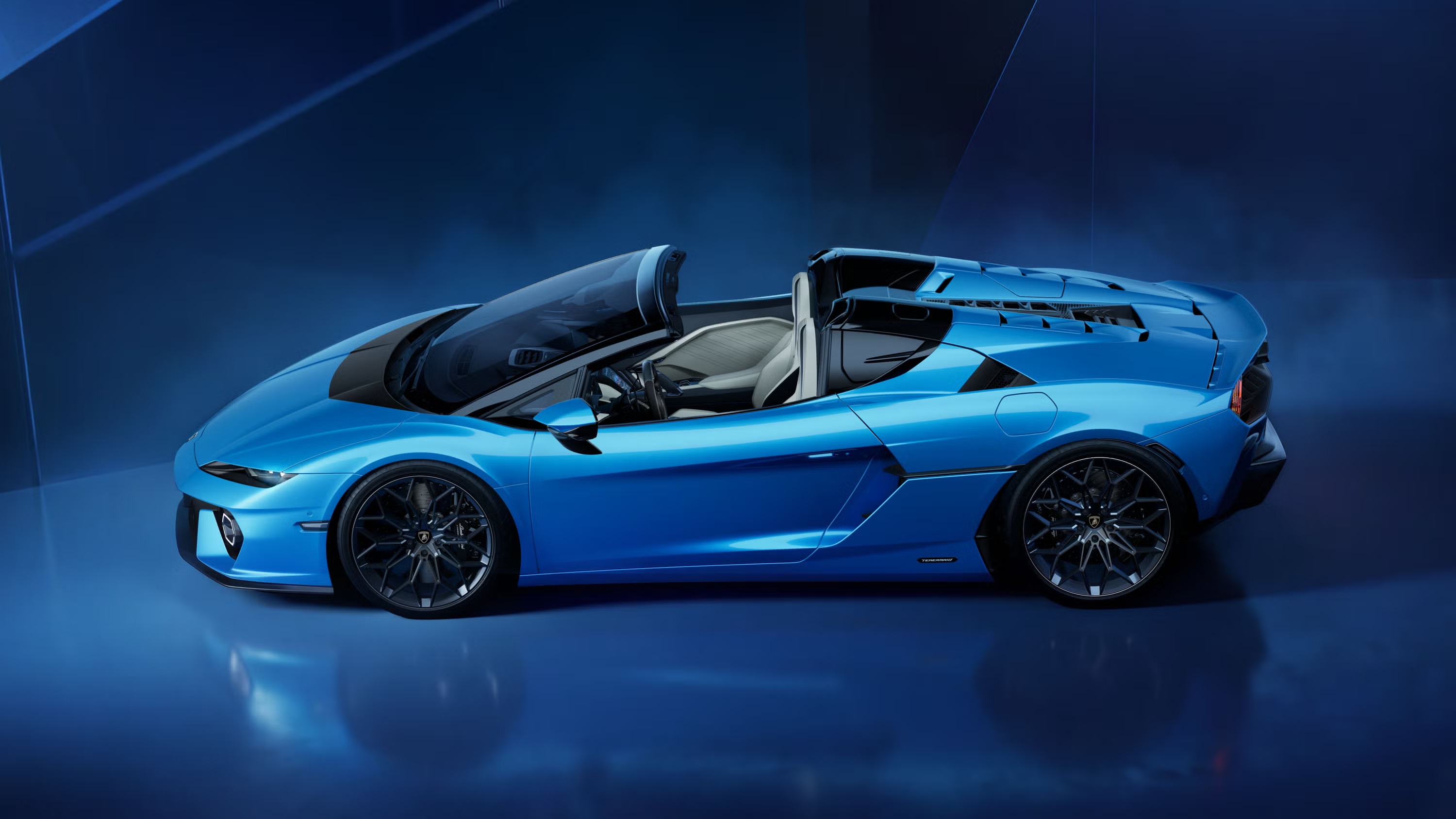
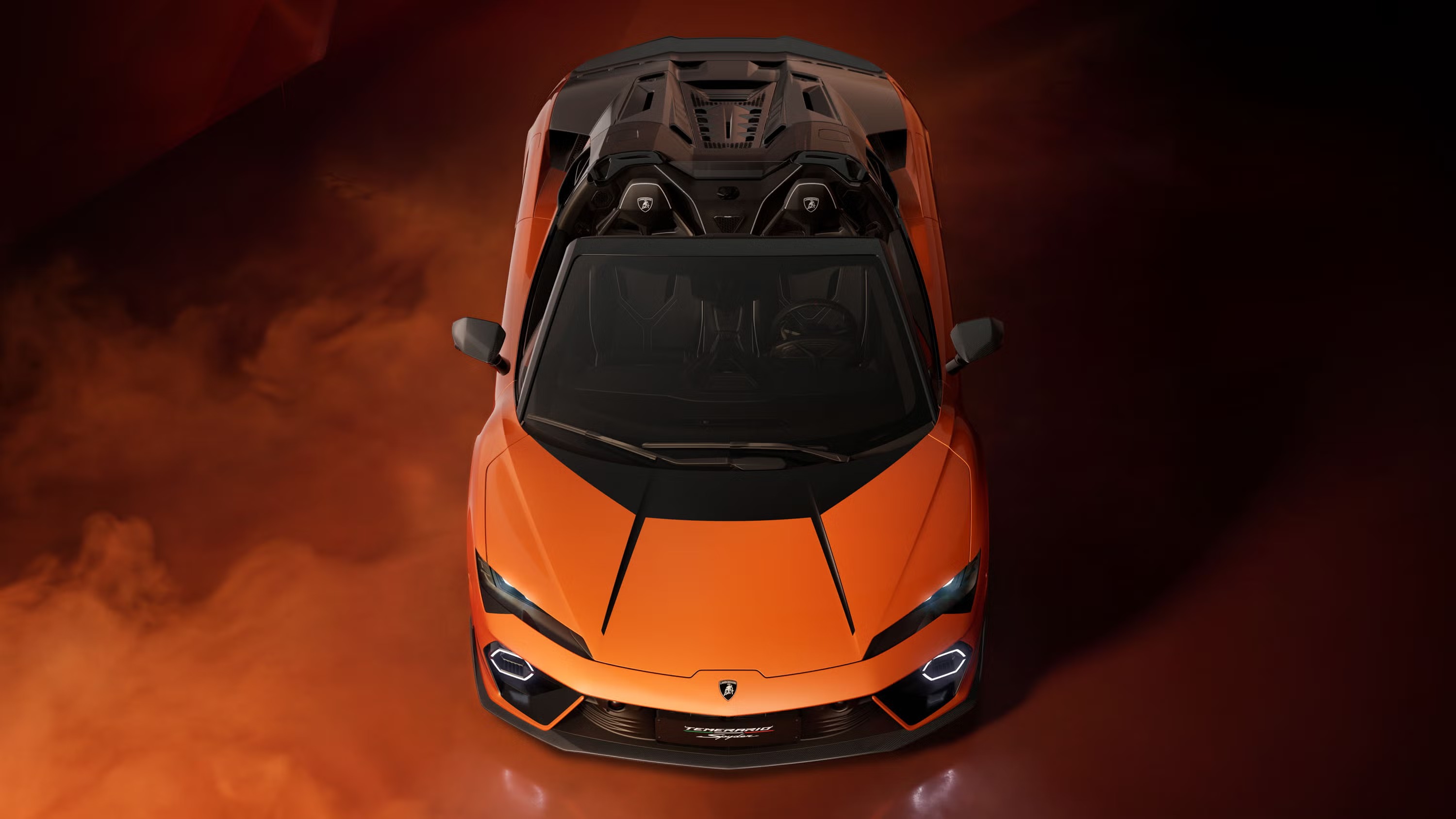
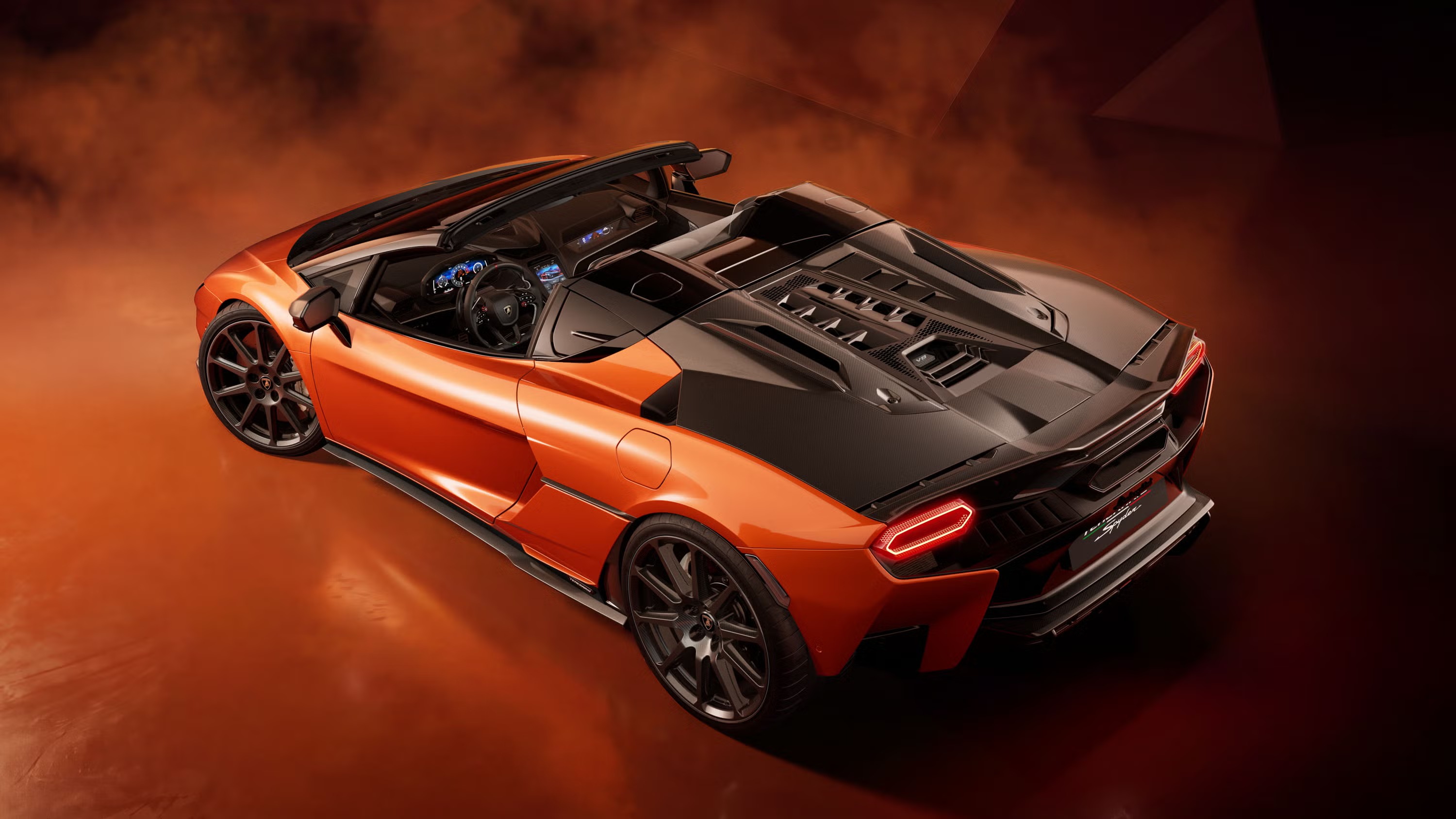
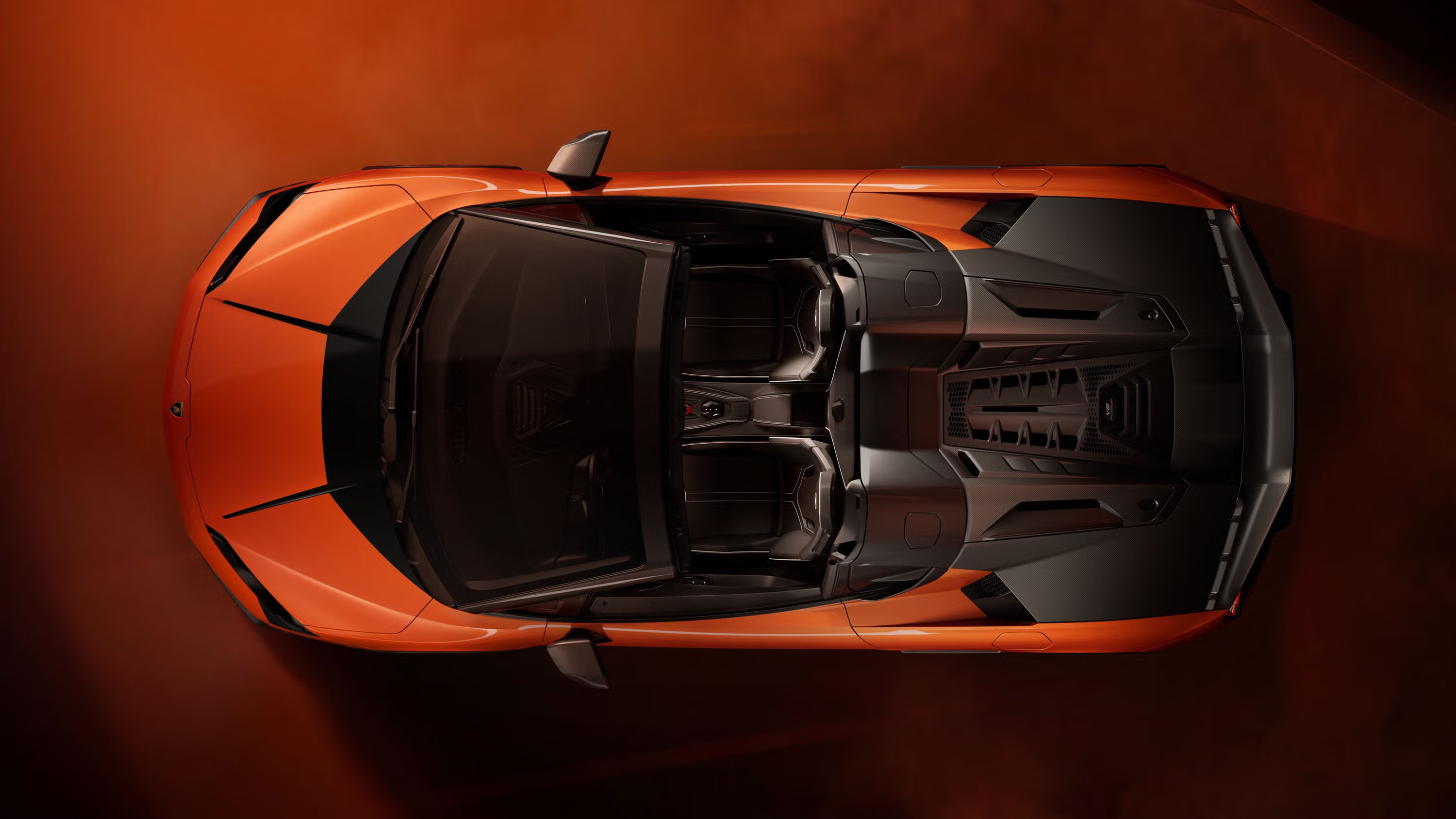
The most compelling option on the Lamborghini Temerario Spyder might be the button that removes the roof. With a twin-turbo V-8 capable of spinning to 10,000 rpm just behind the seats, opening the cabin promises to make an already theatrical powertrain considerably more personal.
Revealed in Los Angeles ahead of the 2026 LA Auto Show, the 2027 Temerario Spyder adds Lamborghini’s first retractable hardtop to its entry-level supercar. “Entry-level” requires some perspective here: Pricing starts at $390,900, and combined output remains a decidedly excessive 907 hp.
The bigger story is how Lamborghini packaged the roof—and what it did to keep the rest of the car from feeling compromised.
A Roof That Packs Down Instead of Piling Up
Ten electric actuators handle the opening and closing sequence, which takes 17 seconds and can operate at speeds up to 31 mph. Rather than stacking horizontally above the engine compartment, the roof stows vertically behind the occupants.
That arrangement has a measurable benefit. Lamborghini says the center of gravity drops by 3 millimeters with the roof open, while weight distribution stays unchanged. The mechanism also dispenses with conventional electrohydraulic plumbing and pumps.
Three millimeters won’t transform a supercar, but the engineering matters. A convertible’s roof mechanism introduces moving mass into a tightly packaged vehicle; where that mass ends up can influence its behavior. Lamborghini’s solution aims to keep the driving experience consistent as the roof changes position.
The aluminum spaceframe receives additional reinforcement, with claimed static and dynamic torsional rigidity each improving 6 percent over the Huracán Spyder. That comparison is with the previous convertible, however, rather than the Temerario coupe.
Three Motors, Two Turbos, One Very Busy Tachometer
The Spyder retains the coupe’s 4.0-liter twin-turbo V-8 and eight-speed dual-clutch transmission. Three electric motors complete the hybrid system: two drive the front axle, while a third works at the rear between the engine and transmission. The result is electrified all-wheel drive and 907 hp of combined output.
Lamborghini claims 0–62 mph in 2.8 seconds, a tenth behind the coupe, with the same 213-mph maximum speed. Those are manufacturer figures; an independent test will establish how closely the convertible tracks its fixed-roof sibling.
The V-8 remains the centerpiece. Its flat-plane crankshaft and unusually high operating range give the Temerario a different mechanical identity from the naturally aspirated V-10 Huracán it replaces. Removing the roof should make that distinction easier to appreciate.
An optional Akrapovič titanium exhaust offers another way to turn up the experience. Lamborghini lists the system as an accessory, rather than equipment every Spyder receives.
More Comfortable When You Aren’t Chasing Redline
Open supercars spend plenty of time traveling at ordinary speeds, and Lamborghini has paid attention to that part of ownership, too.
Revised airflow management around the windshield and rear bodywork aims to reduce cabin turbulence. An electrically adjustable rear window lets occupants fine-tune wind protection and how much engine sound enters the cockpit. Seat-integrated neck warmers help extend roof-down driving into cooler weather.
The cabin also provides more space than the Huracán EVO Spyder’s. Lamborghini quotes approximately 1.8 inches of additional legroom and 0.9 inch more headroom, with accommodation for occupants up to roughly 6 feet 7 inches tall. A front luggage compartment supplies about 4 cubic feet of storage.
Those improvements could matter more on a weekend trip than another fraction shaved from an acceleration claim.
The Lightweight Option—and the Expensive Decisions
Buyers seeking a sharper specification can choose the Alleggerita package. With the available carbon-fiber wheels included, Lamborghini says its lightweight components can remove up to approximately 49 pounds compared with the standard Spyder. That is a reduction from the convertible’s own weight, rather than a statement about its weight relative to the coupe.
Customization runs through Lamborghini’s Ad Personam program, with roughly 400 exterior colors and extensive choices for trim, finishes, and personalized details. The launch cars demonstrate opposite approaches: glossy Blu Cepheus for the standard presentation and bright Arancio Egon for the Alleggerita.
First deliveries are expected in spring 2027.
The Spyder’s strongest argument is the access it gives occupants to the powertrain. The coupe already supplies the speed. This version adds open air, greater control over the soundtrack, and a roof engineered to disappear without rearranging the car’s balance. For buyers drawn to the Temerario’s 10,000-rpm personality, that could be the specification worth waiting for.