The road-focused follow-up to the Dakar-inspired Marsien gets RUF power, a carbon-fiber body, active aero and a bespoke KW suspension. Just 30 will be built.
Marc Philipp Gemballa is taking the Marsien back to the pavement.
Five years after introducing the original off-road-focused Marsien at Pebble Beach, the German company has revealed the Marsien GT, a more road-focused interpretation of the same basic concept. Underneath sits a Porsche 911 Turbo S from the 992 generation, but calling this a modified Turbo S doesn’t really describe the extent of the work involved.
According to Marc Philipp Gemballa GmbH—which is separate from Gemballa GmbH—the conversion incorporates roughly 1,500 individually engineered and manufactured components, including an entirely new carbon-fiber exterior, suspension hardware, aerodynamics, exhaust, lighting and numerous chassis and interior components.
Production will be limited to 30 cars, bringing total production across the Marsien program to 70 examples in tribute to what would be Uwe Gemballa’s 70th anniversary.
From Dakar Inspiration to Grand Touring
The original Marsien was inspired by the Paris-Dakar rally era and deliberately blurred the line between a supercar and an off-roader. The Marsien GT takes the opposite approach.
It’s designed specifically for paved roads, with greater emphasis on high-speed stability, handling precision and everyday GT usability.
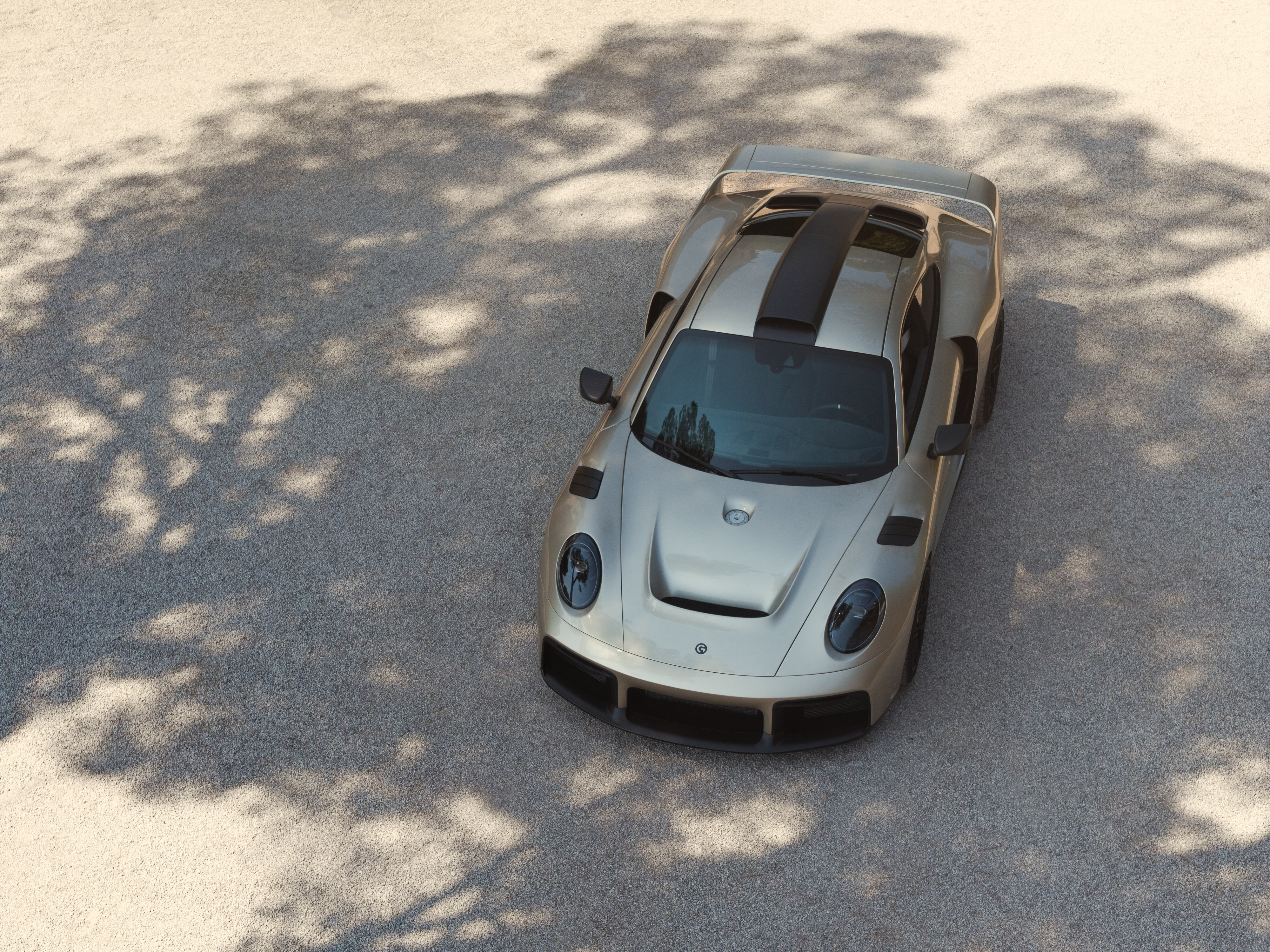
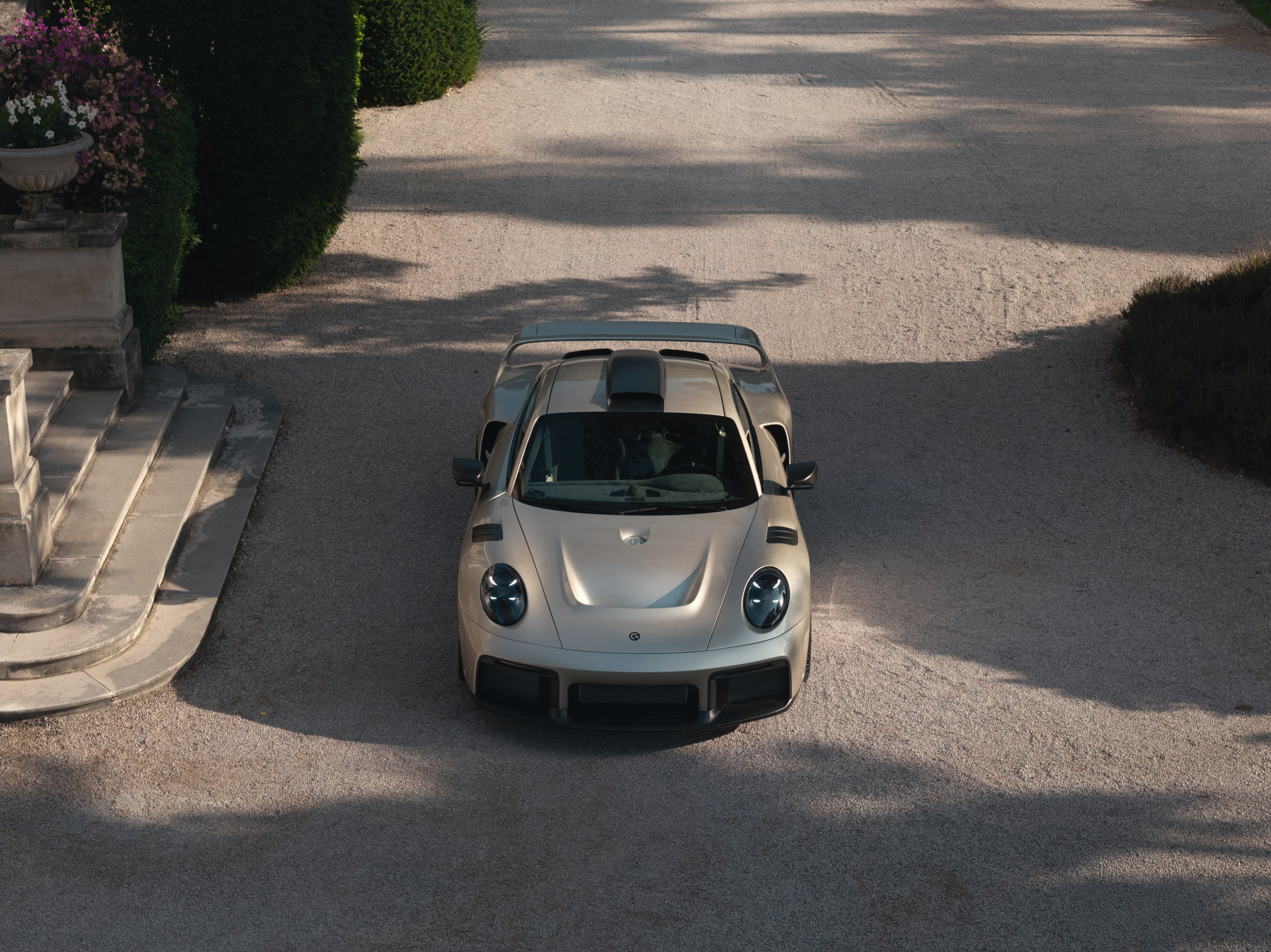
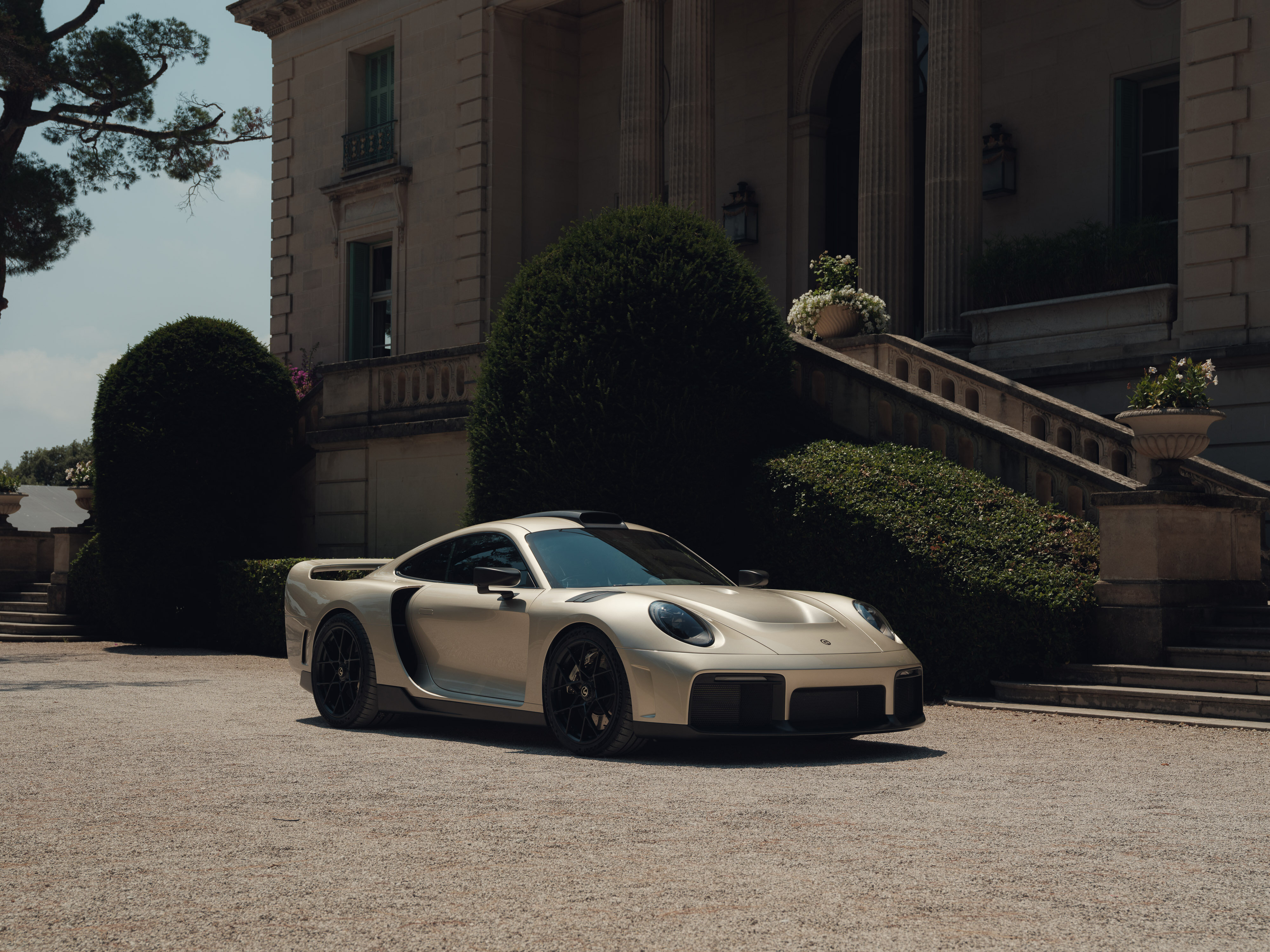
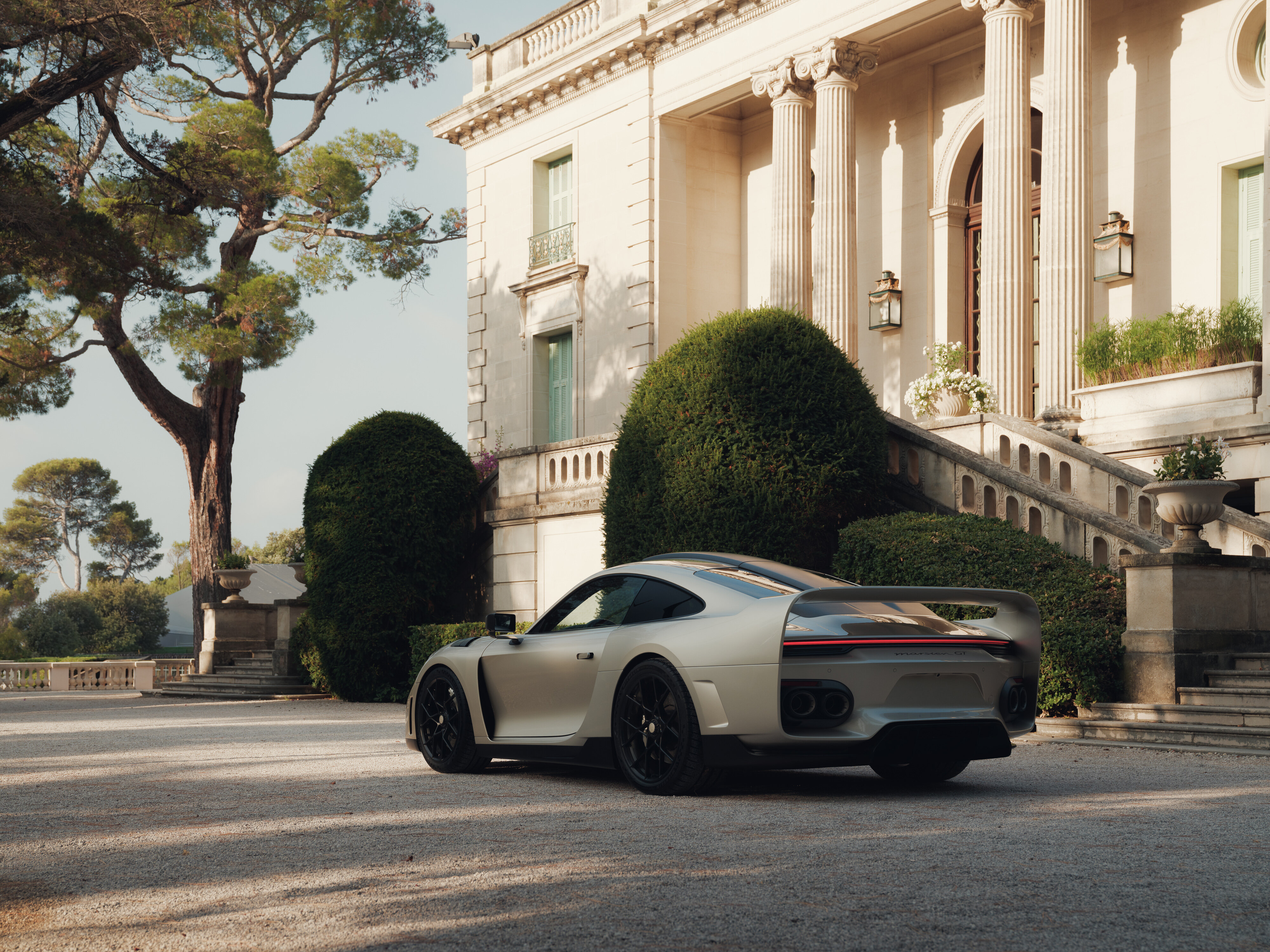
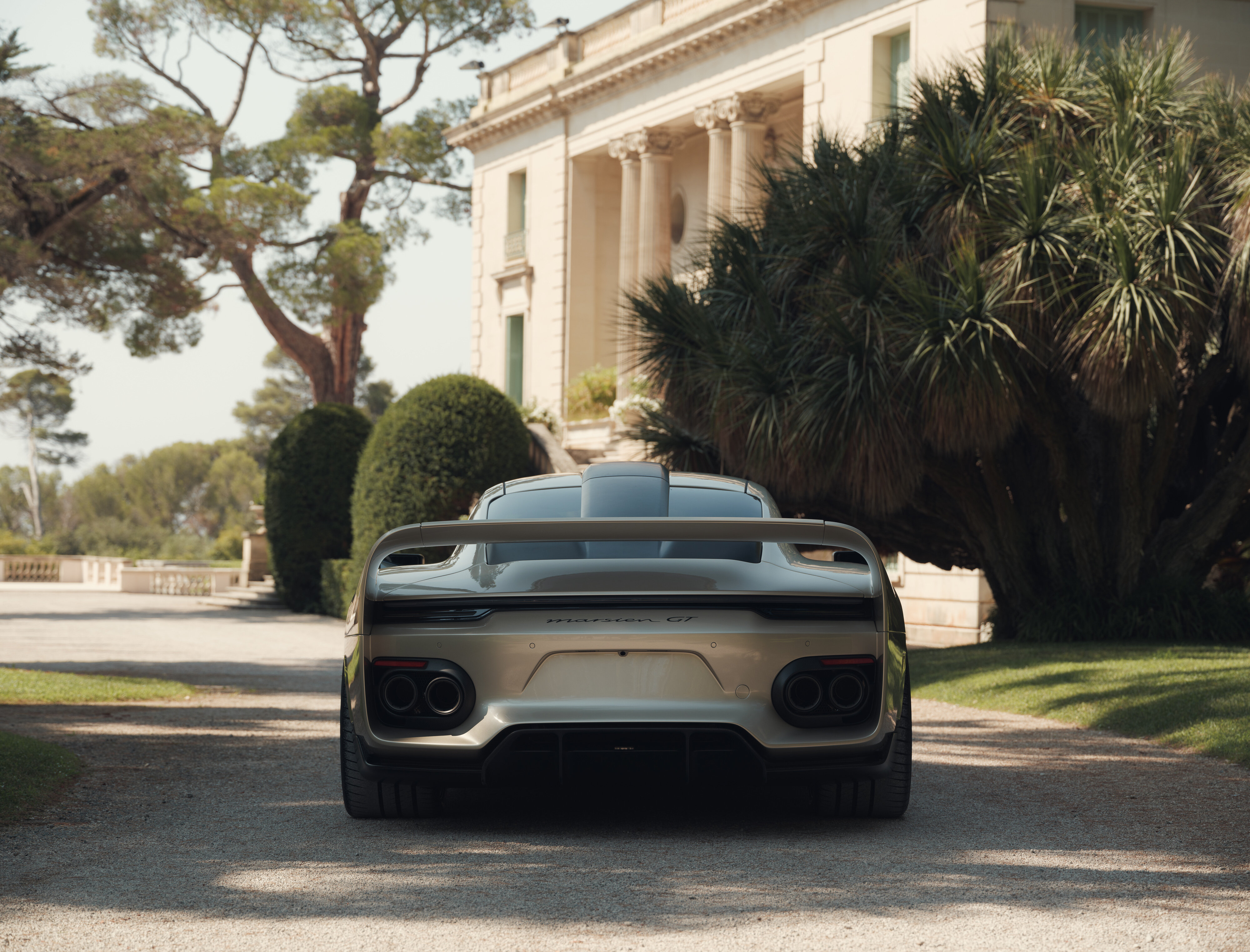
Visually, the family resemblance remains obvious, but practically every exterior panel has changed.
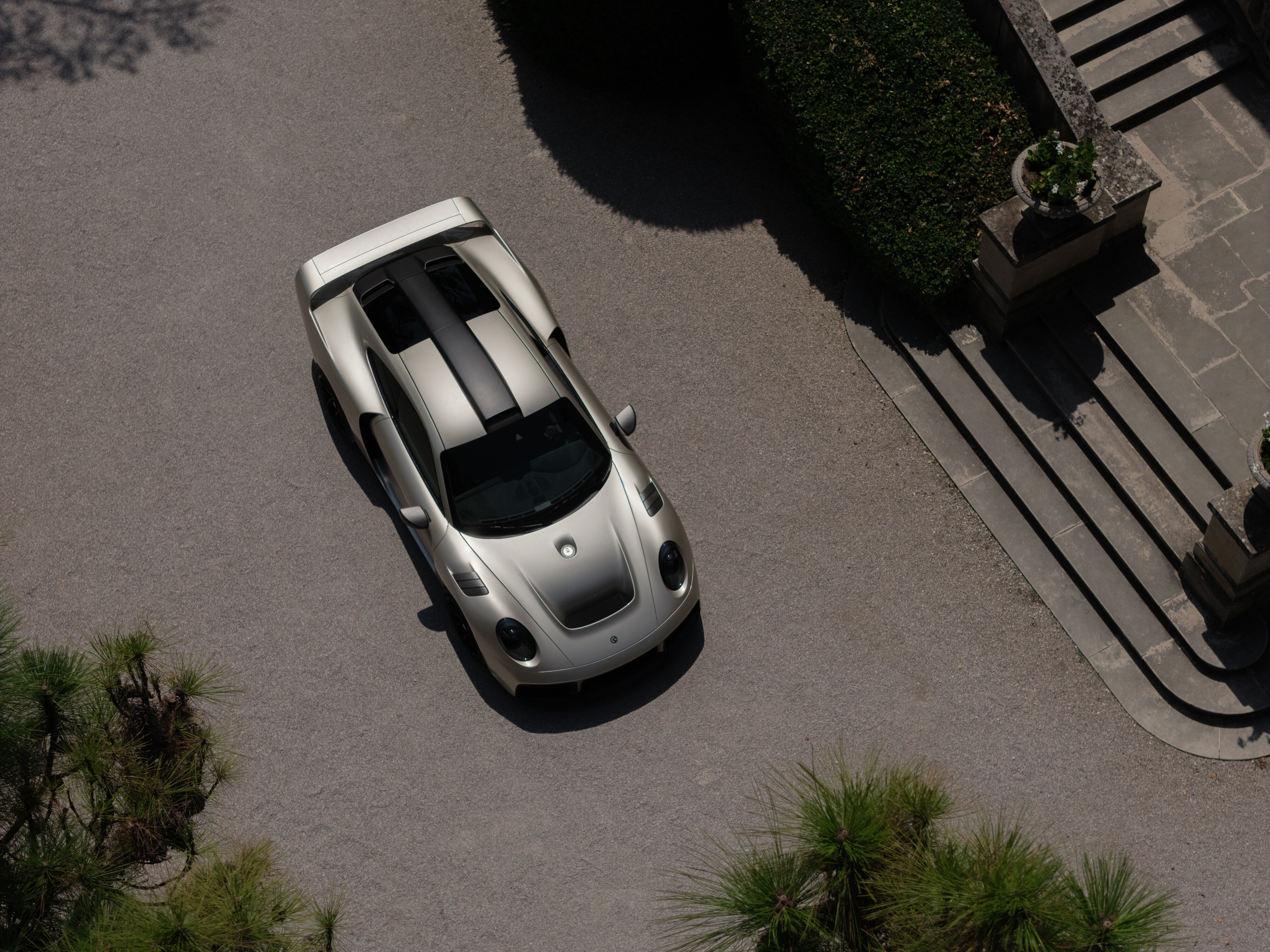
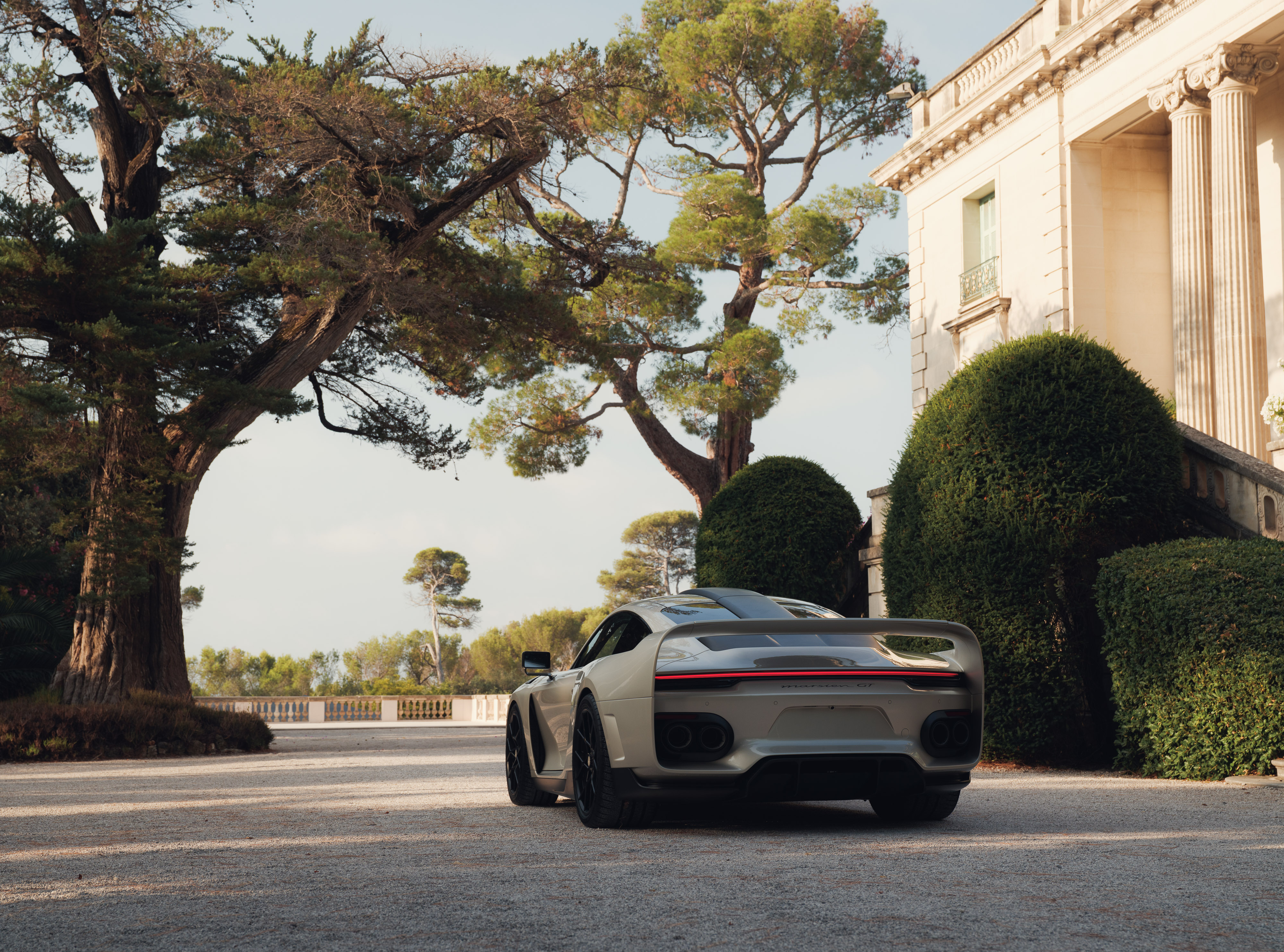
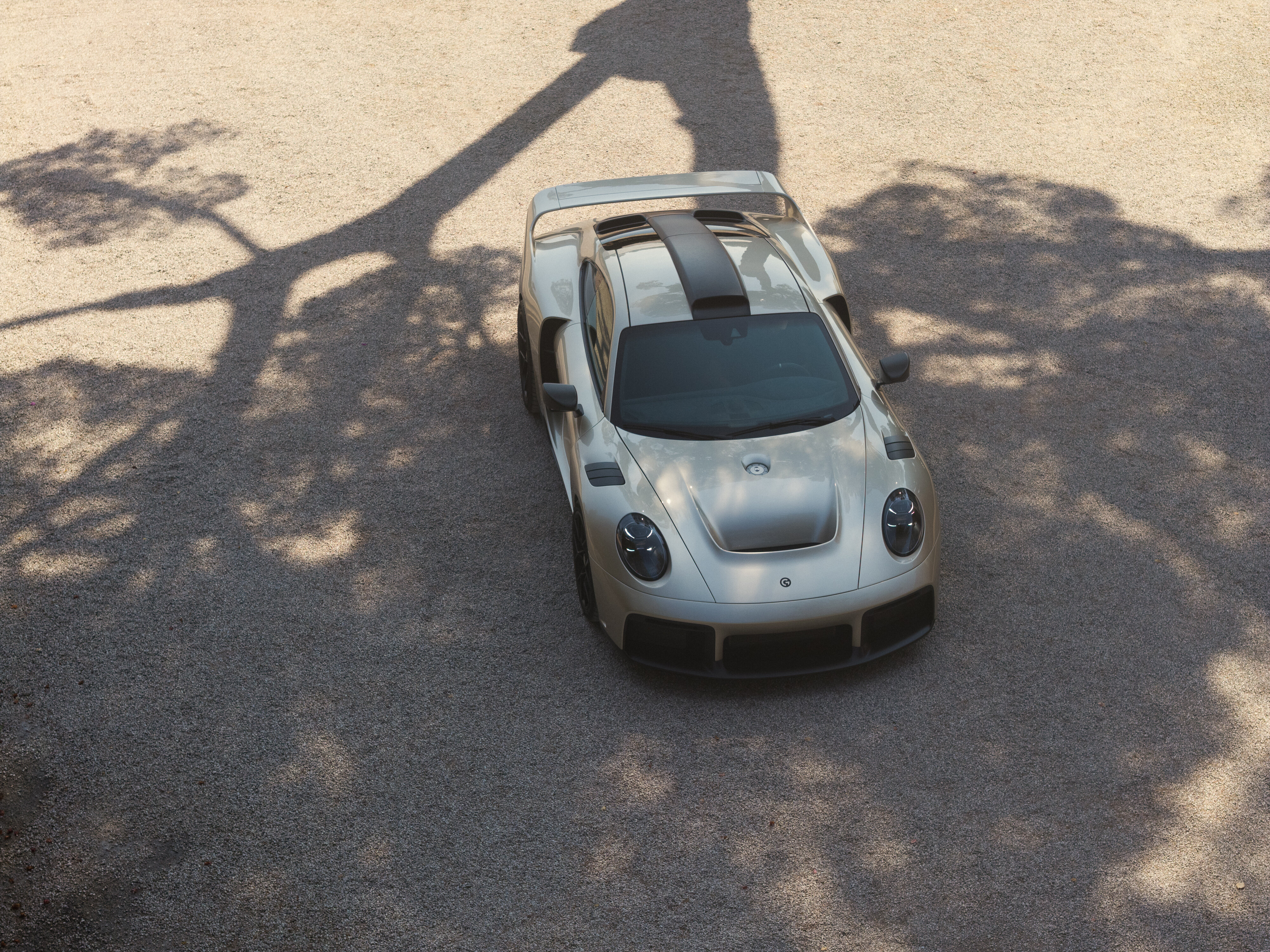
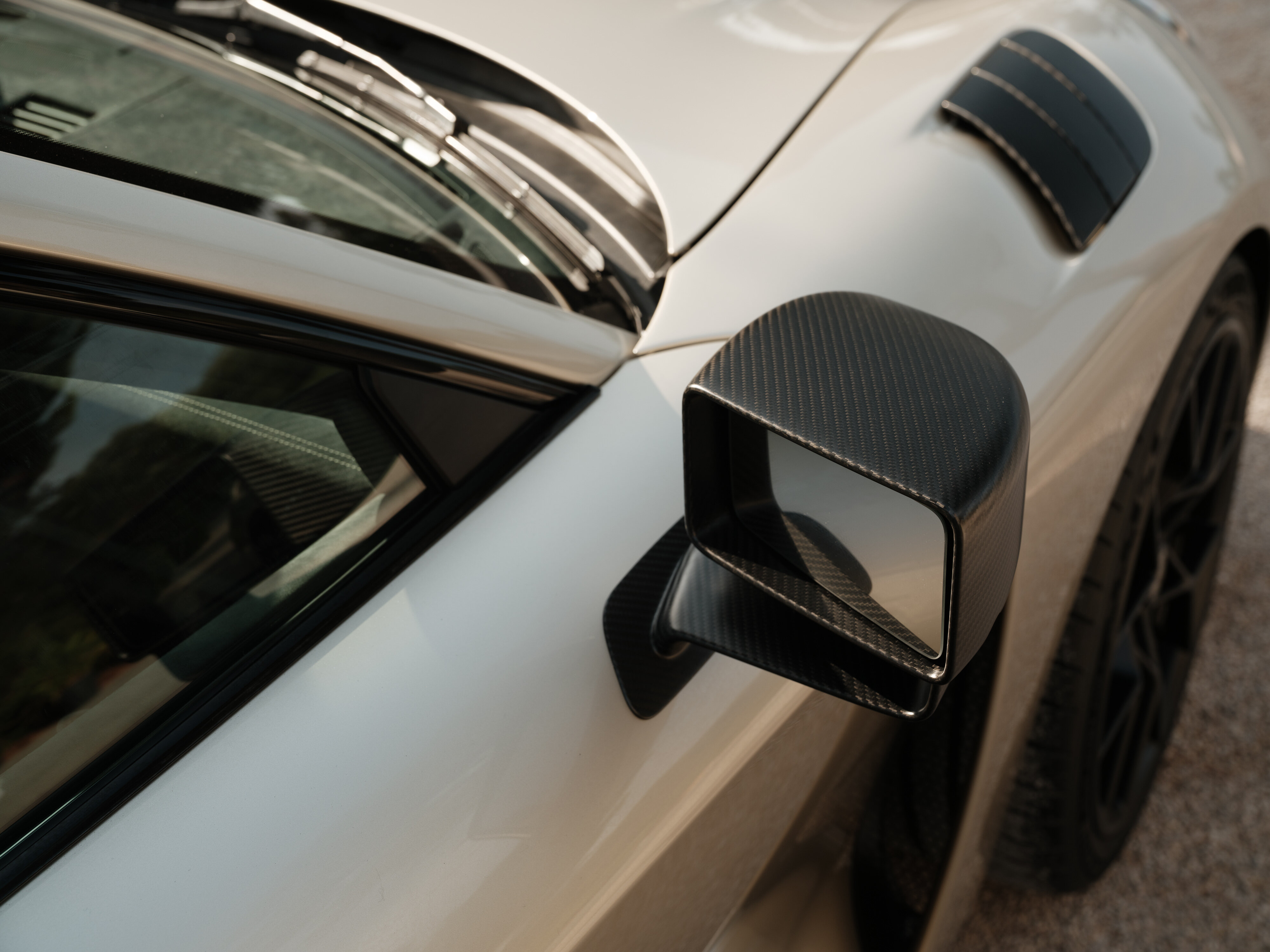
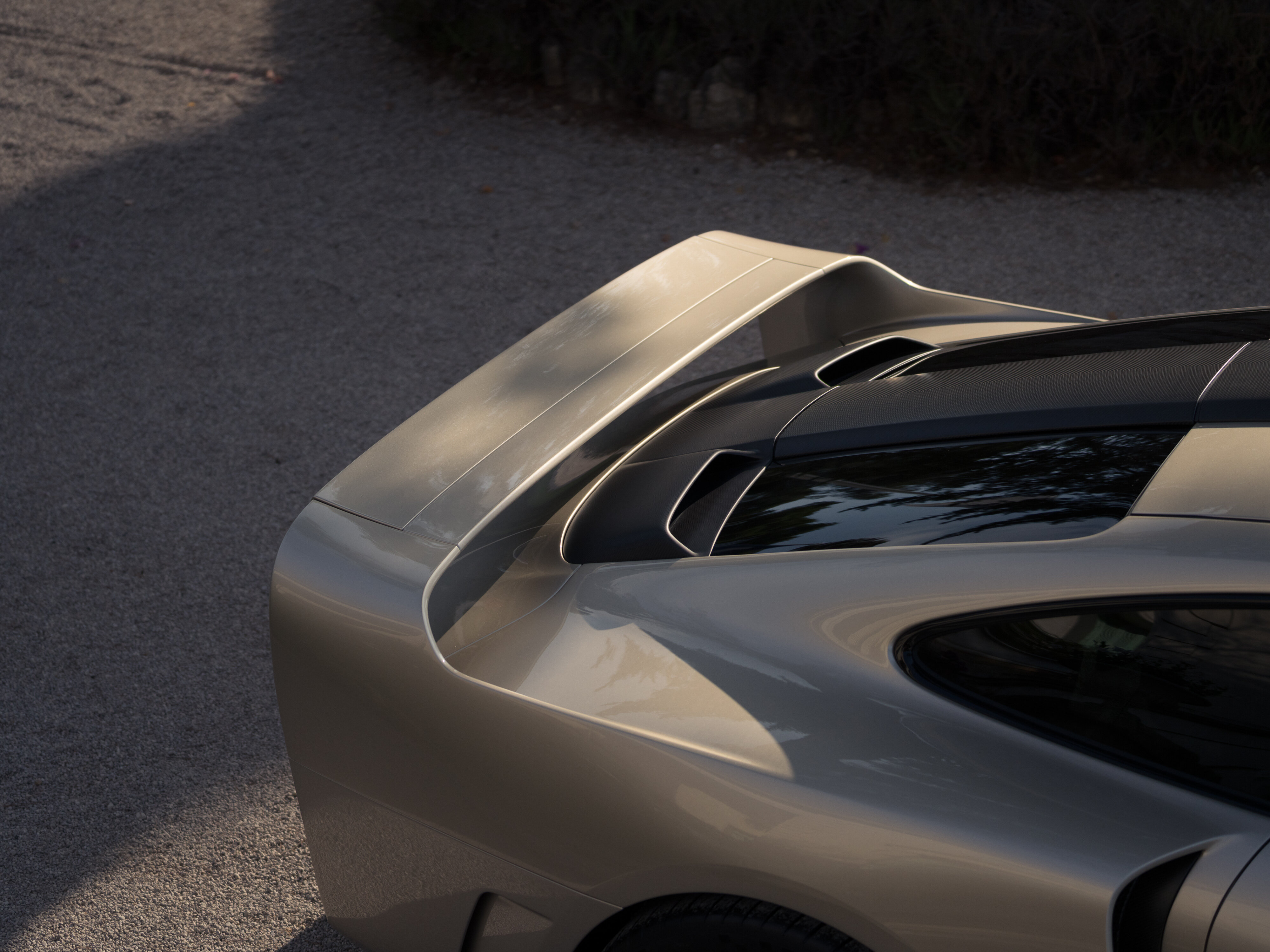
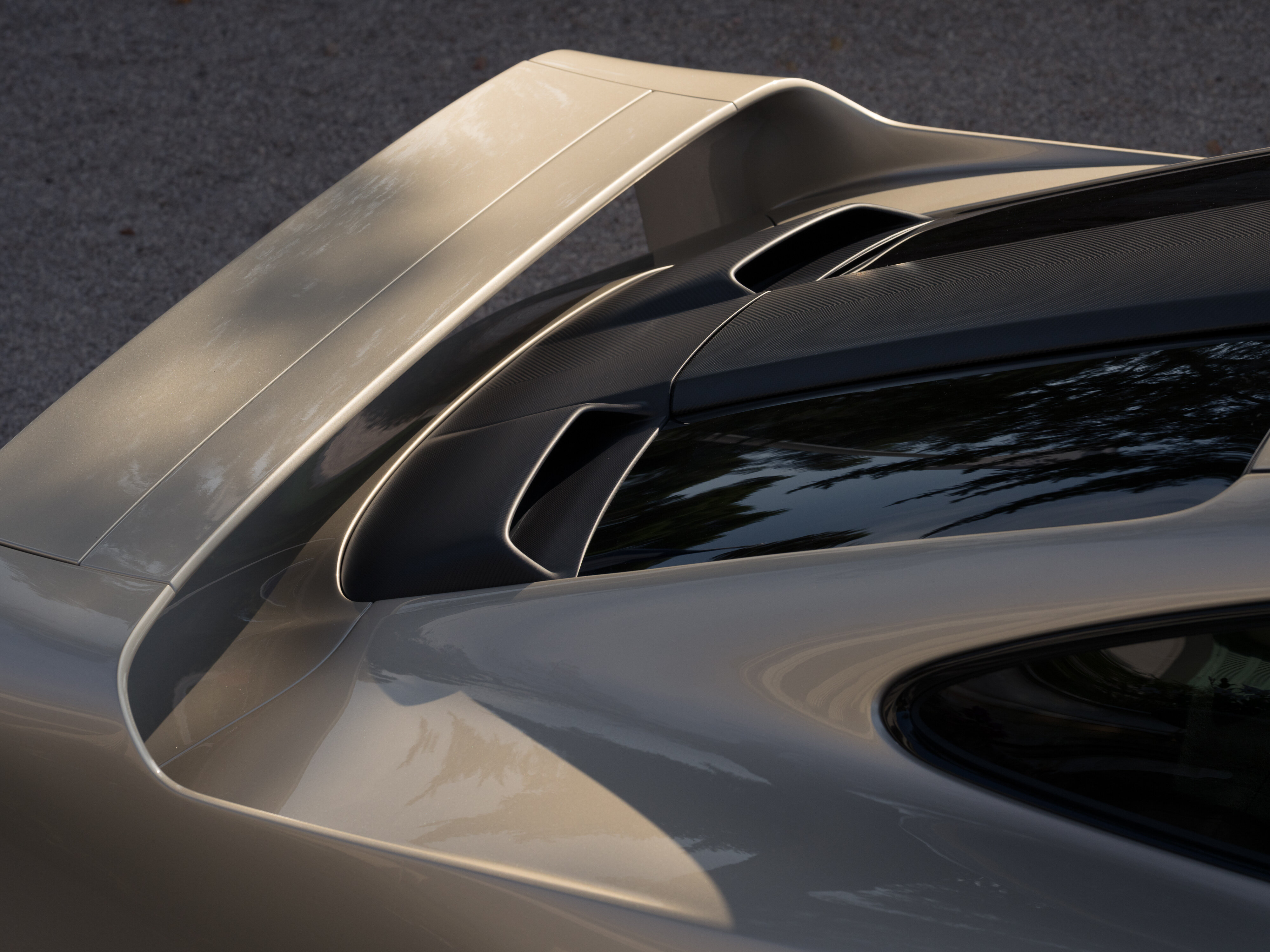
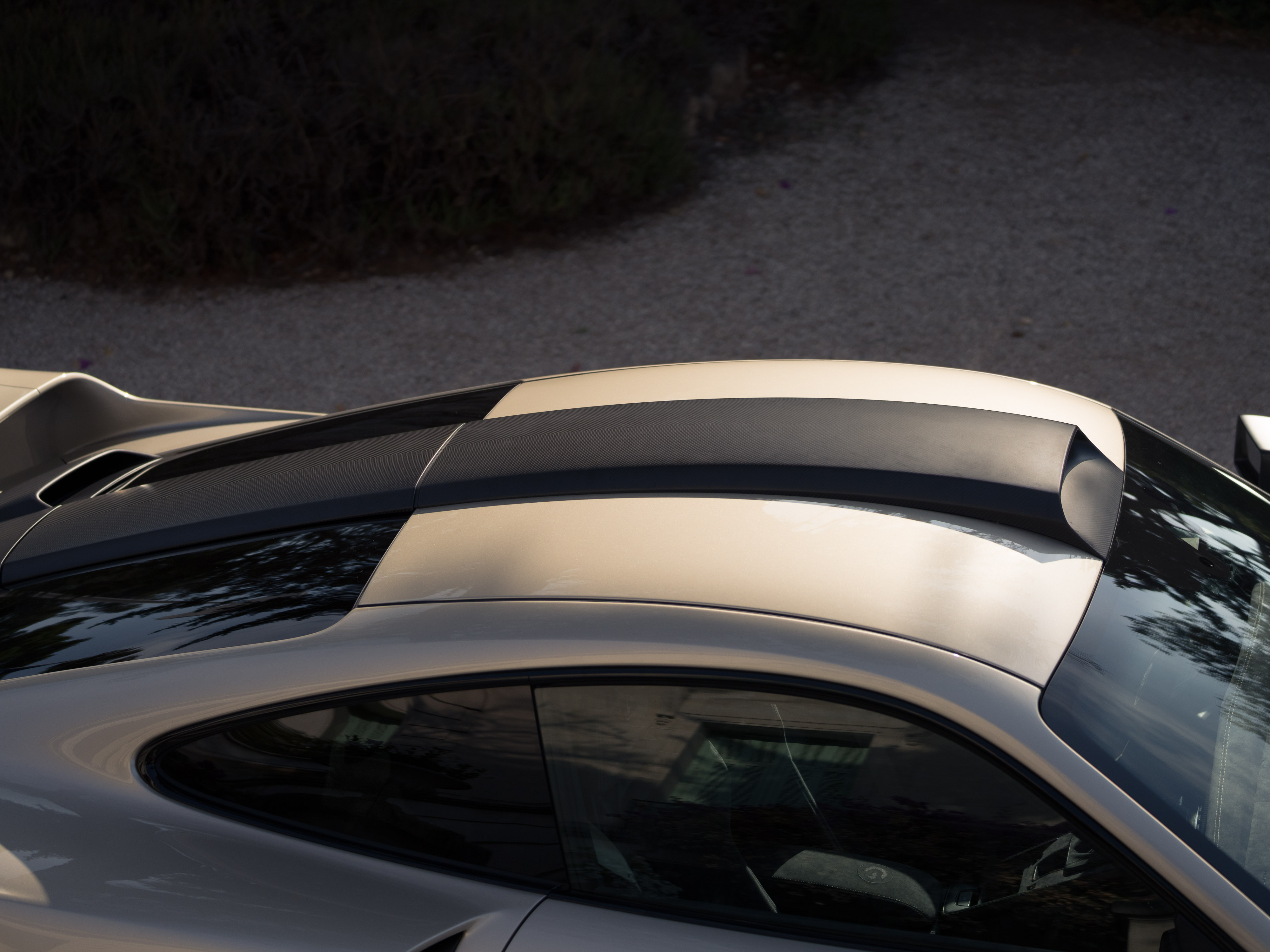
More than 100 individual carbon-fiber components make up the body, including the mirrors, wheel-arch liners, air channels and a huge rear section stretching from the A-pillar to the rear wing. The extensive use of carbon cuts approximately 75 kg compared with the standard Porsche 911 Turbo S donor car.
Alan Derosier, who designed the original Marsien, returned to shape the GT.
Active Aero Gets Serious
There’s plenty happening underneath that carbon skin.
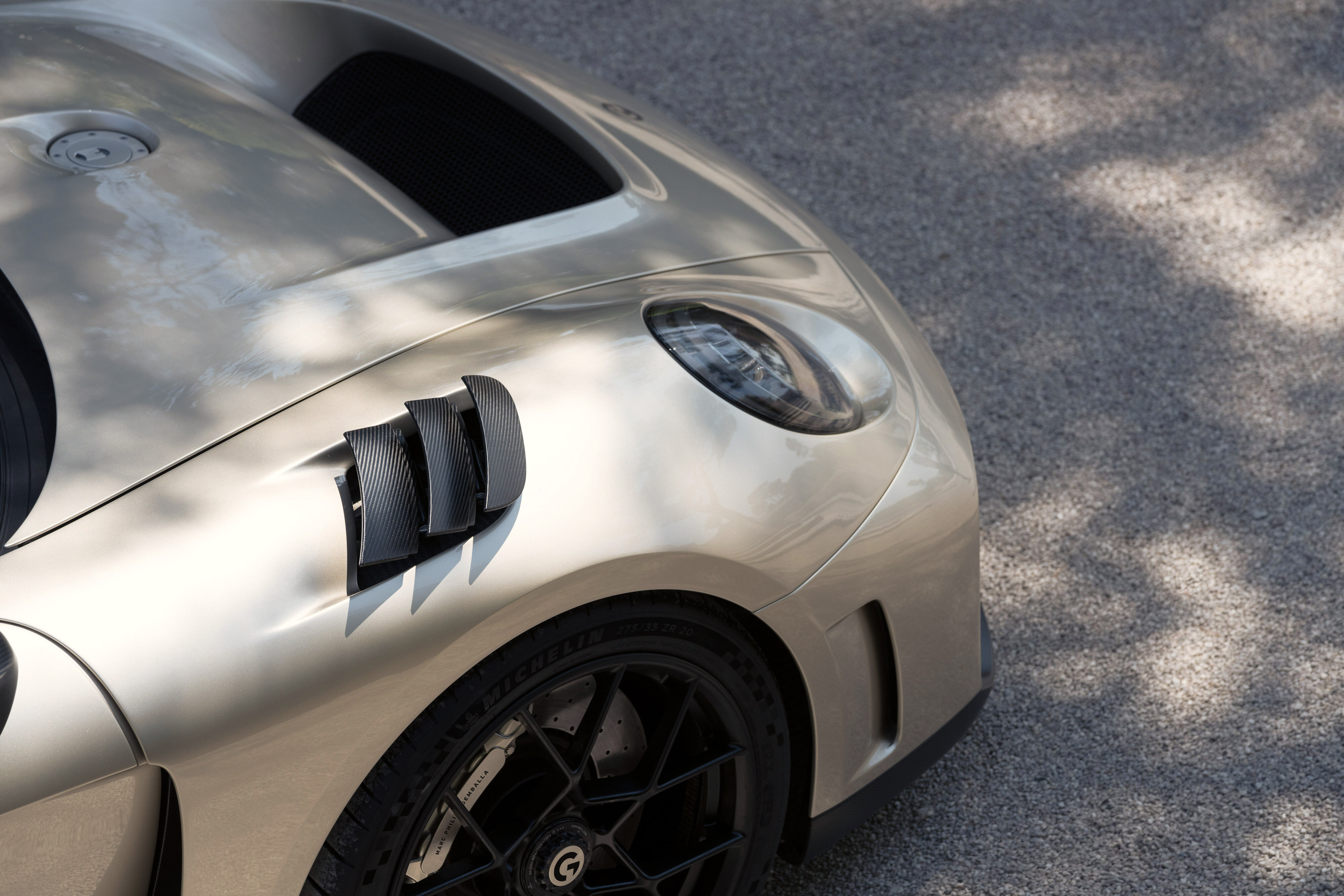
The Marsien GT introduces an active aerodynamic system incorporating front-fender louvers and an active rear wing, both pneumatically operated for rapid response.
Opening the front louvers helps evacuate high-pressure air from the wheel wells, reducing front-axle lift and turbulence. At the rear, the wing runs a more aggressive angle of attack to generate additional downforce and stability, and it can double as an air brake.
A roof scoop feeds clean air toward the intercoolers, while separate ram-air intakes supply the engine. Additional openings in the side skirts direct cooling air toward the rear brakes.
Even the underside gets the carbon treatment. The standard aluminum underfloor has been replaced by a full carbon-fiber panel designed to reduce weight and improve airflow toward the diffuser.
830 HP, Courtesy of RUF
Then there’s the engine.
Marc Philipp Gemballa again turned to RUF Automobile for the powertrain development. The relationship has some history behind it: RUF previously worked with Marc Philipp Gemballa’s father, Uwe Gemballa, on powertrains during the 1980s.
With upgraded variable-turbine-geometry turbochargers, revised ECU calibration and transmission settings, the twin-turbo flat-six produces more than 830 hp and 930 Nm of torque.
Apparently that’s merely the starting point. A second-stage package producing more than 900 hp is already under development.
According to the published specifications, the Marsien GT can hit 330 km/h (205 mph) and is quoted at 2.4 seconds to 60 mph.
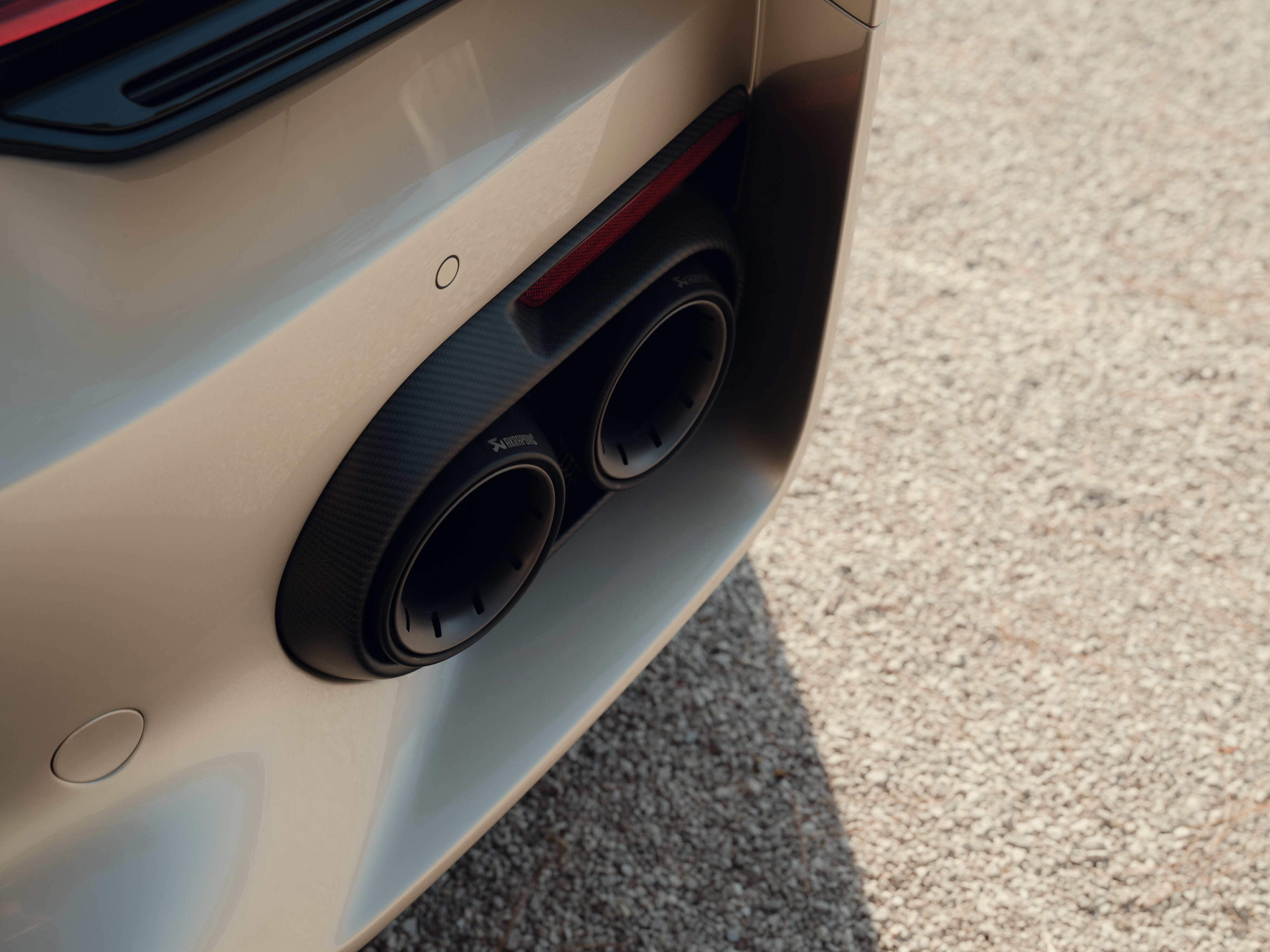
A bespoke titanium quad-exhaust system developed by Akrapovič completes the powertrain package.
A Completely Different Suspension
Turning an all-terrain Marsien into a serious road car required more than different springs and dampers.
Working with KW Automotive, Marc Philipp Gemballa developed a new double-wishbone suspension setup for the GT, paired with bespoke electronically controlled dampers based on KW’s DDC V5 technology.
Two electromagnetic proportional valves inside each damper independently manage compression and rebound. The system can respond to changing road conditions in as little as 20 milliseconds, theoretically allowing the chassis to combine tight body control with the compliance expected from a grand tourer.
The Marsien GT normally sits just 100 mm (3.94 inches) off the ground, but a front-axle lift can raise its nose by another 60 mm (2.36 inches) for ramps, driveways and speed bumps.
Drivers can also use the steering-wheel-mounted drive-mode selector to alter the dampers, transmission and engine calibration.
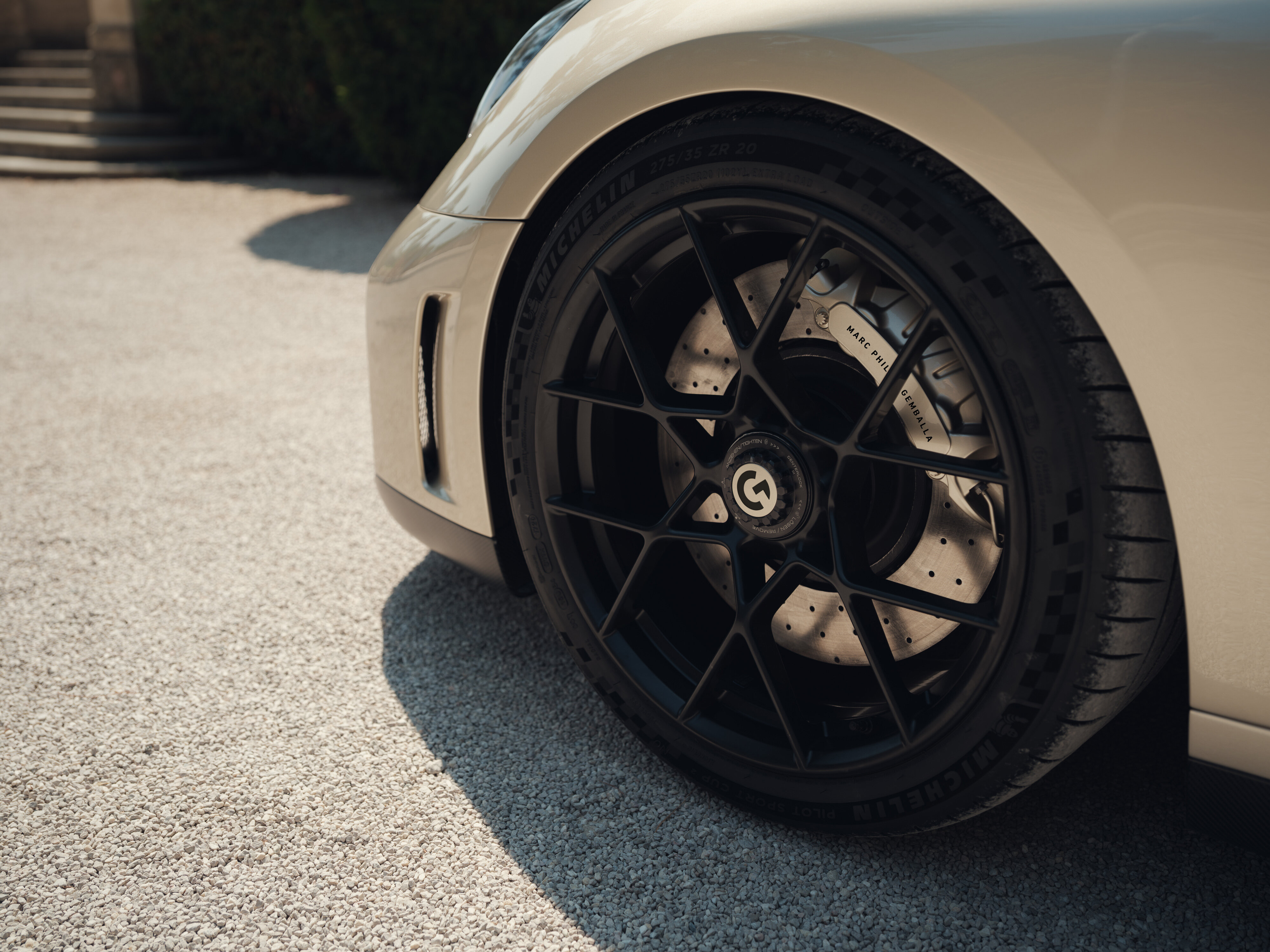
Forged center-lock wheels measure 20 inches up front and 21 inches at the rear, wearing Michelin Pilot Sport Cup 2 rubber sized 275/35 ZR20 and a substantial 335/30 ZR21, respectively.
A Little Carrera GT Inspiration Inside
The cabin doesn’t simply carry over from the donor 911, either.
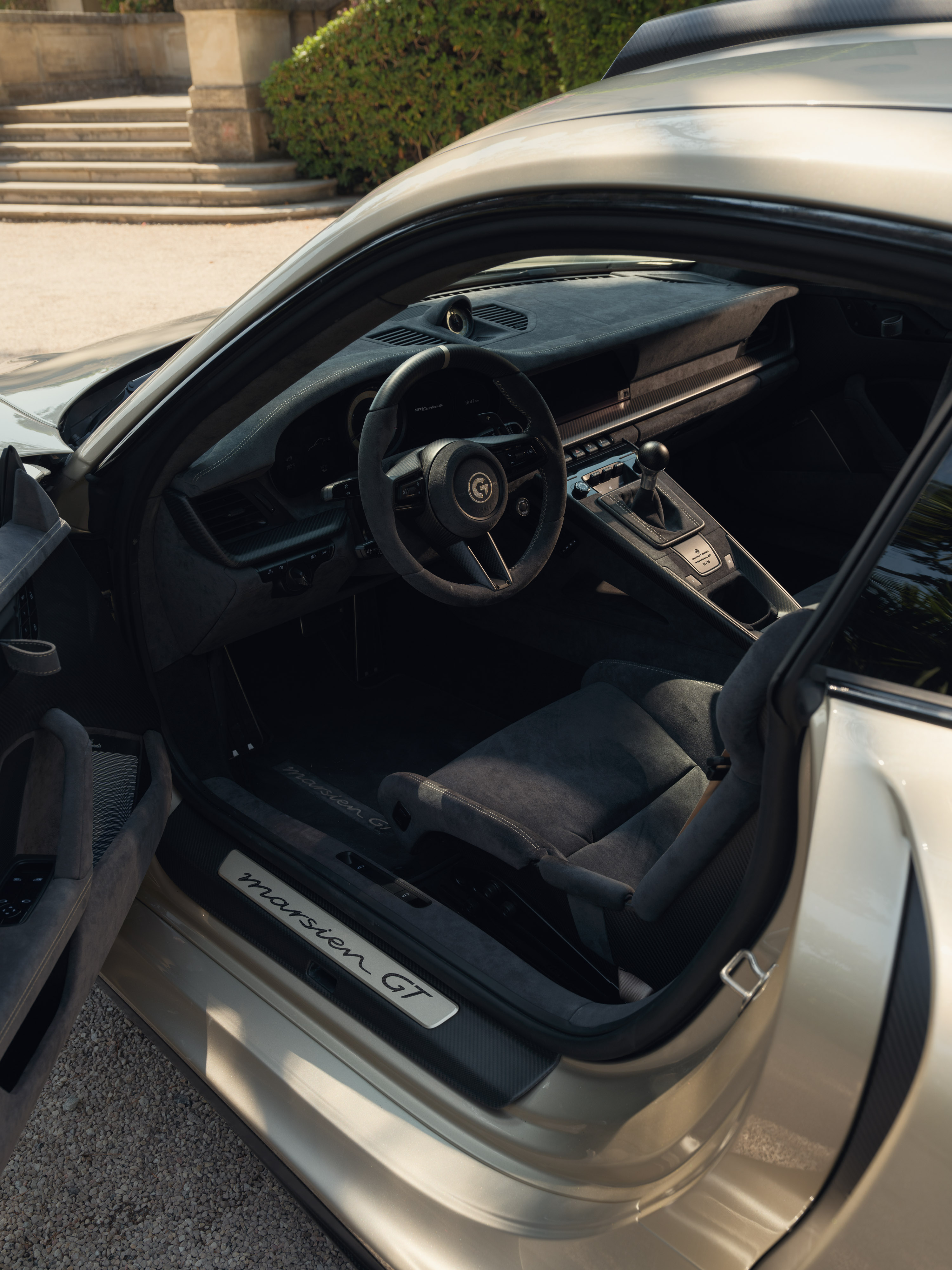
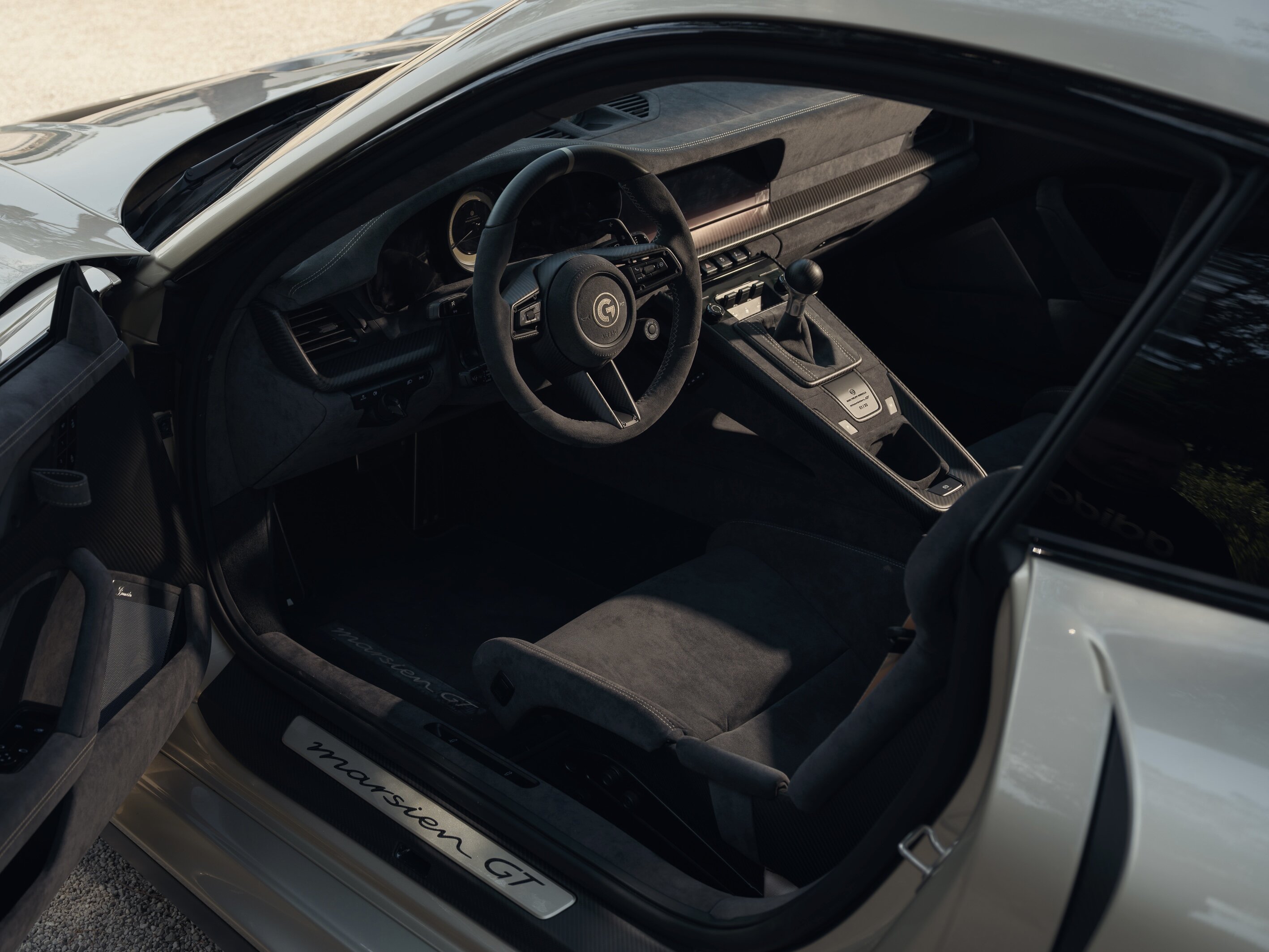
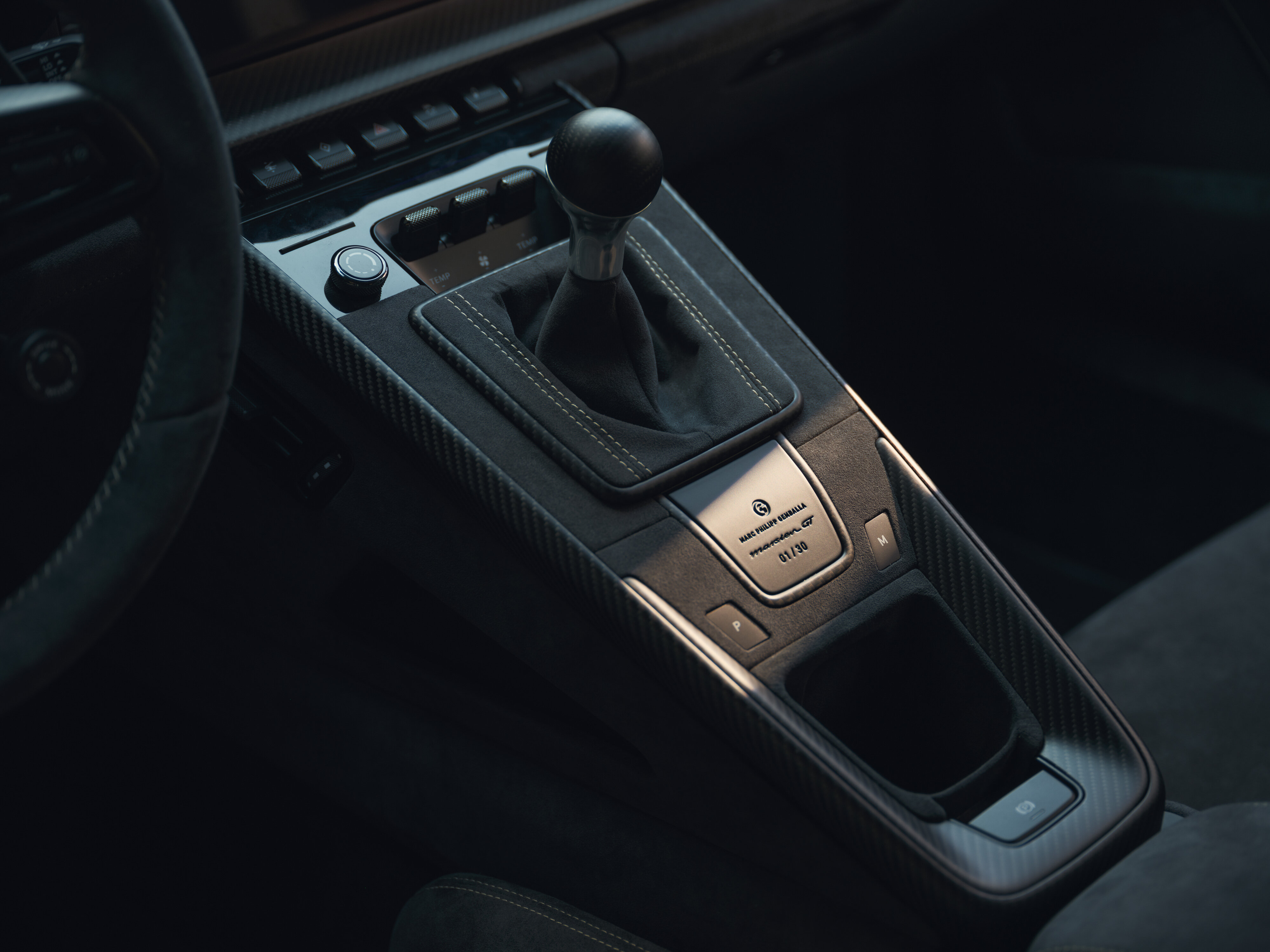
One of its defining features is a raised center console topped by an aluminum gear selector inspired by the Porsche Carrera GT. Buyers can specify the knob in exposed carbon fiber or mahogany instead of leather or Alcantara.
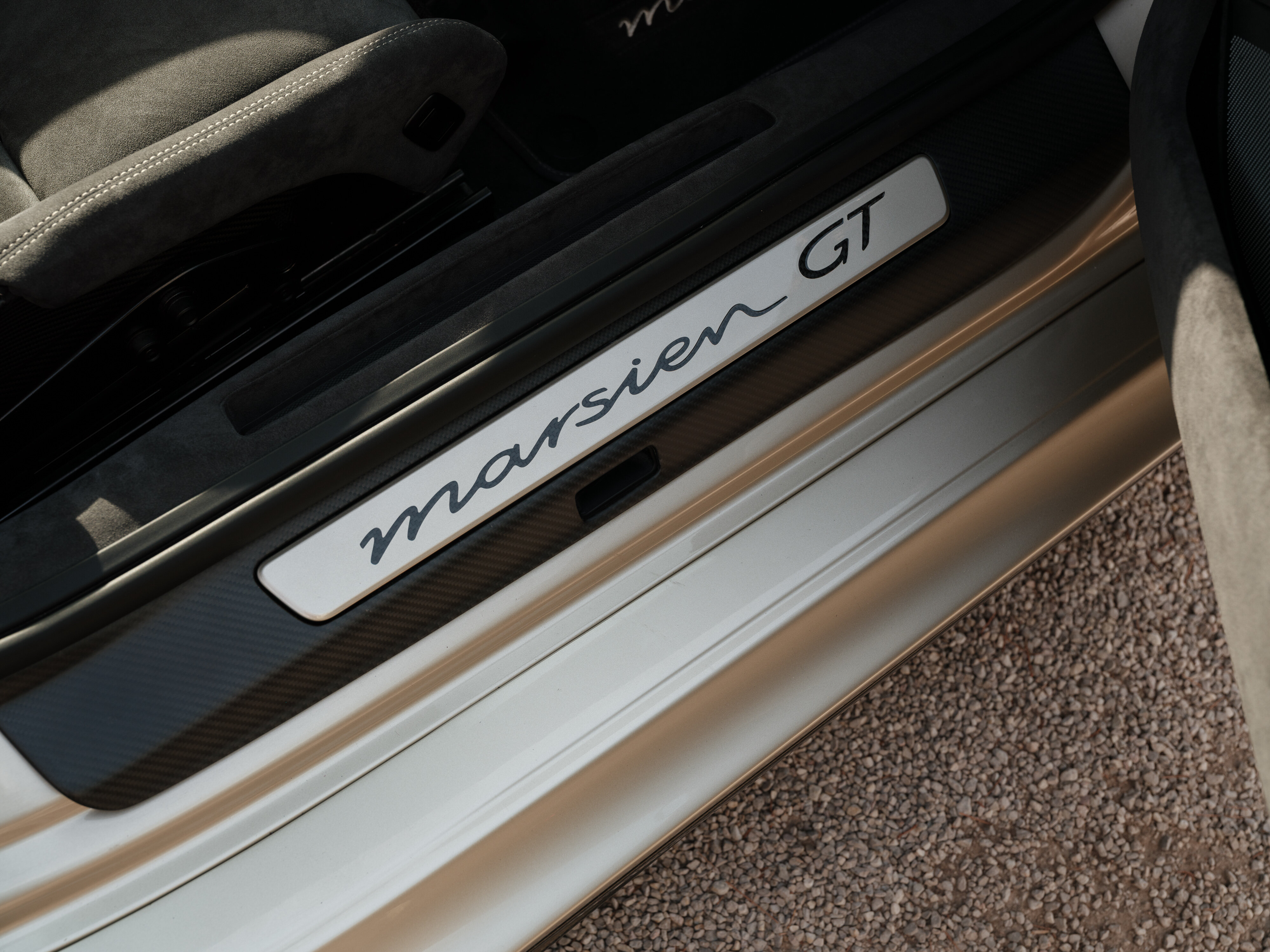
Carbon-fiber interior packages and a Clubsport roll bar are available, with the latter offered in body color, leather, Alcantara or exposed carbon. Each car also receives an individually numbered plaque mounted in the center console.
The launch car combines dark gray Alcantara and carbon bucket seats with champagne-colored stitching, seatbelts and instrument accents.
Those details were chosen to complement its appropriately extravagant exterior finish.
One Very Expensive Shade of Champagne
To mark Uwe Gemballa’s 70th anniversary, the debut car wears a bespoke four-layer paint called Anniversary Liquid Champagne Gold.
The metallic finish incorporates pearlescent flakes and was created specifically for the Marsien GT’s launch, while subtly referencing the pearl-white finish used for the original Marsien’s debut.
It also makes the already dramatic carbon-bodied 911 rather difficult to mistake for anything coming directly out of Zuffenhausen.
Only 30, and the Donor 911 Isn’t Included
Exclusivity comes with an appropriately serious price.
The Marsien GT starts at €770,000 before taxes, duties and shipping—and that figure doesn’t include the Porsche 911 Turbo or Turbo S donor car. Production begins in 2027, with first deliveries planned toward the end of that year.
Only 30 examples will be commissioned, compared with 40 examples of the original Marsien.
The Marsien GT makes its world premiere during Monterey Car Week at Pebble Beach, before appearances at The Quail and the Pebble Beach Concours d’Elegance.
The original Marsien asked what would happen if a modern 911-based supercar were engineered to leave the pavement. The GT essentially flips that formula around: it keeps the Marsien’s bespoke construction and visual drama, then concentrates everything on making it faster, sharper and more usable where most owners will actually drive it.
The result may start life as a 911 Turbo S, but after 1,500 new components, 830-plus horsepower and a €770,000 conversion, there’s not much ordinary Porsche left.