After a long absence, Mitsubishi’s legendary SUV returns with a ladder frame, seven seats, Super Select 4WD-II, and a 2.4-liter turbodiesel.
Mitsubishi has brought back one of the biggest names in its history. The all-new Pajero is officially here, returning as the brand’s flagship SUV with body-on-frame construction, serious four-wheel-drive hardware, and a more upscale mission than before.
First introduced in 1982, the Pajero went through four generations and surpassed 3.29 million units of production, finding buyers in more than 170 countries and regions. Now Mitsubishi wants the revived SUV to combine the qualities traditionally associated with the name—off-road capability and durability—with a noticeably more premium experience.
And despite the increasingly crossover-heavy SUV market, Mitsubishi hasn’t softened the Pajero’s basic formula.
Yes, It Still Has a Ladder Frame
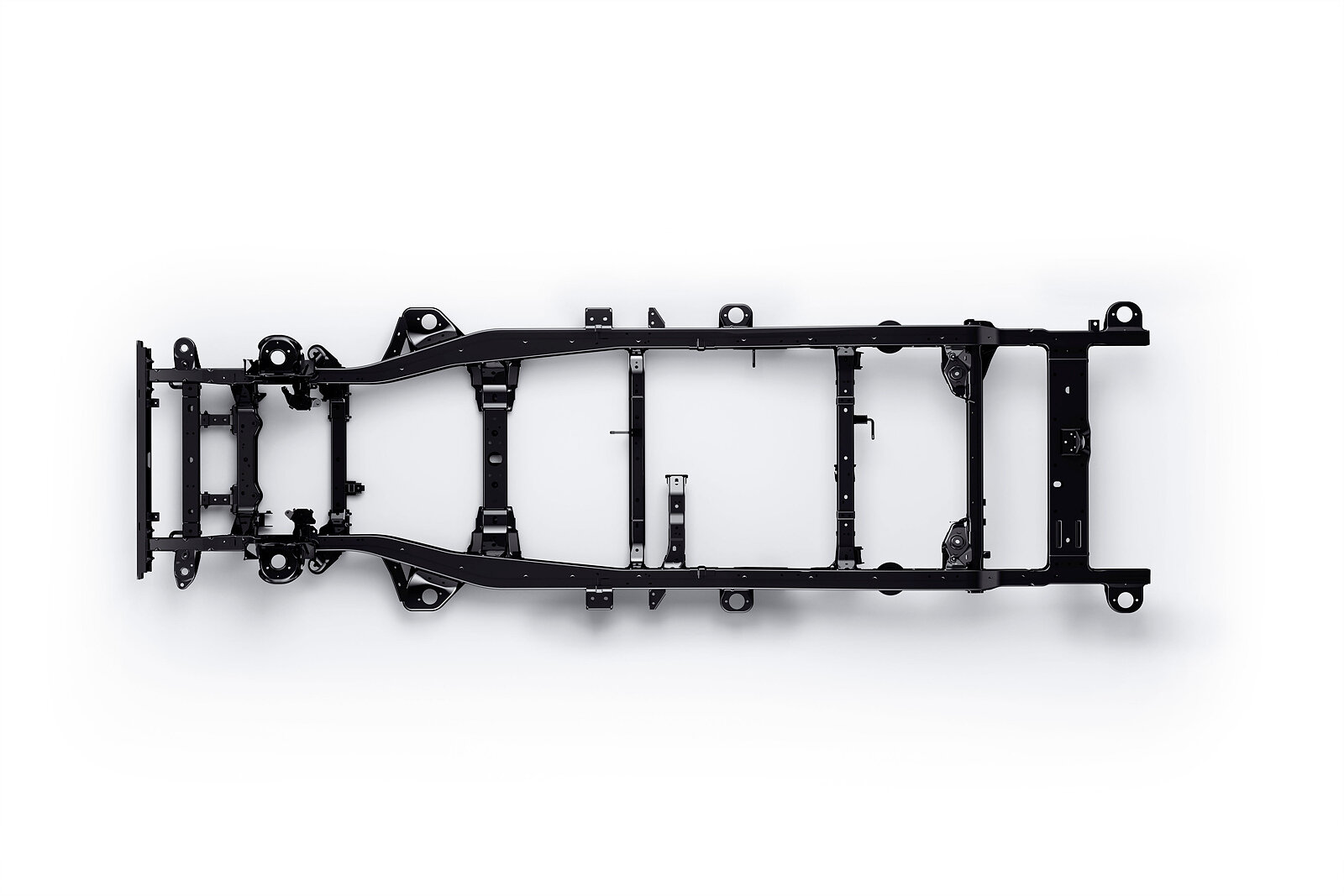
Underneath the new body sits a high-rigidity ladder frame, with greater use of high-tensile steel and increased frame cross sections intended to improve torsional and bending rigidity without unnecessarily adding weight.
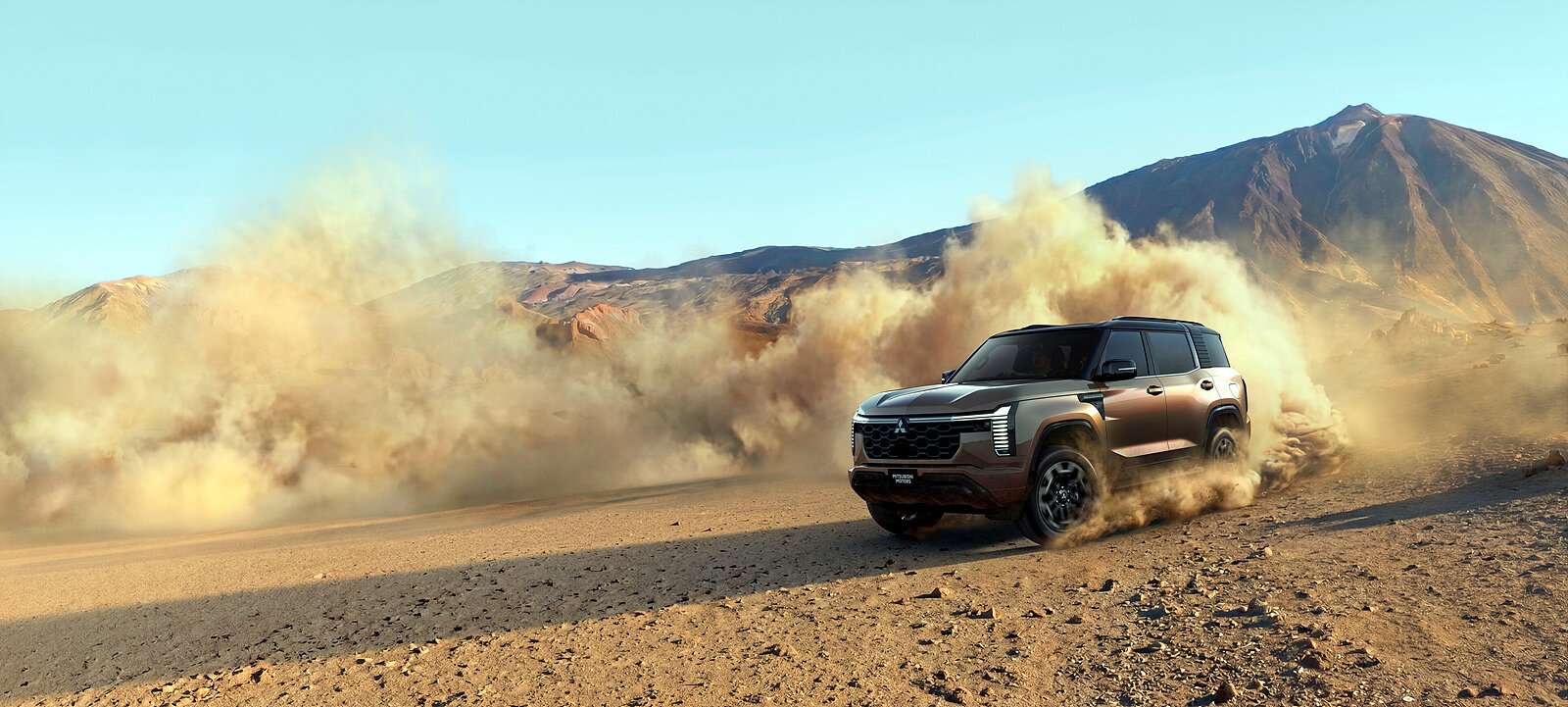
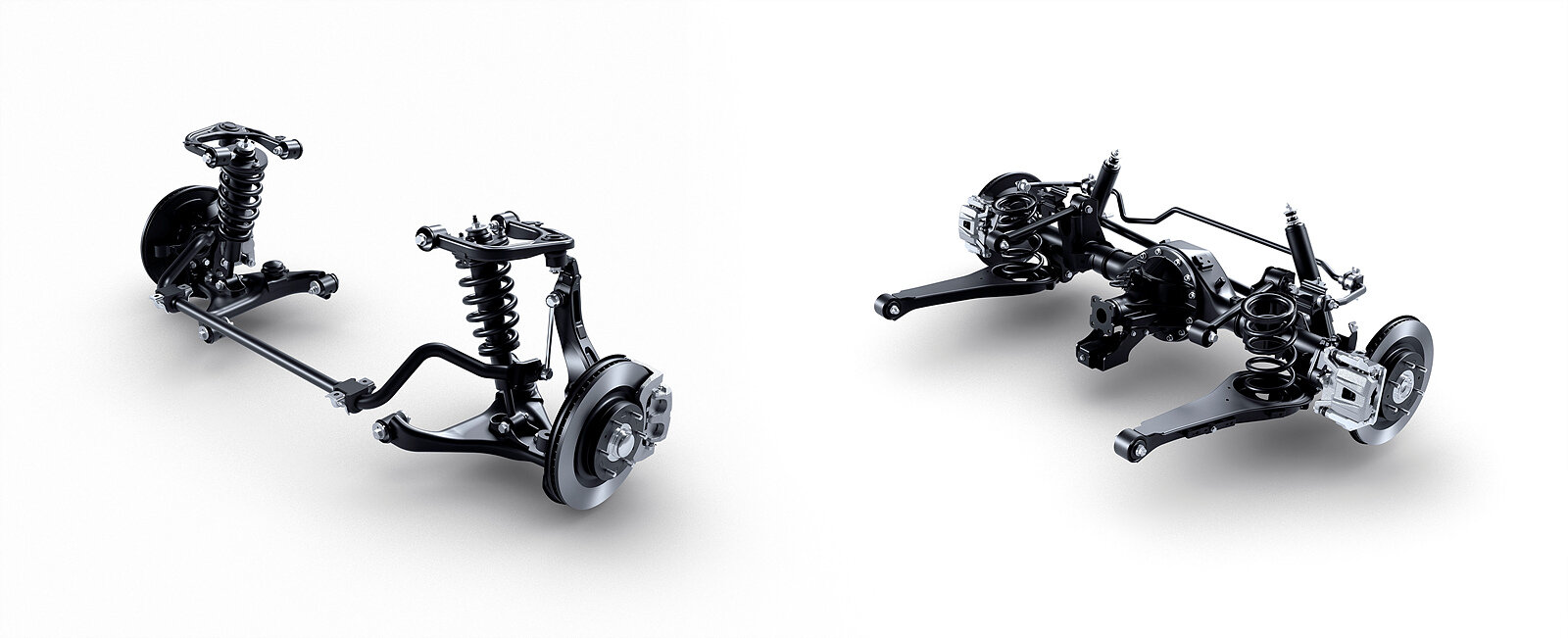
Up front is an independent double-wishbone suspension, while the rear uses a newly developed five-link rigid axle. Mitsubishi says it specifically targeted what it calls “off-road comfort,” attempting to retain articulation and durability on rough terrain without making the Pajero unpleasant during everyday highway driving.
The new SUV measures 193.7 inches long, 75.8 inches wide, and 75.2 inches tall, riding on a 113.0-inch wheelbase. Ground clearance reaches 9.1 inches on models equipped with 20-inch tires.
Its approach, breakover, and departure angles are 30.4, 22.6, and 25.8 degrees, respectively.
Those aren’t the specs of a crossover pretending to be an off-roader.
A 2.4-Liter Diesel Does the Work
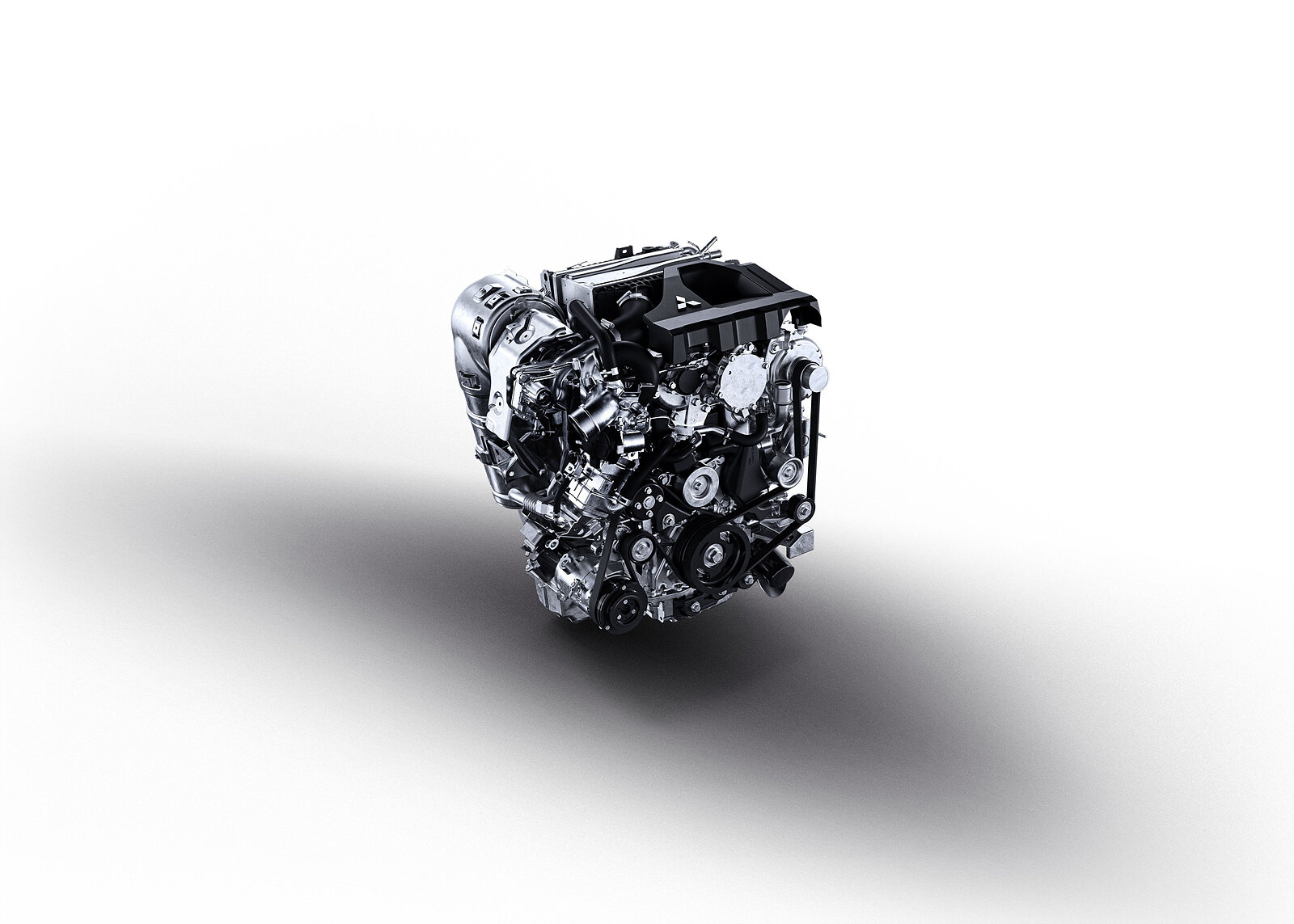
For now, Mitsubishi has detailed a specially developed 2.4-liter clean-diesel engine using a variable-geometry turbocharger. Maximum torque is 354 lb-ft (480 Nm), delivered through a newly developed eight-speed automatic transmission with a Sport mode.
Mitsubishi hasn’t positioned the Pajero as a horsepower hero. Instead, the powertrain is designed around controllable low- and midrange response, refinement, and the kind of torque delivery that makes sense in a heavy off-road SUV.
More interesting is what happens downstream of the transmission.
Super Select 4WD-II Meets S-AWC
The Pajero retains Mitsubishi’s Super Select 4WD-II system, giving the driver four drivetrain configurations: rear-wheel-drive 2H, full-time four-wheel-drive 4H, center-differential-locked 4HLc, and low-range 4LLc.
That last one matters. The new Pajero still has an actual low-range transfer case.
This time Mitsubishi combines SS4-II with its Super-All Wheel Control, or S-AWC, vehicle-dynamics system. S-AWC integrates Active Yaw Control, stability and traction control, and ABS to manage driving and braking forces at individual wheels.
Drivers can choose from seven terrain and driving modes: Normal, Eco, Gravel, Snow, Mud, Sand, and Rock.
There’s also some useful off-road tech hiding behind all the electronics. A 3D Multi Around Monitor combines feeds from four cameras to generate a view around the vehicle, while a front under-floor view lets the driver see terrain immediately ahead of and underneath the Pajero. It can automatically activate when 4HLc or 4LLc is engaged.
It Looks Like a Pajero Again
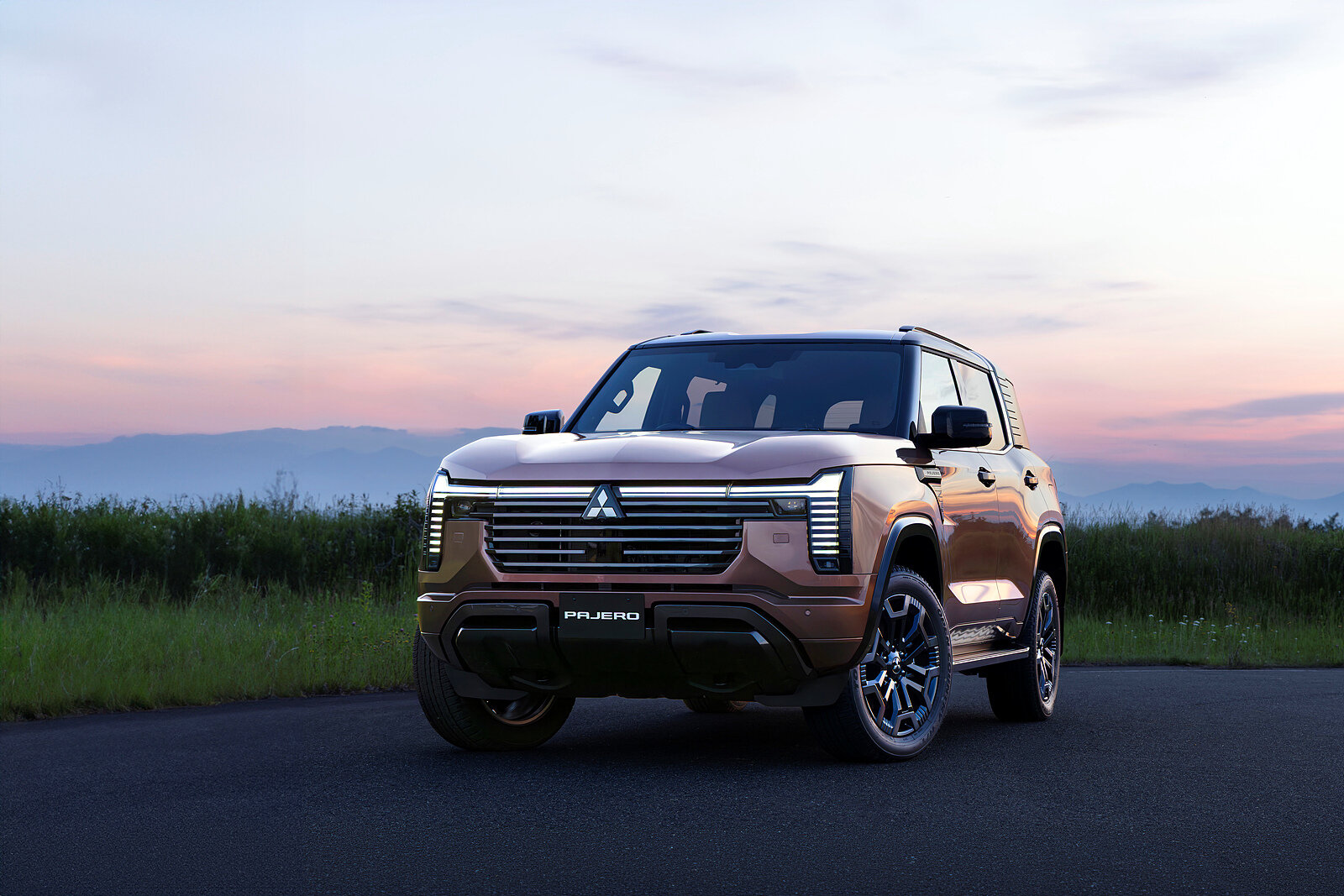
Mitsubishi calls the new design philosophy “Grand Charisma,” but the more important point is that designers deliberately reached into the Pajero back catalog.
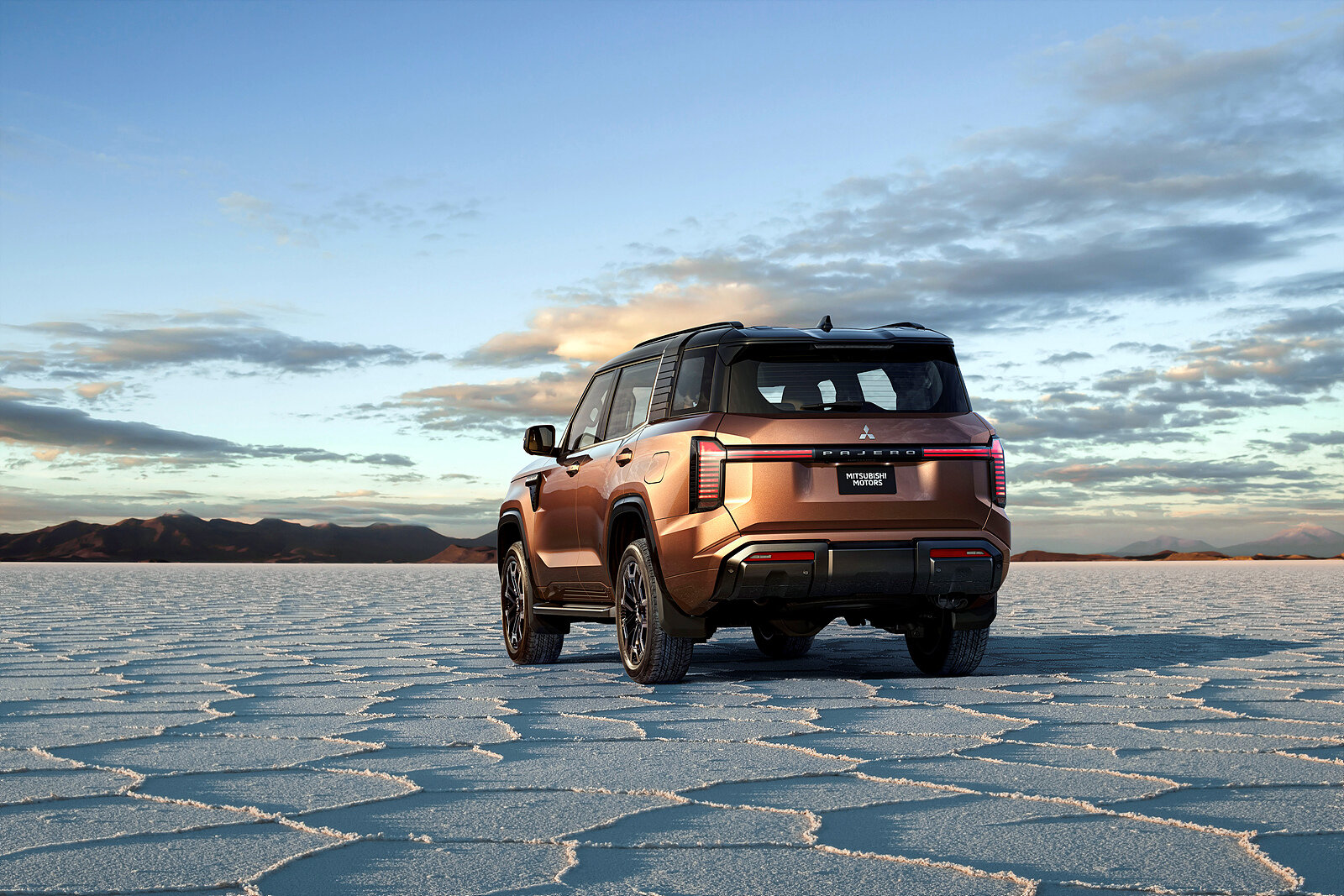
The upright body and strong horizontal lines reference the original model, while the C-pillar takes inspiration from the first-generation Pajero’s roll-bar treatment. At the rear, a hexagonal design motif recalls the externally mounted spare wheel of earlier generations.
Up front, T-shaped headlights flank a choice of two grille treatments: horizontal bars or a more aggressive honeycomb pattern.
The result isn’t retro in the usual sense. Instead, Mitsubishi has borrowed enough recognizable Pajero cues to separate its flagship from the anonymous two-box shapes that dominate the modern SUV market.
Three Rows and Room for Seven
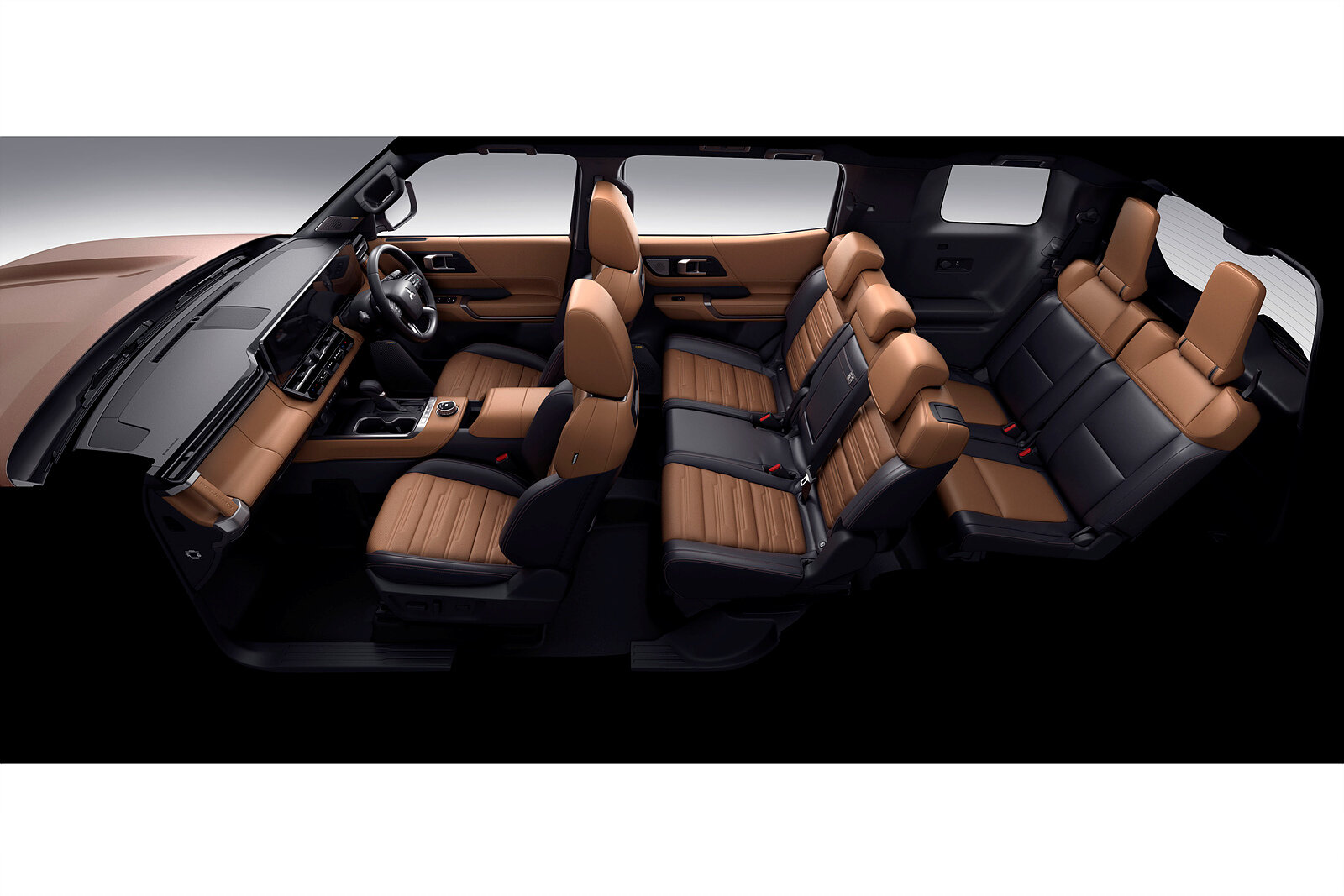
This isn’t simply an off-road toy, either. Mitsubishi has given the new Pajero a three-row, seven-seat cabin.
The second row slides through 5.9 inches and incorporates a tumble mechanism to improve third-row access. Mitsubishi says the third row has enough headroom for adults, with space beneath the second-row seats for passengers’ feet.
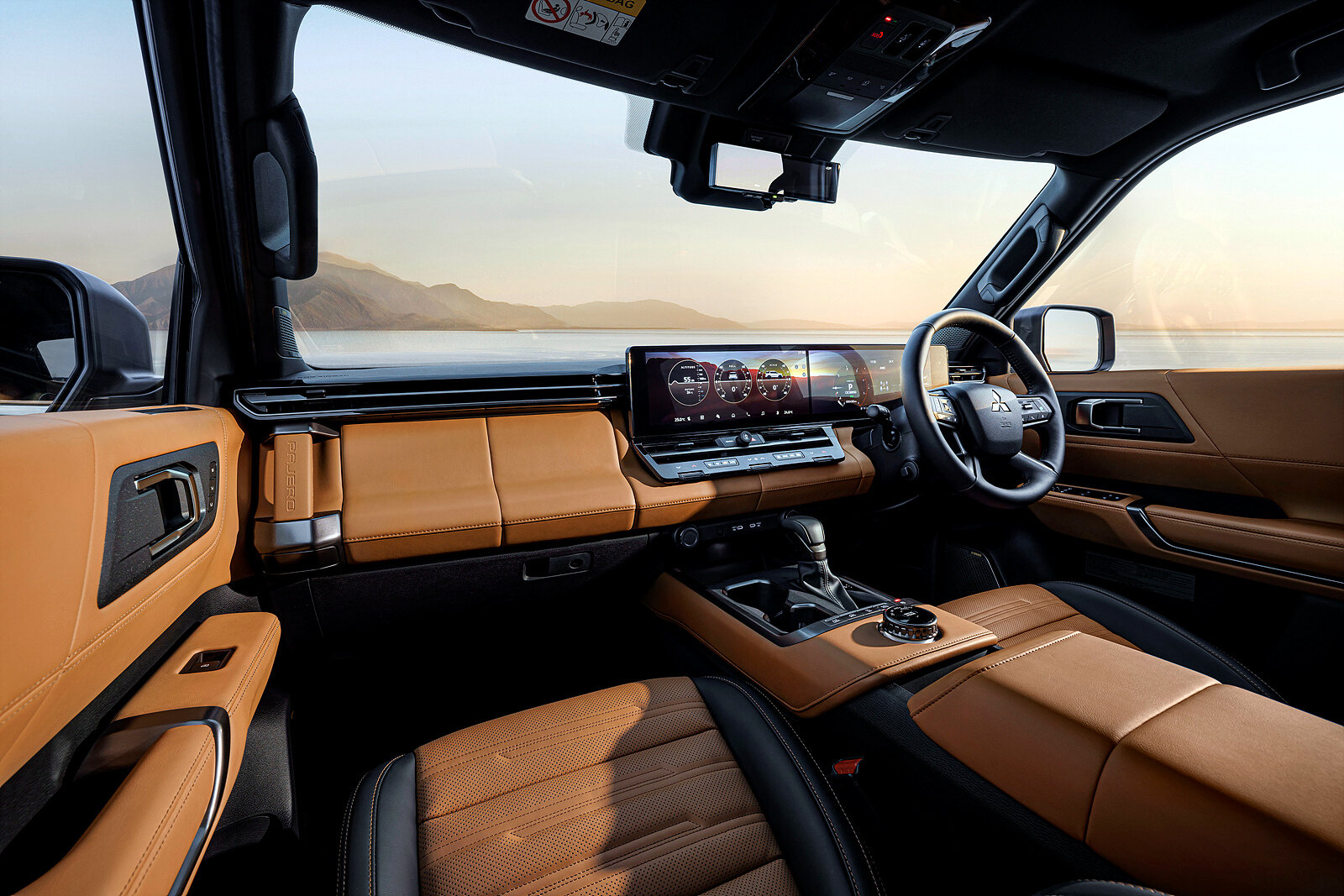
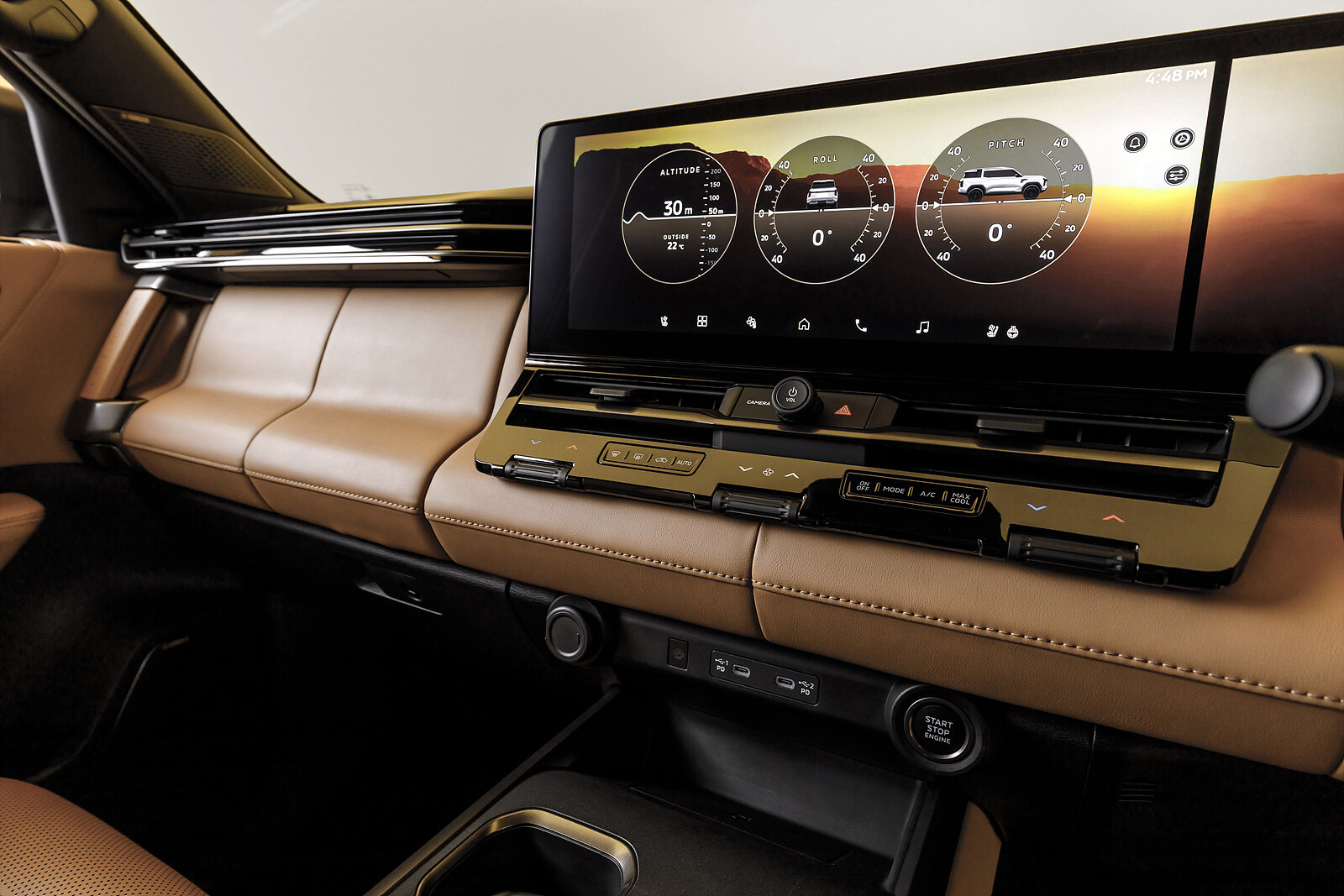
The dashboard is dominated by a horizontal monolithic display incorporating two 14.3-inch screens on applicable specifications. Mitsubishi has even digitally resurrected the old Pajero triple-gauge cluster through a new Multi-Meter display showing information such as altitude, compass heading, pitch and roll angles, temperature, and AYC status.
Acoustic glass is used not only for the windshield but also for the front and rear side windows, emphasizing just how much Mitsubishi wants the revived Pajero to move beyond its utilitarian roots.
Other available equipment includes ventilated seats, three-zone climate control, connected services, and a 12-speaker Yamaha audio system with dual amplifiers.
The Pajero Is Going Global Again
Production takes place in Thailand, with Thailand getting the new Pajero first. Japan and Australia are scheduled to follow during Mitsubishi’s fiscal 2026.
Beginning in fiscal 2027, Mitsubishi plans to expand the SUV into roughly 100 countries, including markets across Southeast Asia, Latin America, and the Middle East.
There’s one market conspicuously absent from that announcement: the United States.
That’s not particularly surprising given Mitsubishi’s current U.S. lineup and the Pajero’s diesel powertrain. Still, Americans of a certain age may recognize the vehicle under another name. Previous Pajeros were sold as the Montero in some markets, including the U.S.
For now, the bigger story is simply that Mitsubishi didn’t revive the Pajero badge for another road-focused crossover. The ladder frame is still there. So is low range. So is the emphasis on getting somewhere after the pavement ends.
After more than four decades, that remains the point of a Pajero.