The finished version gets a 100-kWh battery, a longer wheelbase, improved ergonomics, and up to 4,400 pounds of downforce—even at a standstill.
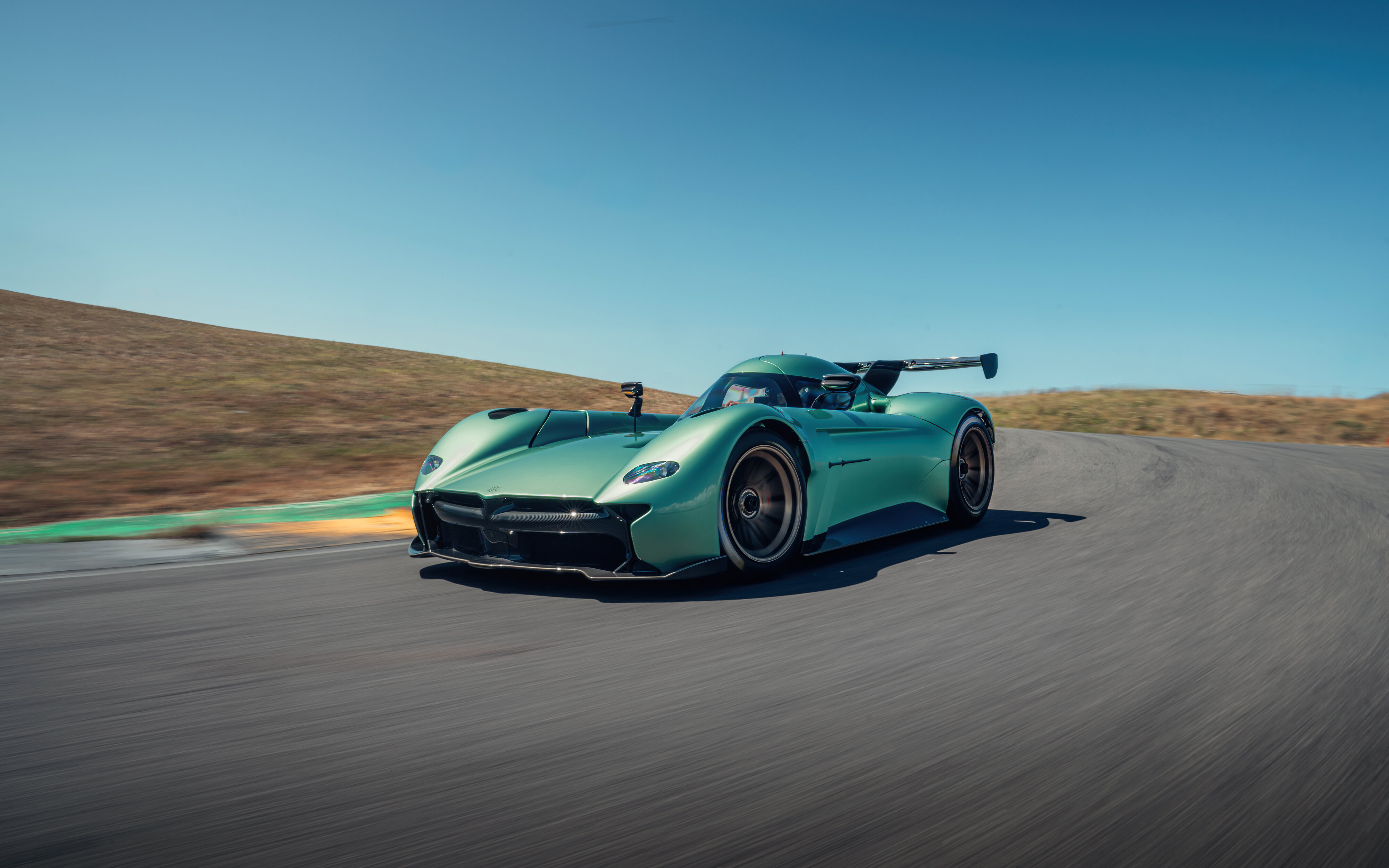
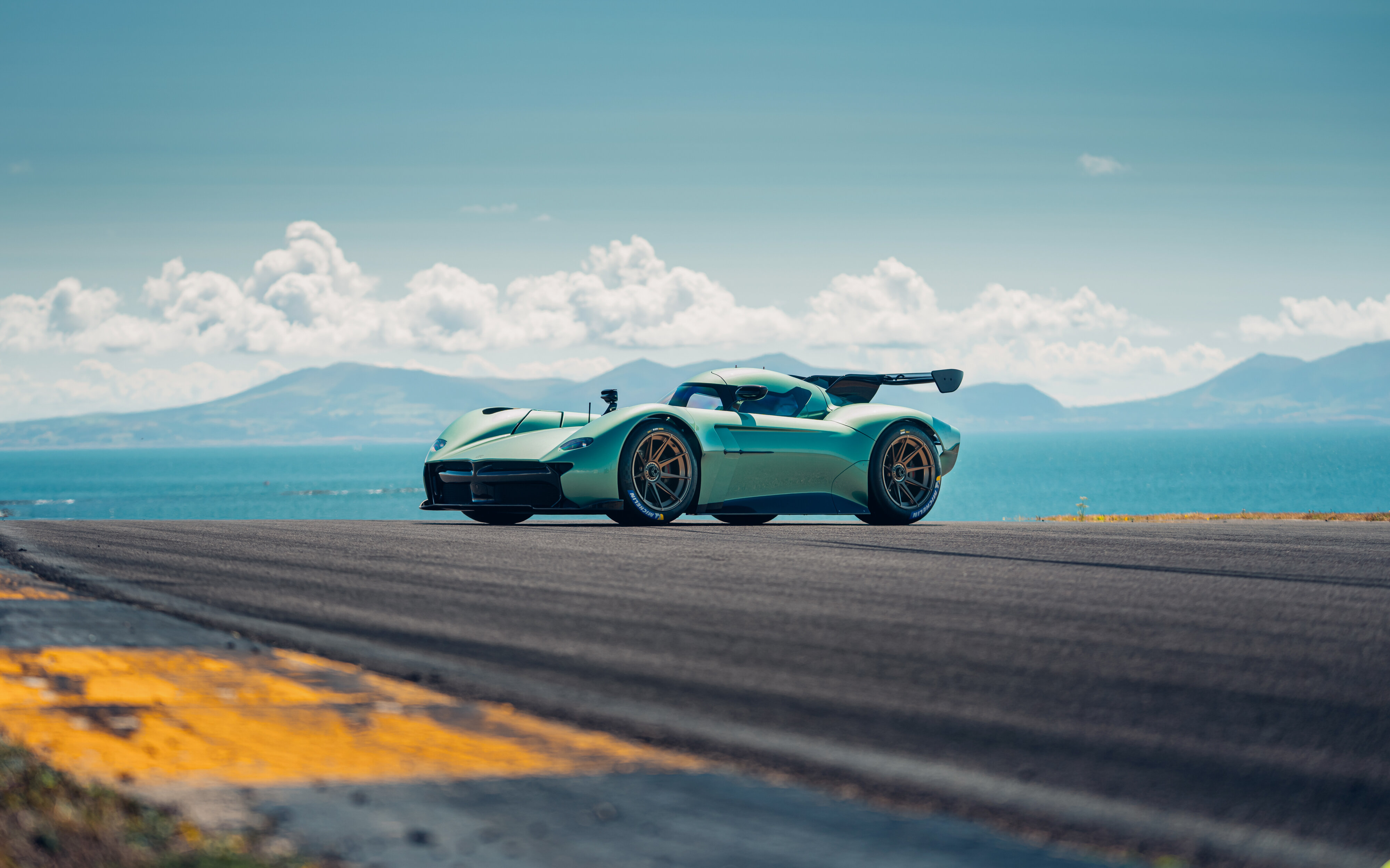
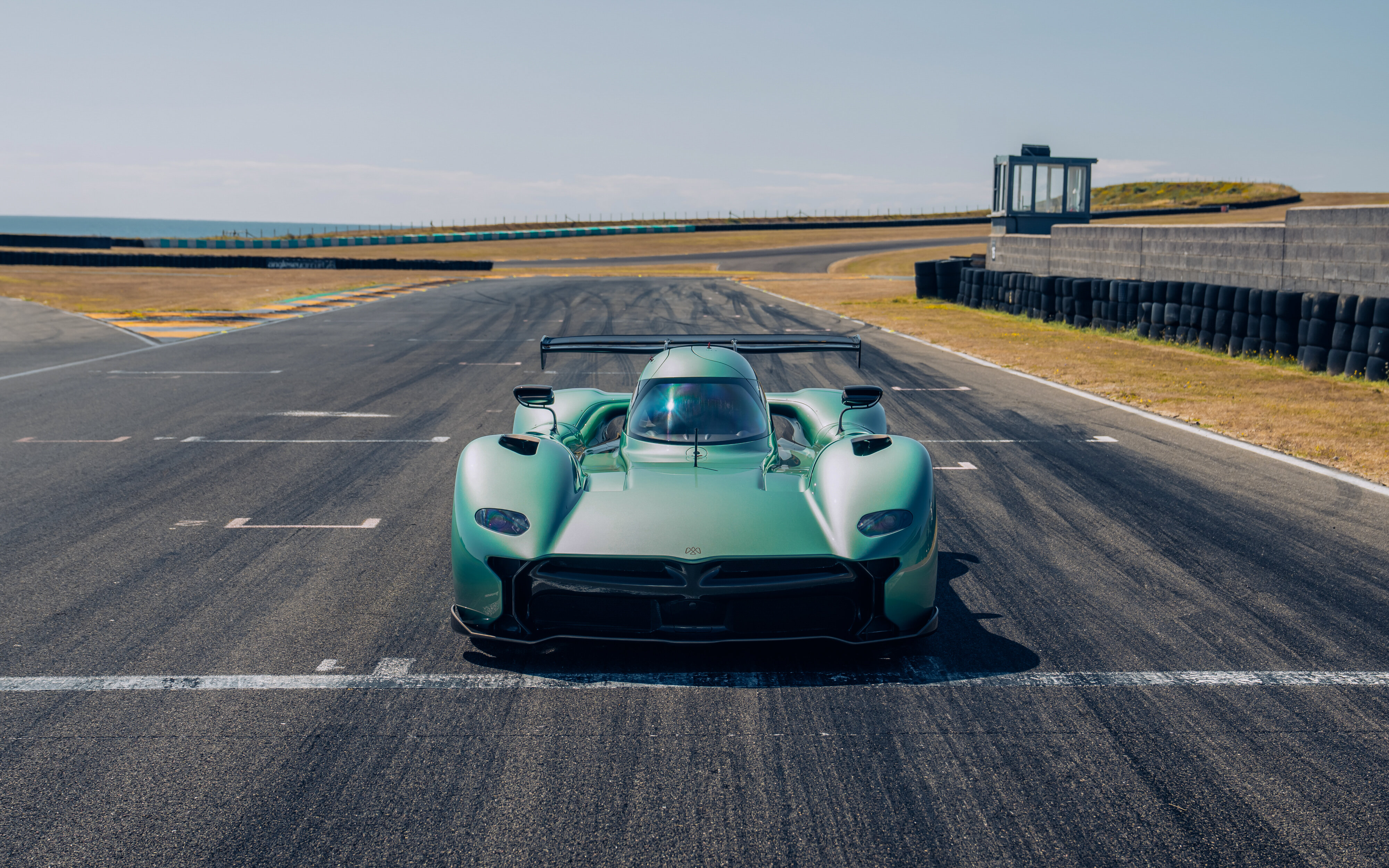
The McMurtry Spéirling Pure is moving beyond record runs and prototype demonstrations. The production version of the tiny electric fan car will make its global public debut on August 14 at The Quail, A Motorsports Gathering, during Monterey Car Week.
It will appear on the McMurtry display in static form before heading to WeatherTech Raceway Laguna Seca on August 15 for the Monterey Motorsports Reunion. McMurtry says a broader U.S. tour will follow, with stops planned at selected dealerships and race tracks.
Although the production car looks familiar, McMurtry says 95 percent of its components are new compared with the earlier prototypes. The changes are intended to turn the headline-making hillclimb machine into a track car that paying customers can operate with less fuss.
A Bigger Battery and More Usable Package
The largest mechanical change is the battery. Prototype versions used a 60-kWh pack, while the production Spéirling Pure receives a 100-kWh battery built with Molicel P50B NCA 21700 cylindrical cells.
The battery uses a standardized modular design, which McMurtry says will allow for future upgrades. Regenerative braking capacity has also increased to as much as 200 kW, regardless of the battery’s state of charge.
Two new Helix electric motors drive the rear wheels through an upgraded gearbox and electronic differential. Total output remains 1,000 horsepower.
Accommodating the larger battery required the wheelbase to grow from 78.7 inches to 86.6 inches. Overall length is now 150.2 inches, making the Spéirling Pure shorter than many subcompact hatchbacks. It measures 70.7 inches wide and just 41.6 inches tall.
Estimated curb weight is approximately 2,980 pounds, depending on options. That is heavier than a stripped-out record prototype, but still remarkably light for an electric car carrying a 100-kWh battery.
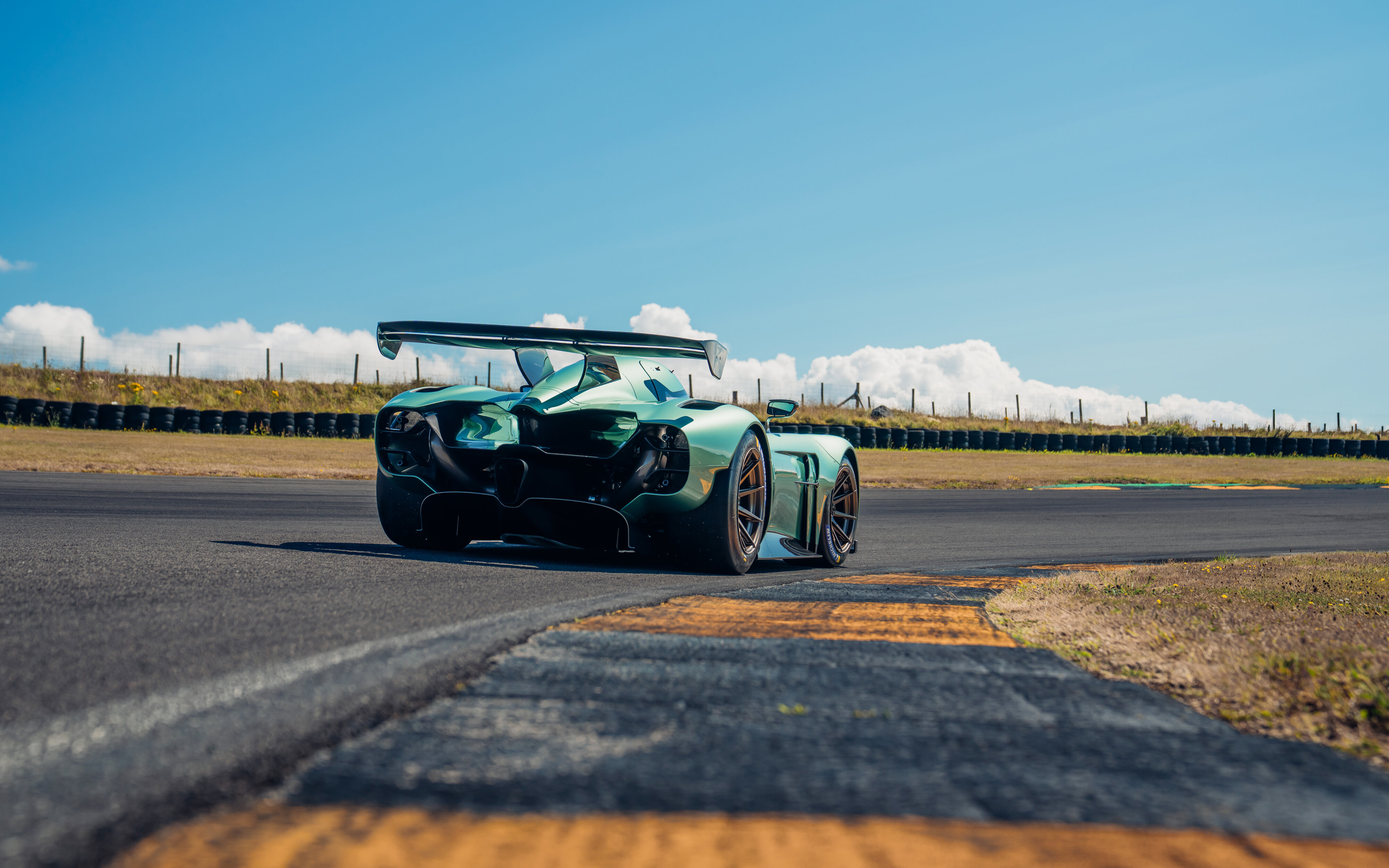
McMurtry has also relocated the powertrain cooling system from the rear of the car to the front. The company says the move improves cooling efficiency while cleaning up airflow around the rear bodywork and underbody tunnels.
Downforce Without Speed
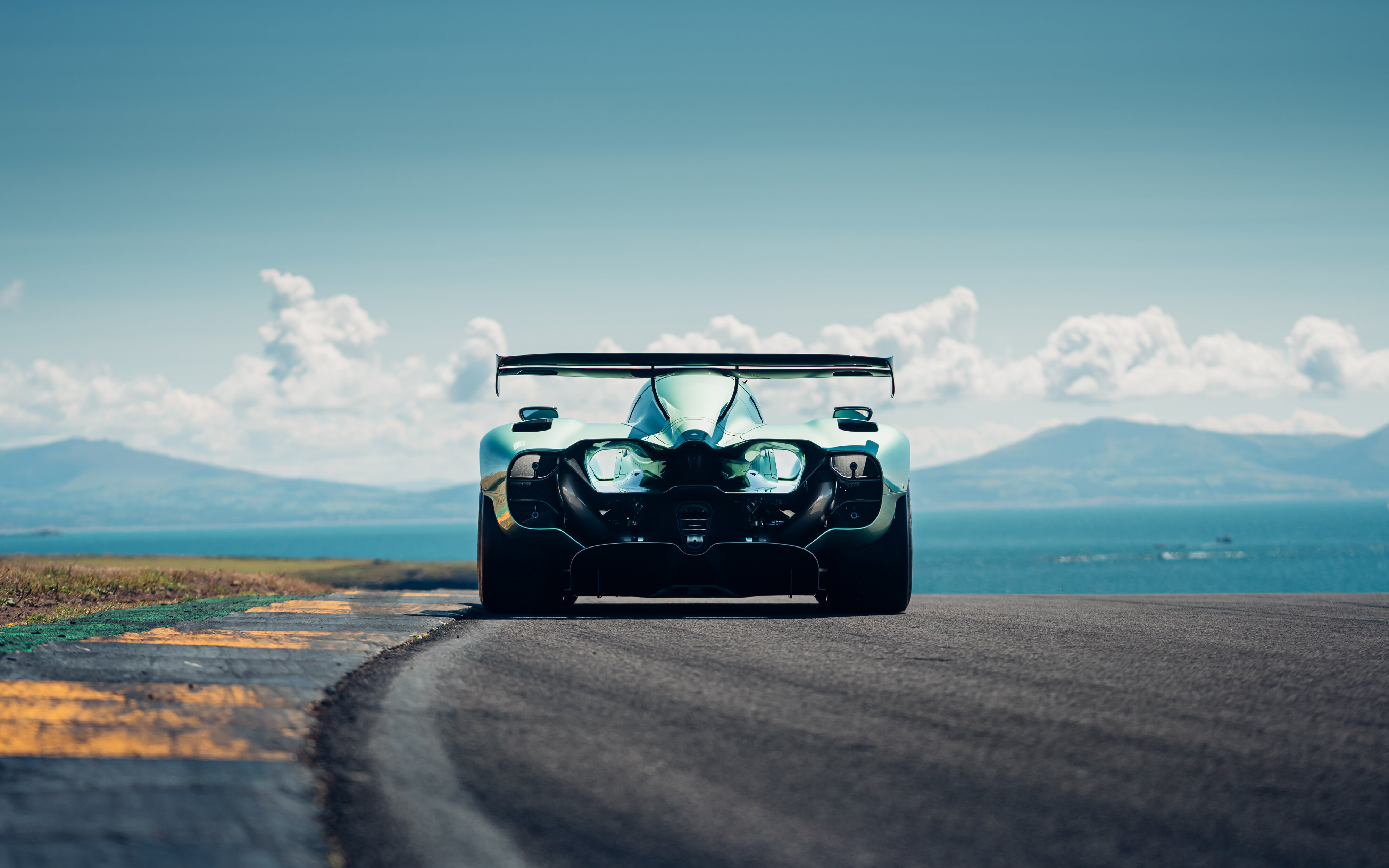
The defining feature remains McMurtry’s Downforce-on-Demand system.
Conventional race cars rely on wings, diffusers, and underbody airflow, meaning their aerodynamic grip increases with speed. The Spéirling Pure instead uses electrically driven fans to extract air from beneath the car, creating a low-pressure area that pulls the chassis toward the road.
McMurtry claims the system can generate up to 4,400 pounds of downforce from 0 mph. That means the car can produce more aerodynamic load than its own weight before it begins moving.
The production model receives new fan blades, upgraded fan motors, revised cooling, and a relocated fan assembly intended to improve the car’s center of gravity.
The flexible skirts that seal the underside of the car have also been redesigned for greater durability and suspension travel. McMurtry says they are now capable of operating for thousands of kilometers.
An onboard air compressor is another important addition. Earlier prototypes required an external air bottle to pressurize the skirt system before operation. On the production car, the skirts can be raised independently for trailer loading, pit-lane driving, and other low-speed maneuvers.
That may sound like a small convenience, but it is one of several changes aimed at making the Spéirling Pure function like a customer-owned track car rather than a specialist engineering experiment.
0–60 MPH in 1.55 Seconds


McMurtry claims the Spéirling Pure can accelerate from 0 to 60 mph in 1.55 seconds with a one-foot rollout. Top speed is electronically limited to 190 mph.
That top-speed figure is not especially remarkable by modern hypercar standards. The Spéirling’s focus is instead on acceleration, braking, and cornering performance.
McMurtry quotes maximum cornering and braking forces of 3.0 g. The company says the car can cover approximately 25 to 31 miles when driven at a pace comparable to an LMP2 race car.
Charging the battery from 20 to 95 percent is expected to take between 20 and 60 minutes, depending on ambient temperature and charger output.
Stopping power comes from 15.4-inch ventilated carbon-ceramic discs and Brembo six-piston calipers. The car rides on commercially available Michelin Pilot Sport GT slick tires, measuring 30/68-18 at the front and 31/71-18 at the rear.
Using an existing competition tire rather than a bespoke design should make replacements easier to source in major motorsport markets.
More Room for the Driver
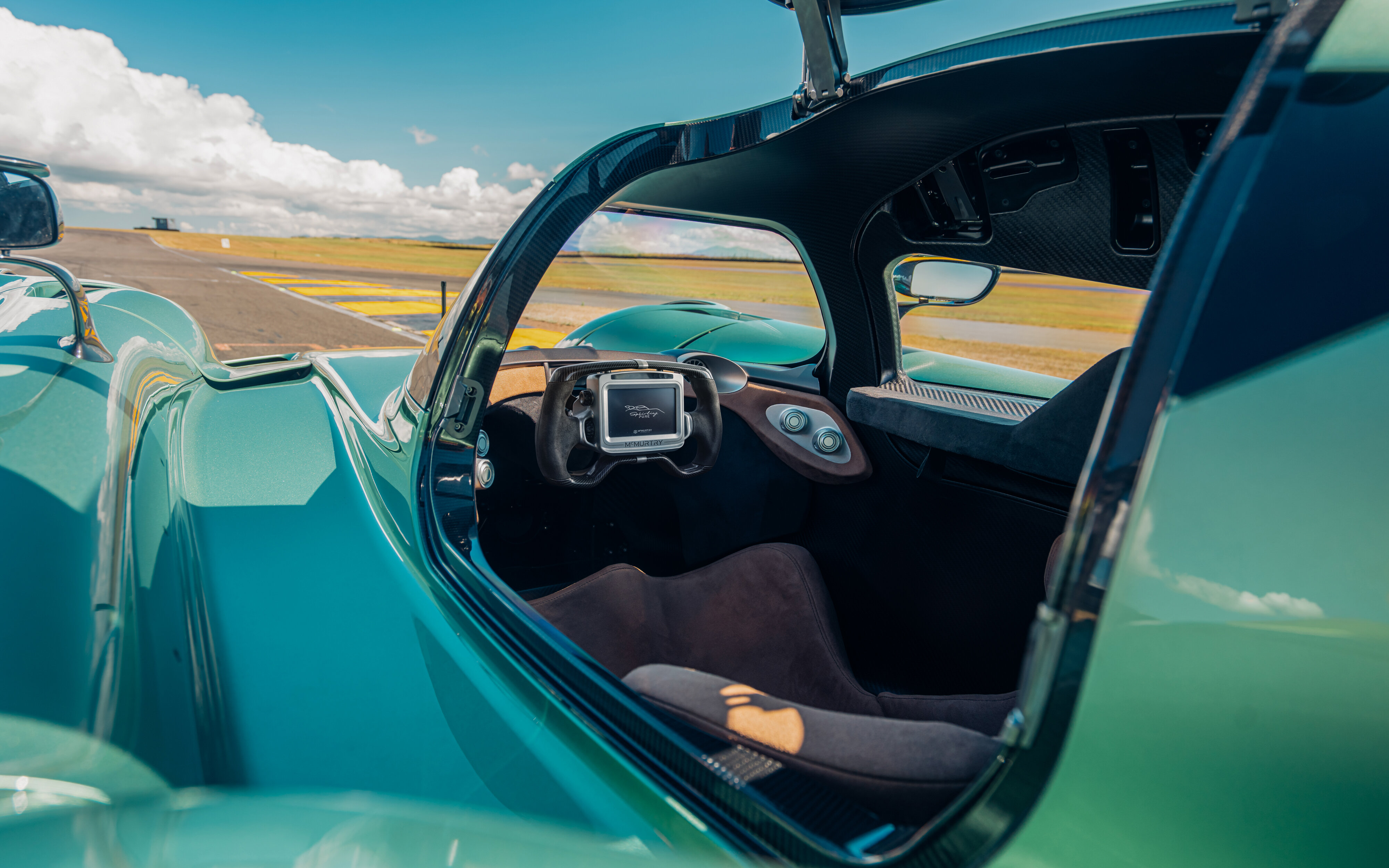
The new carbon-fiber monocoque was designed to meet international motorsport safety requirements while improving cabin space and visibility.
The cockpit offers additional elbow room and legroom, and McMurtry says it can accommodate drivers as tall as 6 feet 7 inches. The A-pillars have been repositioned to widen the field of view, while the door openings are larger to make getting in and out less awkward.
A second door is now hinged, and the hinge spacing has been widened to improve access further.
The steering system has also changed. The prototype’s electric power steering has been replaced by a hydraulically assisted setup with what McMurtry describes as Formula 1-style valving. The goal is lighter steering effort without filtering out too much feedback from the front tires.
Electronically adjustable dampers will be offered as an option. The production car also receives more suspension travel and a nominal 20-percent increase in ride height while in use.
The front Michelin slicks are 11 percent wider than before, while the rear tires grow by 3 percent. Both front and rear sidewalls are 15 mm taller to improve compliance.
Headlights, Indicators, and a Place for Your Helmet
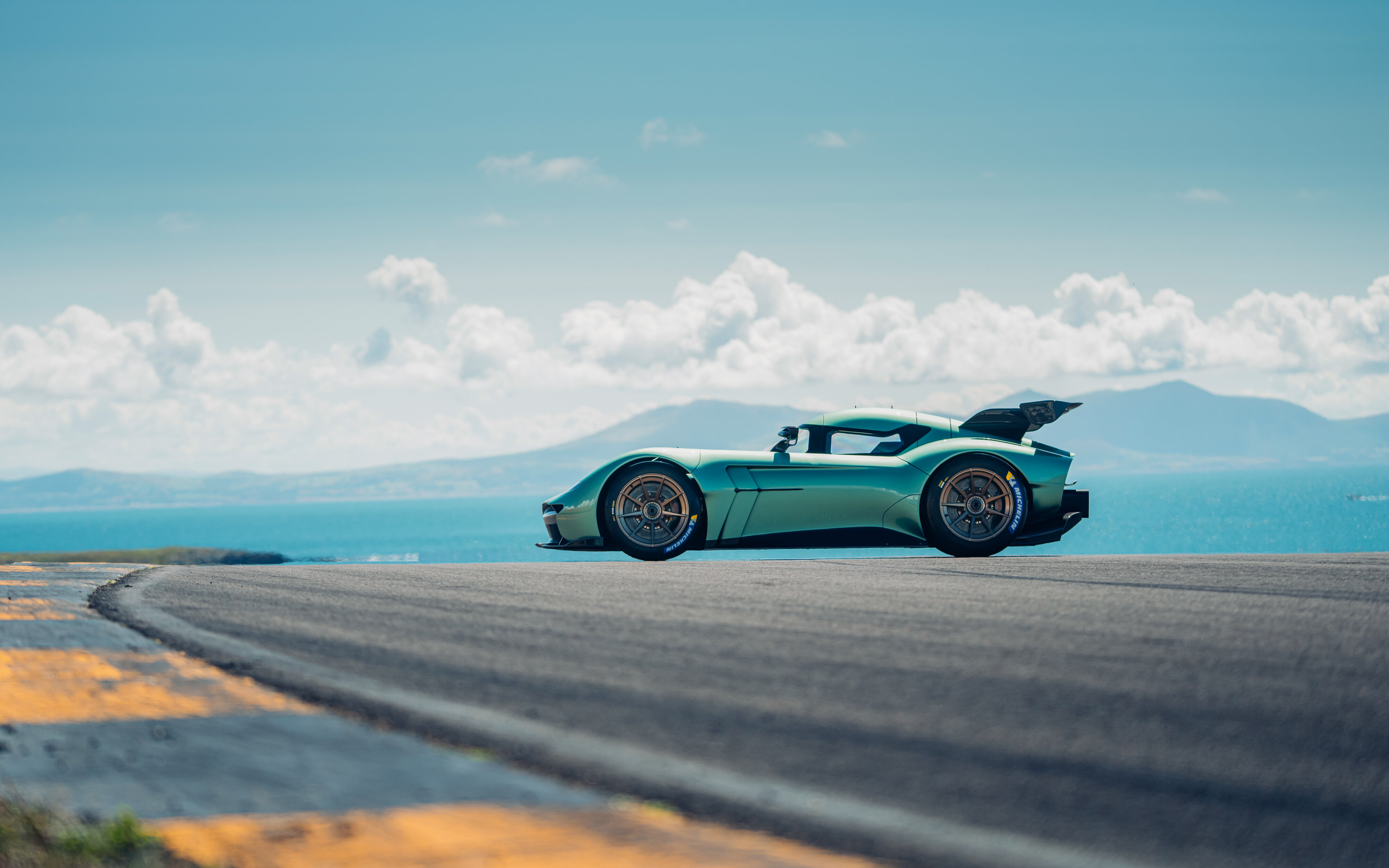
The Spéirling Pure remains a dedicated track car, but the production version gains several features that make it easier to use during conventional track days.
Headlights allow for evening and nighttime driving, while indicators, hazard lights, brake lights, and a main-beam flash function improve safety around other vehicles.
A new swan-neck rear wing incorporates a small storage compartment beneath it, sized to hold a helmet and HANS device.
Inside, buyers receive a custom-molded seat, adjustable pedals, and an adjustable steering wheel. Air conditioning is optional.
McMurtry says the vehicle can be operated trackside by the driver and a technician—or even what the company calls a “competent friend.” Full factory support will also be available.
The car is eligible for several competition categories, including GT1 Sports Club, Global Time Attack in the United States, and the European Time Attack Masters series.
Nearly $1.3 Million, Limited to Fewer Than 100 Cars
Production will be capped at no more than 100 examples.
Pricing starts at £995,000, or approximately $1.3 million, before taxes, shipping, and optional equipment. First customer deliveries are scheduled to begin later in 2026.
That price puts the Spéirling Pure in the same financial territory as limited-production hypercars from established exotic brands. But the McMurtry is not designed for road trips, valet stands, or boulevard cruising.
Its appeal is much narrower and more extreme: delivering the acceleration, braking, and cornering forces of a top-level race car in a compact electric package that an owner can bring to a track and operate without a full professional race team.
The original Spéirling proved that fan-assisted aerodynamics could produce extraordinary performance. The production Pure now has to prove that the same concept can work as a durable, repeatable, and genuinely usable customer car.
2026 McMurtry Spéirling Pure Specifications
Power: 1,000 hp
Drivetrain: Dual-motor rear-wheel drive with electronic differential
Battery: 100-kWh lithium-ion, Molicel P50B NCA 21700 cells
0–60 mph: 1.55 seconds with one-foot rollout
Top speed: 190 mph
Maximum downforce: 4,400 pounds from 0 mph
Maximum cornering force: 3.0 g
Maximum braking force: 3.0 g
Length: 150.2 inches
Width: 70.7 inches
Height: 41.6 inches
Wheelbase: 86.6 inches
Estimated weight: Approximately 2,980 pounds
Track range: 25–31 miles at LMP2 pace
Production: Fewer than 100 cars
Price: £995,000, approximately $1.3 million, before taxes and options