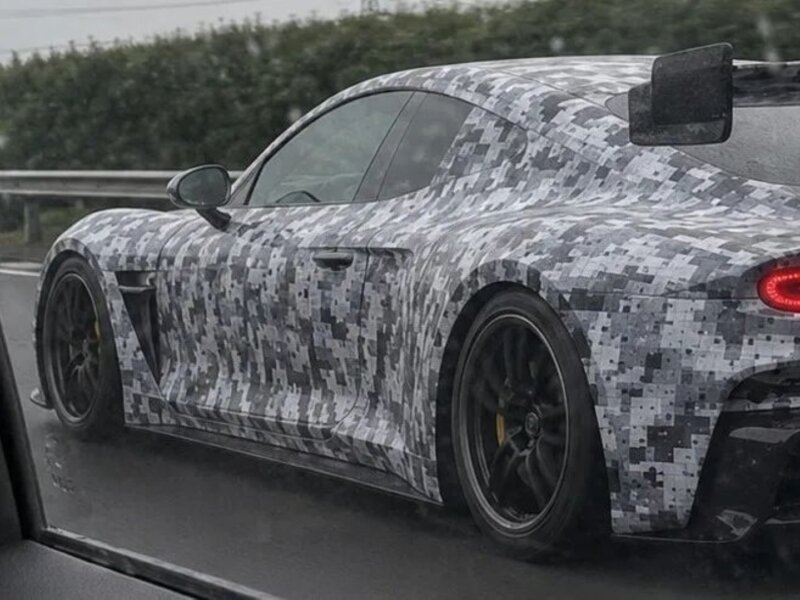
Leaked images reveal a heavily camouflaged two-door electric sports car testing in China, widely believed to be Xiaomi’s upcoming high-performance vehicle, while CATL expands its influence through a global battery standardization partnership.


Key Details:
-
Xiaomi Sports Car Prototype: A camouflaged test vehicle spotted on Chinese highways features design cues matching Xiaomi’s SU7 Ultra, including a distinctive continuous ring-shaped rear light bar, low-slung wide-body silhouette, and fastback roofline, suggesting it could be a production version of the digital Vision GT concept.
-
Track-Oriented Engineering: The prototype showcases performance modifications including a swan-neck fixed rear wing, multi-layered aerodynamic diffuser, and yellow brake calipers, with thermal management systems designed for sustained high-speed circuit driving.
-
Advanced Powertrain Potential: The vehicle could feature Xiaomi’s previously unveiled 2,054 HP quad-motor system paired with a 48V active intelligent chassis framework, enabling real-time damping adjustments and software-driven steer-by-wire capabilities.
-
International Expansion Timeline: Xiaomi’s EV division targets the second half of 2027 for its official overseas launch, prioritizing European markets with mid-to-high-end products, building on the brand’s Nurburgring lap record of 6:22.091.
-
CATL’s Battery Alliance: The world’s largest battery manufacturer partnered with Google, BMW, Renault, Volvo, and others to develop the Battery Circular Design Guide (launching 2027), establishing uniform standards for battery testing, disassembly, and remanufacturing across passenger and commercial vehicles.
-
Sustainability Achievements: CATL’s subsidiary Brunp processed 210,000 tons of battery waste in 2025, recovering 99.6% of core minerals, while achieving 77% reduction in factory emission intensity since 2022 and carbon neutrality across all manufacturing facilities.
Why It Matters:
Xiaomi’s sports car entry signals aggressive competition in the premium EV market, while CATL’s standardization framework establishes critical infrastructure for the circular battery economy as the industry scales globally.
Source: Weibo